If you have silver sitting around and want to turn it into cash, you're in the right place. Whether it's a box of old coins, inherited sterling flatware, or jewelry you no longer wear, ready to sell silver - it is one of the more straightforward ways to get real money for something collecting dust.
This guide walks you through every type of silver, where to sell it, what to expect price-wise, and how to avoid the buyers who'll lowball you.
Have Silver or Other Valuables to Sell?
Cha-Ching Co connects you with vetted buyers who pay fair prices - no guessing, no pressure, no games.
What affects what you get paid for silver
Before you take your silver anywhere, it helps to understand what drives the price. Buyers are not pulling numbers out of the air - most are anchoring to a few key factors:
- Spot price: The live market price for silver per troy ounce. As of March 2026, silver is trading in the $70-$75/oz range. Every buyer starts here.
- Purity: Sterling silver is 92.5% pure (.925 fineness). Coin silver is usually 90%. Fine silver is 99.9%. Lower purity means lower value per ounce.
- Weight: Buyers measure in troy ounces (1 troy oz = 31.1 grams). Know your weight before you walk in.
- Condition: For bullion and bars, condition matters less. For coins, a pristine Morgan dollar is worth far more than a scratched one. For jewelry and flatware, craftsmanship and brand name can add value above melt price.
- Type: A rare numismatic coin can be worth 10x its melt value. A scrap silver chain is worth melt and nothing else.
The math: spot price x weight in troy oz x purity percentage = melt value. The buyer will offer you a percentage of that - typically 70% to 95% depending on the type of silver and who you're selling to.
How to sell silver coins
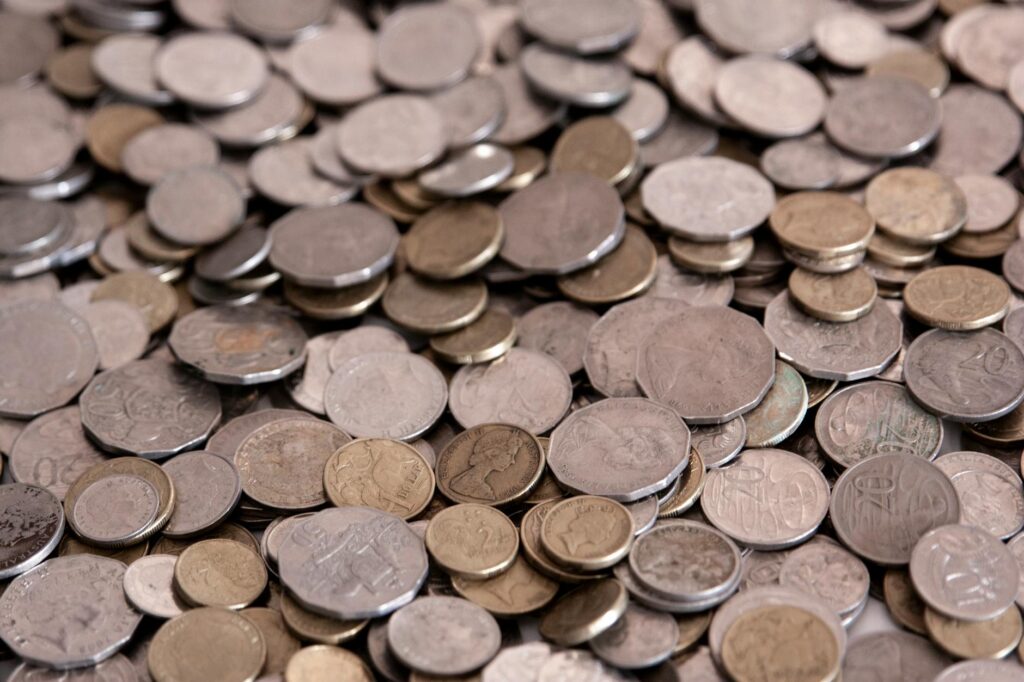
Silver coins fall into two buckets: bullion coins and numismatic (collectible) coins. This distinction matters a lot for where you sell and how much you get.
Bullion coins - like American Silver Eagles, Canadian Maple Leafs, and 90% "junk silver" quarters and dimes - are sold based on silver content. A coin dealer or online precious metals buyer will typically offer you spot price minus a small spread. For common bullion, that's usually spot minus $1-3/oz.
Numismatic coins - like Morgan dollars, Peace dollars, or key-date Walking Liberty halves - carry collector premiums that go well beyond melt value. A coin shop will grade these and offer accordingly. The Red Book (Official Guide to U.S. Coins) gives you a baseline before you walk in.
Where to sell silver coins:
- Local coin dealer: Best for in-person transactions. They'll weigh, test, and make an offer on the spot. Get quotes from two or three if you have time.
- Online precious metals buyers: Sites like APMEX, Gainesville Coins, and JM Bullion have buyback programs. You request a quote, ship insured, and get paid by check or wire.
- Coin shows: If you have numismatic coins, a regional coin show puts multiple buyers in one room. Competitive environment, often better prices than any single shop.
Pawn shops will buy silver coins, but their offers run 40-60% of spot. That's a last resort, not a first stop.
How to sell silver flatware and sterling silverware
That silverware set in the back of the cabinet is almost certainly sterling (.925). The melt value of a full sterling flatware service for 12 can be $300-$800+ depending on the pattern and total weight. Most people have no idea.
The challenge is that flatware rarely sells at melt value alone - someone has to process it. But certain patterns (Gorham Chantilly, Reed and Barton Francis I) carry collector premiums because replacement services actively buy them.
Options for selling silver flatware:
- Silver buyers / precious metals dealers: Will pay melt value minus a processing margin, typically 70-85% of melt. Fast and simple for complete or incomplete sets.
- Antique dealers and replacement services: If you have a named pattern, a silverware replacement service (like Replacements, Ltd.) may pay above melt for pieces they need. Check their "Sell to Us" section online.
- eBay: Complete sets in desirable patterns can fetch retail prices, but it takes time and careful packing. Worth it for high-end patterns, not worth the hassle for common ones.
- Estate sale companies: If you have a large estate with multiple pieces, an estate sale handles everything for a 30-40% commission.
How to sell silver jewelry
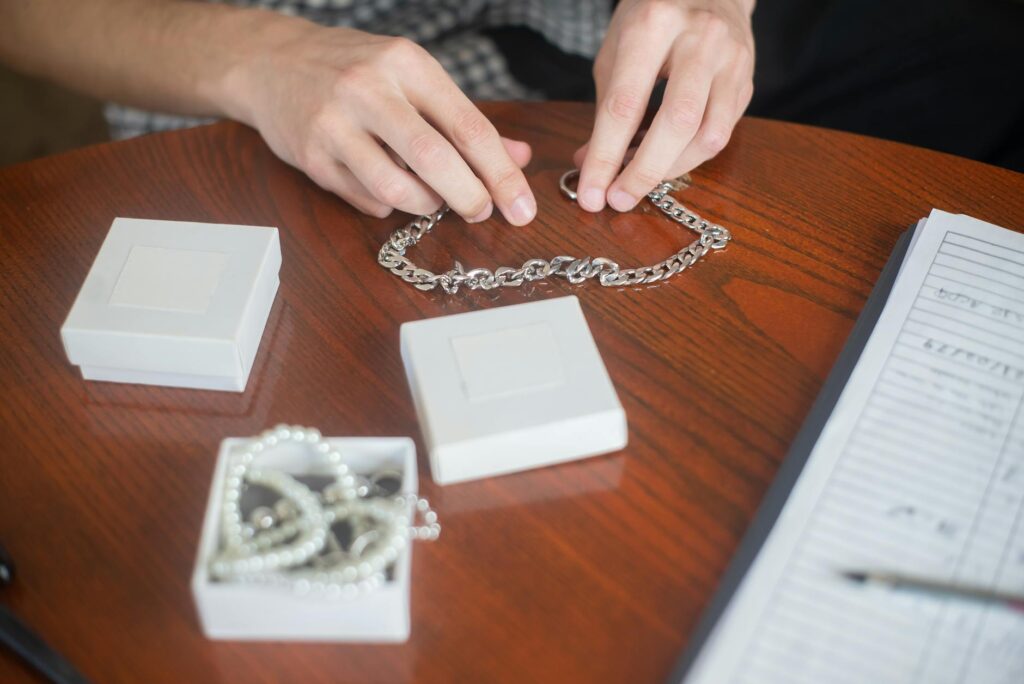
Sterling silver jewelry is stamped .925 or "Sterling" on the piece. Unlike gold, silver jewelry tends to trade close to melt value unless it has brand value (Tiffany, Georg Jensen, Navajo artisan work) or gemstones that add separately appraised value.
Your options for silver jewelry:
- Jewelry stores that buy silver: Many local jewelers buy sterling. They'll weigh it and offer a percentage of melt. Expect 60-80% of melt for common pieces.
- Online silver buyers: Get a quote, ship insured, get paid. Convenient when you have multiple items to move at once.
- Pawn shops: Faster, lower offers. Fine if you need cash the same day.
- eBay or Etsy: If the piece is handmade, unusual, or from a recognized designer, selling directly to buyers can get you 2-5x melt value. Requires more effort.
Before you sell, check the stamp - a .925 mark confirms sterling. If there's no stamp, the piece might be silver-plated, which has almost no resale value as precious metal. A dealer can test it with acid or XRF if you're uncertain.
Not Sure What Your Silver Is Worth?
Cha-Ching Co helps you find legitimate buyers fast - whether it's silver, gold, jewelry, or other valuables. Start with a free offer and compare.
How to sell silver bars and bullion
Silver bars are the simplest to sell because they're standardized. A 10 oz .999 fine silver bar from a recognized mint (PAMP, Sunshine, Engelhard) sells at or near spot at any precious metals dealer. There's little ambiguity in pricing.
Best places to sell silver bars:
- Online dealers: APMEX, JM Bullion, Kitco - all have buyback programs. Lock in your price online, ship insured, get paid in 1-3 business days after receipt.
- Local coin shops: Quick, no shipping required. Bring any assay certificate you have for bars from less-common mints.
- Silver refiners: For large quantities or scrap silver (broken jewelry, cutlery scraps), a refiner pays refinery rates - often the highest percentage of melt for bulk scrap.
Red flags and scams to watch for
The silver market is mostly legitimate, but a few situations are worth knowing about:
- Pressure to sell immediately: Any buyer who says "this offer expires in 5 minutes" is running a tactic. Take your time.
- No physical location: For online buyers especially, verify they have a real address, phone number, and years of reviews before you ship anything.
- Offers well below spot: If someone offers less than 60% of melt value and won't discuss it, walk away. Better buyers are easy to find.
- Social media "silver buyers": Be cautious with individuals who contact you through Facebook Marketplace or Instagram DMs. Use established dealers instead.
- Silver-plated vs. sterling confusion: A dishonest buyer might misrepresent your sterling as plated to justify a lower offer. Know your stamps.
The fix for most of these: get multiple offers. Spend a couple hours contacting two or three buyers. The difference between the lowest and highest offer can be 20-30% on identical items. That's worth 90 minutes of your time.
A simple process that works for any type of silver
- Inventory what you have: Sort by type (coins, flatware, jewelry, bars), note any markings (.925, sterling, coin silver, fine silver), and weigh everything you can. A kitchen scale works for rough estimates; a jewelry scale measuring in grams is better.
- Check the spot price: Kitco.com shows live silver prices. This gives you a baseline to evaluate any offer.
- Calculate your melt value: Weight in grams divided by 31.1 = troy ounces. Multiply by purity (0.925 for sterling, 0.999 for fine silver) x spot price. This is your floor.
- Contact 2-3 buyers: A local coin shop, one online buyer, and one specialty buyer (replacement service for flatware, estate jeweler for jewelry). See who offers the most.
- Sell and get a receipt: Always get something in writing with the weight, description, price per ounce, and total paid. Matters for your records and taxes.
Local vs. online - which pays more
Local selling is faster and you get cash in hand the same day. Online selling often pays more - online dealers have lower overhead and compete hard on buyback prices. For larger quantities ($500+ in silver), it's worth getting at least one online quote before settling on a local offer. You can always decline and go local if the shop matches up.
If you already have a relationship with a local coin dealer, that's worth something real - they'll often work with you on price if you're a regular customer. Build that over time.
And if you're sitting on a mix of silver and other valuables, Cha-Ching Co's guide to finding local silver buyers near you is worth reading alongside this one. You may find you can move everything through one network of vetted buyers rather than chasing separate channels for each item.
Same goes if you're also looking at gold - our piece on the best place to sell gold covers how precious metal buyers work across metals, so you're not starting from scratch with a new category.
Ready to Turn Your Silver Into Cash?
Cha-Ching Co makes it simple - tell us what you have and we'll connect you with vetted buyers who pay fair market rates. Free, fast, no obligation.
Disclaimer: Cha-Ching Co is a marketplace platform that connects sellers with buyers. We are not financial advisors. Silver prices fluctuate daily - verify current spot prices before selling. Always conduct your own due diligence when choosing a buyer. Cha-Ching Co does not guarantee specific offers or outcomes.