If you want to sell gold chain pieces for cash, the best first move is simple: slow down long enough to understand what your chain is made of, what it weighs, and which buyer is likely to pay fairly. A gold chain can be worth more than it looks, especially when gold prices are high, but the offer you receive depends on karat, gram weight, condition, brand, and how much margin the buyer needs.
Want a clear cash offer?
Cha-Ching Co helps you compare options and get a free cash offer without pressure.
This guide walks through how gold chain pricing works, how to check the basic details at home, where to compare offers, and what to avoid before handing over your jewelry.
Sell Gold Chain: What Buyers Look at First
Most gold chain buyers start with melt value. Melt value is the value of the pure gold inside the chain before buyer fees, refining costs, resale margin, and any design value. You can estimate it with four pieces of information:
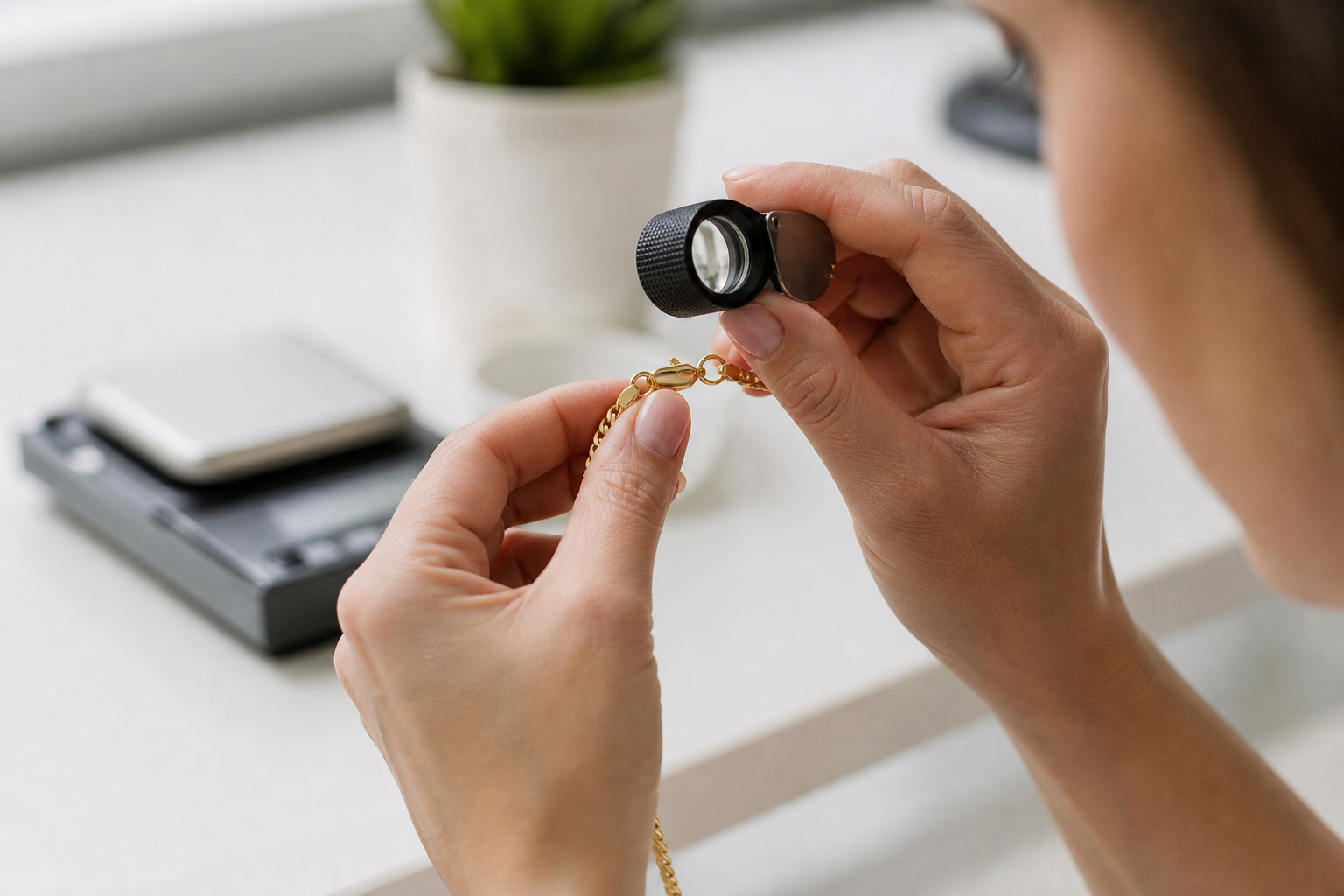
- Weight: Gold is usually priced by gram, pennyweight, or troy ounce. A kitchen scale can help you estimate grams, but a jeweler's scale is more accurate.
- Karat: Karat tells you gold purity. A 10k chain is 10 parts gold out of 24. A 14k chain is 14 parts gold out of 24. An 18k chain is 18 parts gold out of 24.
- Spot price: This is the market price for pure gold. It changes daily, so use a current gold price when estimating value.
- Buyer payout: Most cash buyers pay below melt value because they have testing, refining, resale, and business costs.
The basic formula is:
Gold value estimate = chain weight in grams x karat purity x current gold price per gram.
For karat purity, divide the karat by 24. A 14k chain is about 58.3% gold. An 18k chain is 75% gold. That difference matters. Two chains can look similar in size, but the higher-karat chain may contain much more gold.
If you have other pieces too, this related guide on how to sell gold jewelry explains how rings, bracelets, and mixed lots are usually sorted and priced.
How to Check a Gold Chain Before You Sell
Before you visit a buyer or mail anything in, take ten minutes to inspect the chain. You are not trying to become a professional appraiser. You are just trying to avoid walking in blind.
Look for a karat stamp
Check the clasp, end caps, and small flat tags near the clasp. Common marks include 10k, 14k, 18k, 22k, 417, 585, and 750. The three-digit marks are purity numbers. For example, 585 usually means 14k gold, while 750 usually means 18k gold.
A stamp helps, but it is not proof by itself. Clasps can be replaced, chains can be plated, and counterfeit markings exist. A serious buyer should still test the piece.
Separate solid gold from plated or filled pieces
Gold-plated and gold-filled chains are not valued the same as solid gold chains. Look for marks like GP, HGE, RGP, or GF. Those usually point to plated or filled jewelry. They may still have some resale value, but not the same melt value as solid gold.
The Federal Trade Commission's jewelry guidance says sellers must represent metal content truthfully, including quality, quantity, and metallic content. That is useful to know because a buyer should be willing to explain what they believe your chain is and how they reached that answer.
Weigh the chain by itself
Remove pendants, charms, and non-gold attachments if they can be separated safely. If there are stones, enamel, or other materials in the chain, ask whether the buyer is subtracting their weight. Some buyers weigh the entire piece and adjust the offer. Others remove or estimate non-gold material.
Take photos and notes
Before mailing a chain, take clear photos of the chain, clasp, stamp, packaging, and shipping label. Write down the weight if you have it. This gives you a record in case there is a disagreement later.
Where to Sell Gold Chain for Cash
There is no single best place for every chain. The right buyer depends on whether your chain is common scrap gold, a designer piece, a heavy Cuban link, an antique chain, or part of a larger jewelry lot.
Local gold buyers
A local gold buyer can be convenient because you can see the test, ask questions, and leave with payment if you accept. The downside is that payouts vary a lot. One shop might offer a fair percentage of melt value while another offers far less.
Ask the buyer to show the weight, karat test result, current gold price used, and payout percentage. If they only give you a final number without the math, get another quote.
Jewelry stores
Some jewelers buy gold chains, especially if the chain is wearable, branded, or easy to resell. A jeweler may pay more than scrap value for a chain they can clean and resell. For damaged, tangled, or very common chains, the offer may be based mostly on melt value.
Pawn shops
Pawn shops can be fast, but speed usually comes with a lower offer. If you need same-day cash, they are worth comparing, but do not make them your only quote. Ask whether the offer is a sale offer or a pawn loan offer. Those are different transactions.
Online gold buyers
Online gold buyers can work well if they provide insured shipping, transparent testing, and a written offer before final sale. Read the terms before sending anything. Look for how long you have to accept or reject the offer, whether return shipping is free, and how payment is issued.
If you are comparing several buyer types, this guide to the best place to sell gold can help you match your item to the right selling route.
Sell Gold Chain Without Getting Lowballed
The easiest way to get a weak offer is to ask only one buyer. Gold is a commodity, but gold jewelry buying is still a spread business. Buyers choose their own margins, and those margins can be wide.
Use this simple process:
- Estimate melt value first. Use weight, karat, and the current gold price. Your estimate does not need to be perfect. It just gives you a baseline.
- Get at least two offers. Three is better if the chain is heavy or high-karat.
- Ask for the math. A fair buyer should explain weight, purity, price used, and payout.
- Do not be pressured. If the offer expires in minutes or the buyer discourages comparison shopping, leave.
- Get payment terms in writing. For online buyers, confirm the return process before shipping.
Compare before you commit
Cha-Ching Co can help you understand your options and request a free cash offer.
When a Gold Chain Is Worth More Than Melt Value
Many chains are priced mainly for their gold content. Some are worth more because of brand, style, rarity, or resale demand.
A chain may deserve more attention if it is:
- Made by a known designer or luxury jewelry house
- A heavy solid Cuban, rope, box, Franco, or Figaro chain in good condition
- Part of a matching set with paperwork or original packaging
- Antique or vintage with collector interest
- High-karat gold, such as 18k, 21k, or 22k
If the chain has a designer mark, do not sell it as scrap until you have checked resale value. A branded chain in good shape may bring more from a specialty jewelry buyer, consignment shop, or private marketplace than from a melt-value buyer.
That said, private resale takes more work. You may need photos, descriptions, authentication, buyer messages, shipping, and fraud protection. A higher listing price is not the same as guaranteed money in your account.
Common Mistakes When Selling a Gold Chain
Most bad sales happen because the seller is rushed, unsure, or working with a buyer who does not explain the offer. Avoid these mistakes:
Selling without knowing karat and weight
If you do not know the chain's purity and weight, you have no way to judge the offer. Even a rough estimate puts you in a better position.
Assuming appraisal value equals cash value
Insurance appraisals often reflect replacement value, not what a buyer will pay in cash today. A chain appraised for a high retail replacement number may sell for much less.
Ignoring buyer fees and shipping terms
For mail-in buyers, read the terms carefully. Some companies deduct refining fees, shipping charges, or return fees. Others pay quickly and return rejected items at no cost. The details matter.
Letting sentimental value set the price
This one is hard. A chain may carry memories that a buyer cannot price. If the piece is tied to family, divorce, inheritance, or a difficult season, give yourself room to decide whether selling is actually the right move. A fair cash offer should help you decide, not corner you.
What a Fair Gold Chain Offer Looks Like
A fair offer is clear. It does not have to be the highest number you imagined, but it should make sense when the buyer explains it.
Look for a buyer who can answer these questions:
- What karat did you test this chain at?
- What is the weight you are paying on?
- What gold price are you using today?
- What percentage of melt value are you paying?
- Are there any fees, deductions, or return costs?
- When and how will I be paid?
If a buyer gets annoyed by reasonable questions, that is a sign to pause. Good buyers expect sellers to ask how the offer was calculated.
Final Checklist Before You Sell Gold Chain Pieces
Before you accept an offer, run through this checklist:
- Checked the chain for karat marks
- Separated pendants, charms, and non-gold pieces
- Estimated melt value using current gold price
- Compared at least two buyers
- Asked each buyer to explain the offer
- Reviewed shipping, return, and payment terms if selling online
- Kept photos and written notes for your records
You do not need to squeeze every last dollar out of the sale if speed and simplicity matter. But you should understand the tradeoff. The goal is to choose the offer that fits your situation with your eyes open.
Ready to see what your chain may be worth?
Get a free cash offer from Cha-Ching Co and compare it before making a decision.
Disclaimer
This article is for general informational purposes only and is not financial, legal, tax, or appraisal advice. Gold prices, buyer policies, and local rules can change. Always compare offers, read buyer terms, and speak with a qualified professional if you need advice for a legal, tax, estate, or insurance matter.