A junk car value calculator can give you a rough starting point, but the real cash offer depends on the vehicle, the local buyer, and what can still be reused or recycled. Two cars with the same year, make, and model can sell for different amounts if one has a clean title, an intact catalytic converter, and usable parts while the other is stripped or hard to tow.
If you want a fair number before you accept an offer, the goal is simple: understand what buyers are actually pricing. Most junk car buyers look at scrap weight, parts demand, condition, title status, pickup cost, and local metal prices. Once you know those pieces, you can spot a weak quote faster and decide whether a quick cash sale makes sense.
Want a Real Cash Offer, Not Just an Estimate?
Cha-Ching Co helps you compare your options and request a free cash offer for your vehicle as-is.
How a Junk Car Value Calculator Works
Most online calculators ask for the same basic details: year, make, model, mileage, ZIP code, title status, and condition. Some ask whether the car starts, whether the engine and transmission are still in place, and whether the catalytic converter is original. Those answers help estimate two kinds of value.
The first is scrap value. This is tied to the weight of the vehicle and current prices for steel, aluminum, copper, and other recyclable material. A heavy truck or SUV may have more scrap value than a small sedan, even if both vehicles are in rough shape.
The second is parts value. A junk car can still have working doors, wheels, seats, glass, electronics, engine parts, body panels, or a transmission that a recycler can resell. That is why a non-running car may still be worth more than its metal weight. A buyer is not only asking, "How much metal is here?" They are also asking, "What can be removed, reused, and sold?"
That is also why calculator results should be treated as a range. They are helpful, but they are not a guaranteed offer. A real buyer still needs to confirm the condition, location, paperwork, and pickup details.
What Affects a Junk Car Value Calculator Estimate?
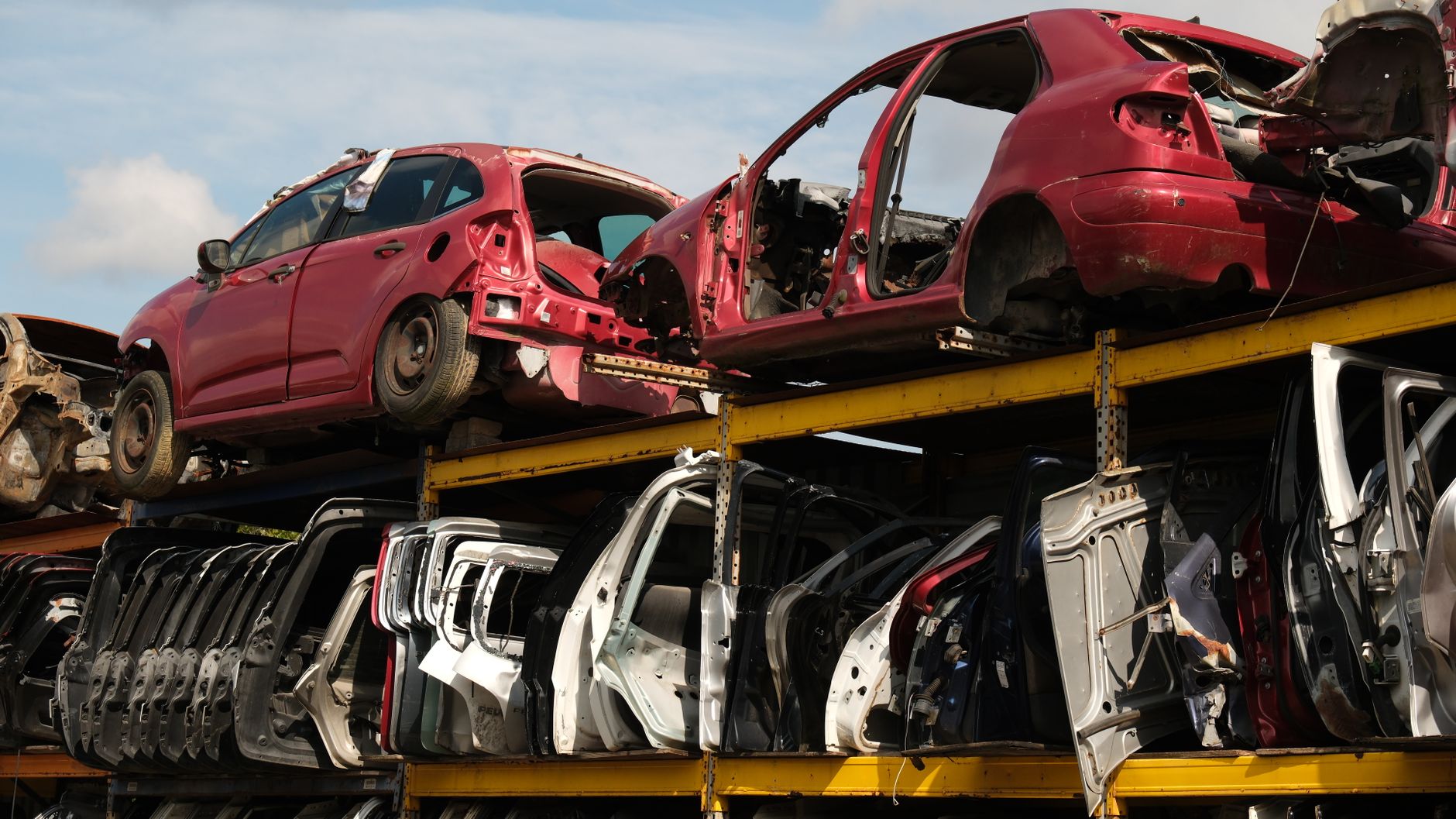
The biggest price drivers are usually vehicle weight, parts demand, completeness, title status, and location. Here is how each one can move the offer up or down.
Vehicle weight and scrap metal prices
Scrap buyers care about weight because heavier vehicles contain more recyclable material. Full-size trucks, vans, and SUVs often start with a higher scrap baseline than compact cars. That does not mean every truck is worth more, but weight matters when the car is being priced mostly for recycling.
Scrap prices also move. If steel prices are higher in your area, offers may rise. If prices soften, the same vehicle may bring less than it would have a few months earlier. This is one reason two sellers can get different offers for similar cars at different times.
Make, model, year, and parts demand
A common model with steady parts demand can be worth more than a rare vehicle nobody is looking to repair. Buyers may pay more for a car if the engine, transmission, doors, wheels, lights, or interior pieces can be resold. Newer vehicles can also carry more parts value, even after a major accident.
Older vehicles can still have value, especially if they are complete. But if the car has already been stripped, the offer may drop quickly. Missing wheels, battery, catalytic converter, engine, or transmission can turn a parts vehicle into a lower-value scrap pickup.
Running condition
A junk car does not have to run to sell. Still, a car that starts or moves under its own power may get a stronger offer because there is less pickup hassle and more chance of usable parts. A car with a blown engine, bad transmission, flood damage, or serious frame damage can still sell, but the quote will usually reflect the repair risk and limited resale value.
If your car has one major issue but is otherwise complete, say that clearly when asking for quotes. For example, a vehicle with a bad transmission may still have a valuable engine, body panels, wheels, and interior parts. You can read more about that specific situation in Cha-Ching Co's guide to how to sell a car with transmission problems.
Junk Car Value Calculator: Paperwork and Title Issues

Title status can change the offer because it affects how easily ownership can be transferred. A clean title is usually the simplest path. A salvage title, rebuilt title, lien, or missing title may still be workable, but it depends on your state, the buyer, and the documents you have.
If you have the title, make sure the name matches your ID and that any lien has been released. If the title is missing, check your DMV's duplicate-title process before you agree to a pickup. Some buyers can work with alternate proof of ownership, but not all of them can. A little paperwork cleanup can protect you from a lower offer or a failed pickup appointment.
Be careful with any buyer who wants the car without clear ownership paperwork or asks you to leave the title blank. The safer path is to complete the transfer properly, keep a copy or photo of the signed paperwork, and report the sale if your state requires it. If your car has no title at all, this guide on how to sell a junk car without title explains the common options.
Catalytic Converter, Battery, Tires, and Other Parts
Some parts can have a large effect on the number a junk car value calculator gives you. The catalytic converter is one of the most common examples because original converters contain precious metals. The value can vary by vehicle, converter type, and metal prices. OEM converters are often worth more than aftermarket ones.
That does not mean you should remove parts before getting quotes. In many cases, a complete car is easier to sell and may bring a better total offer than a stripped vehicle. If you remove the catalytic converter, battery, wheels, or stereo, tell each buyer before they quote. Surprises at pickup usually lead to a lower final price.
Tires and wheels can help if they are in decent shape. A newer battery may add a little value. Working electronics, airbags, mirrors, seats, glass, and body panels may matter if the model has active parts demand. The more complete and honestly described the car is, the easier it is to compare quotes.
Selling a Complete or Non-Running Car?
Share the condition once and get a free cash offer from Cha-Ching Co without paying for repairs first.
How Towing Changes the Final Cash Offer
Pickup cost matters. A car sitting close to a buyer's yard is usually cheaper to collect than one in a rural area, a paid parking lot, a narrow driveway, or a hard-to-access spot. If the buyer includes free towing, that cost is already being considered in the offer.
Before you accept a quote, ask whether towing is included and whether there are any fees. A higher offer with a towing charge may end up worse than a slightly lower offer with free pickup. Also explain whether the vehicle rolls, has keys, has inflated tires, or is blocked in. These details help prevent a last-minute price change.
Before pickup, remove personal items, take off the plates if your state requires it, cancel insurance after the sale, and keep proof that the vehicle changed hands. A clean handoff matters more than squeezing a few extra dollars from a buyer who is vague about payment or paperwork.
How to Get a Better Junk Car Offer
Start with the calculator, then gather real quotes. Give every buyer the same facts: VIN if available, year, make, model, mileage, location, title status, whether it runs, what major parts are missing, and photos of the exterior, interior, engine bay, wheels, and odometer. The more complete the quote request, the less room there is for a buyer to lower the price later.
Get at least two or three offers. Ask each buyer whether the quote includes towing, how payment works, what paperwork is needed, and when pickup can happen. If the car still runs and has a clean title, you may want to compare a private sale, trade-in, or cash buyer. If it does not run, has major damage, or is expensive to fix, an as-is buyer may be the simpler choice.
Avoid spending money on repairs just to sell a junk car unless you know the repair will raise the offer by more than it costs. Many sellers lose money trying to make an old or damaged vehicle look better for a buyer that was going to price it for parts and scrap anyway.
When a Calculator Estimate Is Too High or Too Low
If a calculator gives you a number that feels high, confirm what the buyer needs before you plan around it. Some tools assume the vehicle is complete, titled, accessible, and located near a buyer. If your car is missing major parts or needs special towing, the final offer may be lower.
If an offer feels too low, ask what the buyer is basing it on. The answer may reveal a real issue, such as missing paperwork or a stripped converter. It may also show that the buyer is pricing the car only for scrap while another buyer might value the parts. That is why comparing quotes matters.
For a broader look at old-car selling options, Cha-Ching Co also has a guide on getting cash for old cars. It can help you decide whether your vehicle is better suited for a junk buyer, private buyer, or another route.
Bottom Line: Use a Junk Car Value Calculator as a Starting Point
A junk car value calculator is useful because it gives you a quick range before you talk to buyers. But the final cash offer comes down to the vehicle's condition, parts, weight, paperwork, location, towing needs, and local market. Use the estimate to set expectations, then compare real written offers before you agree to a sale.
The best quote is not always the biggest number on the screen. It is the offer that holds up after the buyer sees the car, includes pickup terms you understand, and pays you the way promised.
Ready to See What Your Junk Car Could Bring?
Cha-Ching Co can help you request a free cash offer for your car without fixing it first.
Disclaimer: This article is for general informational purposes only and is not legal, financial, tax, or DMV advice. Vehicle sale rules, title requirements, towing practices, and buyer policies vary by state and local market. Confirm requirements with your local DMV or a qualified professional before selling.