Selling a house with solar panels can feel stressful when the contract language is hard to follow. The process can still be straightforward, but the paperwork depends on who owns the system and whether money is still owed. A paid-off system usually transfers with the home. A solar loan, lease, or power purchase agreement can add lender review, buyer qualification, transfer forms, or a payoff at closing. The best first move is to identify your exact arrangement before you list.
Want a simpler way to sell?
Request a free cash offer from Cha-Ching Co and compare it with your other selling options.
Selling a house with solar panels starts with ownership
Pull out the original solar contract and a recent statement. Look for the name of the system owner, the account balance, the contract term, the monthly payment, and any transfer or early-buyout language. Do not rely on how the salesperson described the deal years ago. The signed documents control what must happen now.
Most residential systems fall into one of four groups:
- Owned and paid off: You bought the equipment outright or finished paying the loan. The system normally conveys with the property.
- Financed purchase: You own the panels but still have a separate solar loan. The loan may be unsecured, secured by the equipment, or connected to the property through a filing.
- Solar lease: A solar company owns the equipment and you pay to use it, often under a long contract.
- Power purchase agreement: A third party owns the system and you pay for the electricity it produces under the contract.
The distinction matters to buyers and mortgage lenders. Fannie Mae's solar property guidance tells lenders to determine the ownership and financing structure because it affects underwriting, title, debt-to-income calculations, and whether the appraiser can attribute value to the panels.
Selling a house with solar panels you own outright
A paid-off system is usually the cleanest situation. Gather the purchase contract, paid-in-full confirmation, warranty information, permission-to-operate notice, recent utility bills, and maintenance records. Give copies to your real estate agent and make them available to serious buyers.
Owned solar may support a home's value, but it does not guarantee a dollar-for-dollar return on the original installation cost. The appraiser looks at the market, comparable sales, the system's age and condition, local energy costs, and available documentation. Fannie Mae guidance allows an appraiser to consider value for homeowner-owned panels under standard appraisal rules. It does not allow the same treatment for leased panels or systems covered by a PPA.
Market the system with facts instead of a promised savings number. Show 12 months of utility usage, system production reports if available, equipment age, warranty terms, and any repair history. A buyer can then compare the home's actual electricity use with the system's output.
What happens when a solar loan is still open?
Start by asking the lender for a written payoff quote and its procedure for a home sale. Some solar loans are personal obligations that must be paid off by the seller. Others may allow an assumption, subject to the buyer's credit approval. A lender or title company may also need to address a Uniform Commercial Code filing connected to the equipment.
Do not promise that the buyer can simply take over the loan until the lender confirms it in writing. Even when assumption is allowed, the buyer may not qualify or may prefer a clean title and one housing payment. Paying the balance from sale proceeds is often easier, but you need to know the payoff amount early enough to calculate your net proceeds.
A separate solar debt can also affect mortgage underwriting. Depending on the documents and collateral, the buyer's lender may include the obligation in debt calculations or refuse to count the panels toward appraised value. Share the loan agreement, current balance, payment history, and any UCC documents as soon as the buyer begins financing.
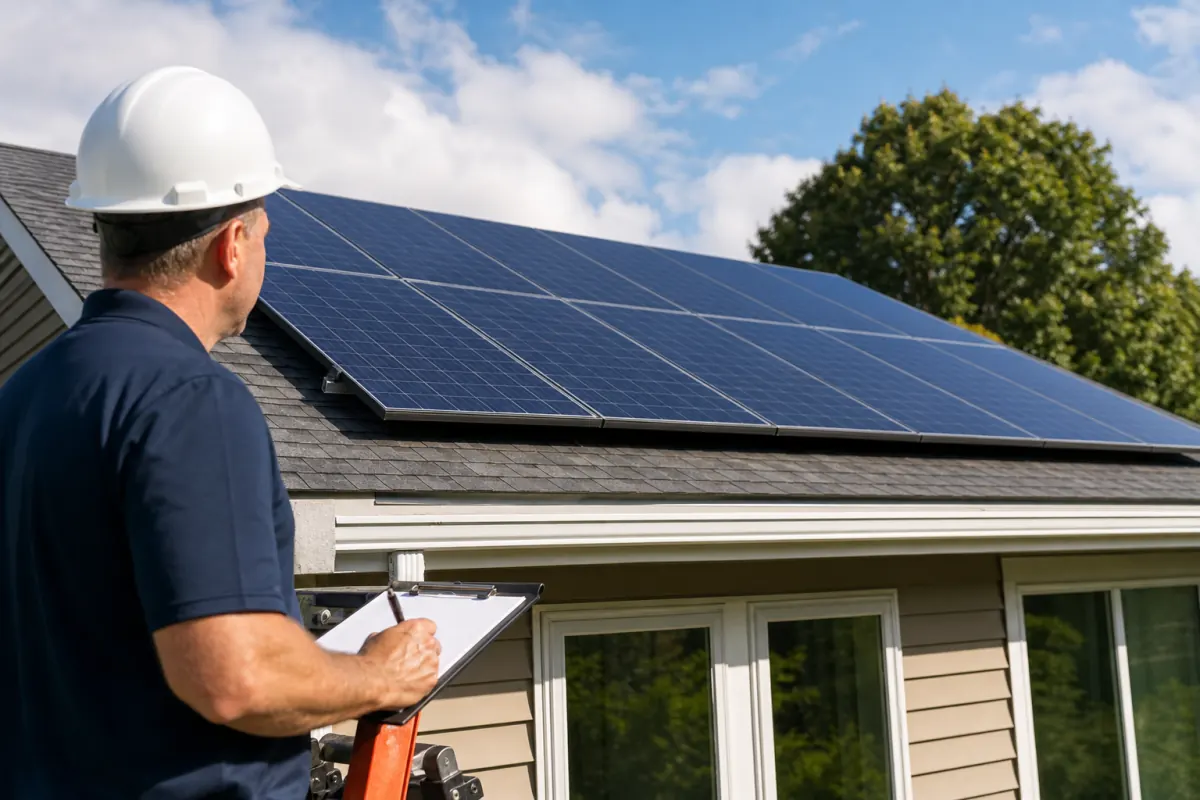
Selling with a solar lease or power purchase agreement
With a lease or PPA, the solar company still owns the equipment. The buyer may need to assume the agreement, and the provider may require a credit review. The Federal Trade Commission's consumer guide to home solar notes that these contracts can last 20 years and may include payment increases, transfer rules, early termination fees, or buyout options.
Call the provider before listing and ask for a resale or transfer packet. Get written answers to these questions:
- Can the agreement be transferred to a buyer?
- What credit standard or application does the buyer face?
- Is there a transfer fee, and who normally pays it?
- Can you buy the system now, and is the buyout price valid through closing?
- Does the contract contain an annual payment escalator?
- What happens if the buyer refuses the agreement?
- How long does approval and transfer usually take?
Send the agreement to the buyer before the inspection or financing deadlines, not a few days before closing. The monthly charge and remaining term can change how a buyer views the home. Under current Fannie Mae guidance, leased systems and PPAs cannot be included in the appraised value. Certain lease payments may also enter the buyer's debt-to-income calculation, while some production-based PPA payments may be excluded under specified conditions.
Compare an as-is cash option
Cha-Ching Co can provide a free cash offer so you can weigh speed, certainty, and net proceeds.
Build a solar document packet before listing
Solar deals slow down when ownership is unclear. Put the documents in one folder and share them with your agent, title or escrow officer, and the buyer's lender when requested.
- Signed purchase, loan, lease, or PPA agreement
- Current payoff quote or transfer instructions
- Recent statements showing the payment and remaining term
- Equipment list, installation date, and permission-to-operate letter
- Manufacturer, installer, roof, and workmanship warranties
- Production history and 12 months of utility bills
- Records for repairs, inverter replacement, or roof work
- Any UCC filing, release, subordination, or title correspondence
If the installer has closed, contact the loan servicer or company shown on the latest bill. Equipment warranties may come from a different manufacturer. A title professional can search recorded documents and explain what must be released or subordinated for your specific closing.
How solar affects price, appraisal, and negotiations
Buyers usually care about three practical questions: Who owns the equipment? What will I pay each month? What happens if the roof needs work? Answering those questions clearly is more useful than describing the system as "free electricity." Utility bills still include fixed charges, and production varies with weather, shade, equipment, and household use.
If the system is owned, ask your agent for comparable local sales with owned solar. If it is leased or under a PPA, price the home based on the real estate and treat the contract as a separate obligation the buyer must review. You can offer to pay a transfer fee or use sale proceeds for a buyout if that keeps the deal workable, but compare the cost with your expected net.
Roof condition deserves special attention. Find out who is allowed to remove and reinstall the panels, what that work costs, and whether doing so affects warranties. If the roof is near the end of its useful life, a buyer may request a credit or repair. Addressing the question before listing prevents a late surprise.
A practical timeline for the sale
- Before listing: Identify the ownership type, request payoff or transfer documents, collect utility and production records, and alert your title or escrow contact.
- When you receive an offer: Disclose the solar arrangement and give the buyer the contract. State clearly whether you plan to pay it off, request assumption, or transfer a lease or PPA.
- During inspection and financing: Respond quickly to requests from the appraiser, buyer's lender, solar provider, and title company. Arrange any buyer credit application early.
- Before closing: Confirm the payoff, transfer approval, required signatures, and handling of any UCC filing. Check that the final settlement statement matches the agreed plan.
- After closing: Confirm the solar account and monitoring access have moved to the buyer and keep proof that your obligation was paid or transferred.
Common mistakes to avoid
Waiting until closing week to contact the solar company is the biggest preventable problem. Transfer approvals and payoff documents can take time. Sellers also get into trouble when they call a lease "owned solar," assume a tax credit transfers to the buyer, or advertise estimated savings as guaranteed.
The Department of Energy's guide for solar home buyers says the federal solar tax credit applies to the original installation, so a buyer generally cannot claim that original credit merely by purchasing your home. State and local programs differ. A tax professional can address your situation.
Another mistake is hiding a difficult agreement. Buyers and lenders will likely find the payment or filing during underwriting and title review. Early disclosure gives everyone time to solve the issue and reduces the chance of a delayed closing.
Can you sell the house as-is?
Yes. Solar panels do not prevent an as-is sale. The ownership, loan, lease, or PPA still has to be handled correctly, though. A cash buyer may have fewer mortgage underwriting steps, but the buyer will still review title and decide whether to accept an ongoing solar agreement.
If the house also needs work, review how to sell a fixer-upper house. If your priority is a shorter transaction, compare the timelines in our guide to how long a cash-buyer sale can take. Get more than one offer and compare the expected net amount after commissions, repairs, credits, solar payoff, and transfer costs.
See what your home could sell for
Get a free cash offer from Cha-Ching Co with no obligation, then choose the route that fits your situation.
Bottom line
Selling a house with solar panels is mostly a documentation job. Confirm whether the system is owned, financed, leased, or under a PPA. Then get the payoff or transfer requirements in writing and share them early with the buyer, lender, and title team. Clear records give you more room to compare a traditional listing, an as-is sale, and a cash offer without letting the solar contract derail closing.
Disclaimer: This article is for general informational purposes only and is not legal, tax, financial, lending, or real estate advice. Solar contracts, disclosure rules, incentives, and closing requirements vary by provider and location. Consult a licensed real estate professional, attorney, tax adviser, lender, and title or escrow company about your situation.