If you are trying to figure out how to sell a car without pink slip paperwork, the safest answer is usually to replace or legally transfer the title before handing over the vehicle. A registration card or bill of sale may help prove the transaction, but it does not automatically replace a title. The exact process depends on the state where the vehicle is titled.
Want a Straightforward Way to Sell Your Car?
Tell Cha-Ching Co about your vehicle and request a free cash offer with no obligation.
How to Sell a Car Without Pink Slip Paperwork
Start by checking your state's motor vehicle agency record. You need to confirm three things: whose name is on the title, whether the title is paper or electronic, and whether a lender or other lienholder is listed. Those details determine which form and signatures you need.
In most cases, the cleanest route looks like this:
- Locate the vehicle identification number on the dashboard, registration, or insurance record.
- Check the title status with the state DMV or equivalent agency.
- Request a duplicate or replacement title if the paper copy was lost, stolen, or damaged.
- Resolve any lien and obtain the lender's required release.
- Complete the state's title assignment, odometer disclosure, bill of sale, and release-of-liability steps.
- Keep copies and confirm the buyer submits the transfer.
Do not sign blank forms or give the buyer possession on a promise that the title will be sorted out later. That can leave the vehicle, tickets, tolls, towing bills, or liability tied to your name.
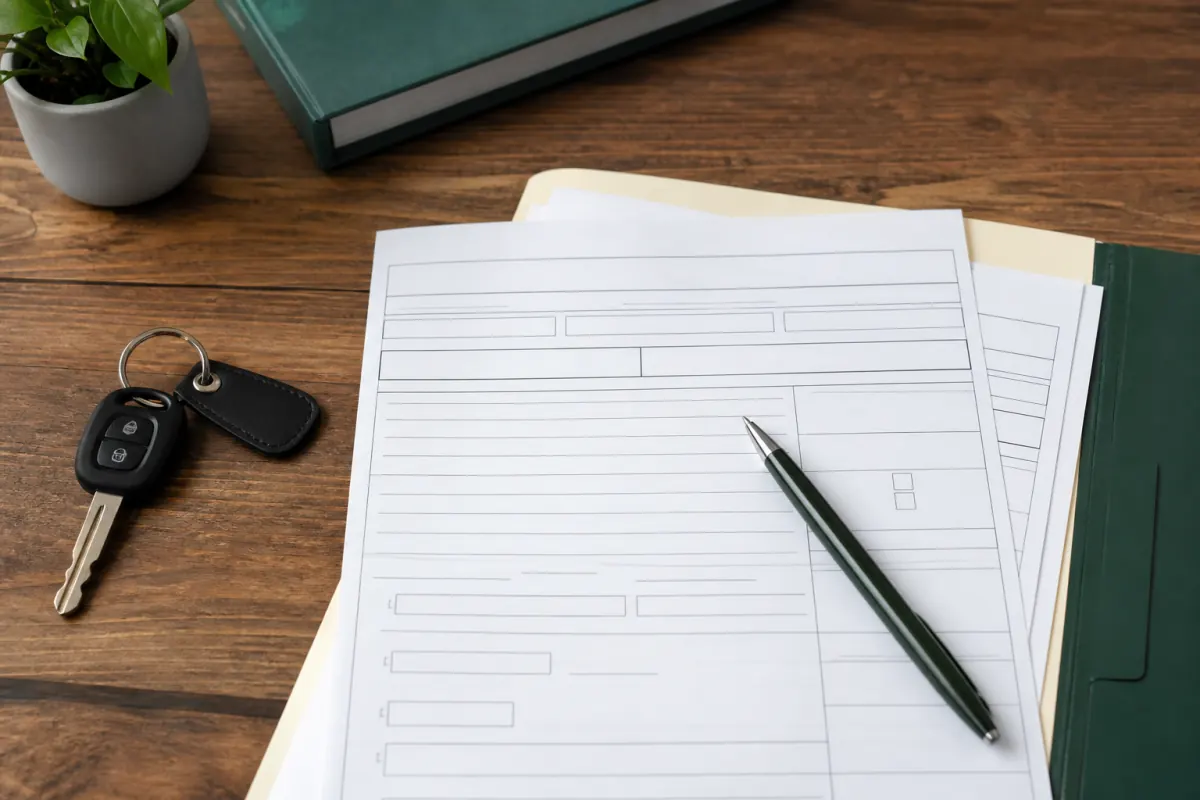
Can You Legally Sell a Car Without Pink Slip Documents?
Sometimes, but only when state law provides another valid transfer process. California, for example, allows a properly completed Application for Replacement or Transfer of Title, Form REG 227, to be used for certain California-registered vehicles whose title is lost, stolen, missing, or unreadable. The California DMV says a lienholder's involvement can add signature and notarization requirements.
Texas takes a different approach. A recorded owner or lienholder can request a certified copy of title using Form VTR-34. If a lien remains on the record, Texas requires the lienholder to apply or provide an acceptable original lien release. These examples show why advice from another state may be wrong for your sale.
Use your state's official motor vehicle website, not a generic form downloaded from an unfamiliar site. Fees, identity checks, notarization rules, odometer documents, emissions requirements, and waiting periods can change.
How to Sell a Car Without Pink Slip When the Title Is Electronic
You may own the vehicle even though you never received a paper title. Several states keep titles electronically, especially while a loan is active. An electronic title is not the same as a missing title.
Ask the motor vehicle agency whether the transfer can be completed electronically, at an office with the buyer, or after requesting a printed title. Florida, for example, provides processes for electronic titles and lets owners request a paper title. Some electronic transfers require both parties to appear at a tax collector or license plate agency.
If a lender holds an electronic lien, contact the lender before listing the vehicle. Ask for the payoff amount, accepted payment method, expected lien-release timing, and where the title will go after payoff. If you owe more than the sale price, read our guide to selling a car with negative equity before agreeing to a deal.
Will a Bill of Sale Work Instead of a Title?
A bill of sale records facts such as the buyer, seller, price, date, VIN, and vehicle description. It can support a transfer and protect both sides when accurately completed. It usually does not create marketable ownership by itself when state law requires a title.
Some states have limited exceptions for older vehicles, abandoned vehicles, low-value vehicles, or specific title-exempt categories. Those exceptions are narrow. The buyer may also need a bonded title, court order, prior registration, inspection, or other proof. Confirm eligibility directly with the state before accepting money.
A handwritten receipt is especially risky when the person selling is not the owner shown in state records. Title jumping, where someone buys a vehicle but never titles it before reselling it, can expose the buyer and seller to tax, fraud, and registration problems. Do not participate in an off-record chain of sales.
Selling a Car With Missing Paperwork?
Share the vehicle details and get a free cash offer from Cha-Ching Co.
What If There Is a Loan or Lien?
A lost piece of paper does not erase a lien. The lienholder may control the title or have to release its interest before ownership can transfer. Call the lender using a verified number from your statement or its official website. Never rely only on contact information supplied by a stranger involved in the sale.
Ask the lender whether the transaction can close at a branch, through an escrow-style payoff, or directly with a dealer or licensed buyer. Get the payoff instructions in writing. Do not treat a bank screenshot as proof that a loan is paid. Wait for cleared funds and the required lien release.
If an old lien was paid years ago but still appears in the record, contact the former lender or its successor. A state may require an original release, notarized signature, or agency-specific form. If the lender closed, ask the DMV what evidence it accepts.
What If the Titled Owner Died or Cannot Sign?
You cannot sell a car merely because you possess it or paid its expenses. If the titled owner died, authority may come from a small-estate affidavit, probate order, executor documents, surviving-owner rules, or a transfer-on-death designation. The accepted proof varies by state and the way the title was held.
If the owner is alive but unavailable or unable to sign, a valid power of attorney may work, but motor vehicle agencies often require their own form or specific language. Bring the original or certified documents the agency requests. If ownership is disputed, stop and get legal advice before taking payment.
What Is a Bonded Title?
A bonded title can be an option when ownership evidence is incomplete and the ordinary replacement process is unavailable. It commonly involves an agency review, a vehicle inspection or valuation, proof of your claim, and a surety bond. The bond protects a prior owner or lienholder with a valid claim; it is not a shortcut around someone else's ownership.
Not every vehicle or situation qualifies. Costs and the length of the bonded period vary. Start with the state agency and follow its instructions before buying a bond. If you are considering selling a junk vehicle, our guide to selling a junk car without a title explains additional practical issues.
Documents to Gather Before You Find a Buyer
- Current registration and government-issued identification
- VIN, license plate number, make, model, and model year
- Duplicate-title or transfer-without-title form required by your state
- Lien payoff statement and release, if applicable
- Odometer disclosure for vehicles subject to federal and state requirements
- Bill of sale with the full terms and accurate vehicle information
- Emissions, safety inspection, damage disclosure, or salvage documents required locally
- Notice of sale or release-of-liability form
Check every name and VIN character before signing. A small error can delay the buyer's registration. Cross out nothing unless the agency's instructions expressly permit corrections. If a form is spoiled, complete a fresh one.
How to Avoid Scams During a No-Title Sale
Missing-title transactions attract both honest buyers looking for a bargain and people hoping to exploit confusing paperwork. Protect yourself with a few firm rules.
- Meet at the DMV or title office when possible.
- Verify the buyer's identity and record the full legal name on the sale documents.
- Use a payment method you can independently verify. Do not refund an alleged overpayment.
- Remove plates when state law tells the seller to keep them.
- File the notice of sale or release of liability promptly.
- Cancel insurance only after the handoff and required filing are complete.
- Keep signed copies, photos of the vehicle at pickup, and proof of payment.
Be candid about why the title is unavailable. A buyer should know whether the paper was lost, the title is electronic, a lender holds it, or the ownership record needs correction. Clear facts prevent surprises and make a legitimate sale easier.
Should You Replace the Title Before Selling?
Usually, yes. A replacement title gives more buyers confidence and reduces the chance that the transfer is rejected. It may also improve your price because the buyer is not taking on paperwork risk.
A simultaneous replacement-and-transfer process can make sense when the state permits it and both parties can follow the agency's instructions. A licensed dealer, dismantler, or cash buyer may also have a lawful process for certain vehicles, but licensing does not let the buyer ignore ownership requirements. Ask exactly which documents will be filed and request copies.
Frequently Asked Questions
Can I sell a car with only the registration?
Registration helps identify the vehicle and registered owner, but it generally is not a substitute for the ownership document required by the state. Ask the motor vehicle agency whether you need a duplicate title or qualify for a specific exception.
Can I sell a car without a title to a junkyard?
Possibly, depending on state law, the vehicle's age and condition, and the junkyard's licensing rules. A legitimate operator will ask for identification and acceptable proof that you own the vehicle. Avoid anyone willing to take a vehicle with no ownership check.
How long does a replacement title take?
Timing varies by state and application method. Some offices offer expedited or same-day options, while mailed titles may take days or weeks. A lien, ownership mismatch, recent duplicate, or missing signature can add time.
Can the buyer apply for the missing title?
Usually the recorded owner must start the replacement process, although some states allow a combined replacement and transfer or a bonded-title route. Do not assume the buyer can fix it after taking the car.
What if the title is in another person's name?
Contact the recorded owner and complete a lawful transfer. If that person cannot be found, ask the state about bonded-title or court procedures. A bill of sale from someone outside the ownership record may not be enough.
Bottom Line
The safest way to sell a car without the paper title is to verify the official ownership record, use the state-approved replacement or transfer procedure, clear any lien, and document the handoff. Do not guess based on what worked for someone in another state. A short call or office visit before the sale can prevent months of trouble afterward.
Ready to See What Your Car Could Be Worth?
Request a free cash offer from Cha-Ching Co and review it on your own time.
Disclaimer: This article provides general information, not legal, tax, or financial advice. Vehicle title and transfer rules vary by state and can change. Confirm the current requirements with the motor vehicle agency where the vehicle is titled, and consult a qualified professional if ownership or lien rights are disputed.