Can you sell a car with check engine light on? The answer depends on your state's transfer and emissions rules, the vehicle, and how the sale is handled. A warning light can affect the price, the buyer's trust, and whether the car can pass a required inspection. The safest approach is to learn why the light is on, disclose what you know in writing, and confirm the rules with your state before accepting payment.
Want a simple option for your car?
Request a free cash offer from Cha-Ching Co and decide whether an as-is sale works for you.
Can you sell a car with check engine light on legally?
There is no useful nationwide yes-or-no answer based on the warning light alone. The details depend on where the vehicle is titled, whether an emissions test is required, and what the seller says about the car. A written "as-is" sale also may not erase state disclosure or emissions duties. Your state motor vehicle and emissions agencies are the right sources for the transaction you plan to make.
California shows why location matters. The California DMV says a seller generally must give the new owner a valid smog certification, subject to listed exemptions. The state's Bureau of Automotive Repair also says a vehicle will not pass a Smog Check while its check engine light is on. A private agreement cannot turn a failed emissions test into a passing one.
Rules can be different even one state away, so do not rely on a friend's past sale or a generic bill of sale from the internet. Check your DMV or motor vehicle agency for seller responsibilities, inspection timing, title signatures, odometer disclosure, plate handling, and release-of-liability forms. If the car is financed, contact the lienholder before advertising it because you will need a valid way to transfer title.
What the check engine light may mean before a sale
The light can come on for something as simple as a loose gas cap or for a repair that costs much more. Common causes include an emissions-system leak, a failed oxygen sensor, an ignition misfire, or a catalytic-converter problem. The light alone does not tell you which repair is needed.
A steady light and a flashing light are not the same situation. In its consumer guide, the EPA says a blinking light can indicate a severe engine problem such as a misfire. It advises minimizing driving, avoiding high speeds and heavy loads, and getting prompt attention. If the car feels unsafe to operate, stop and arrange a tow rather than taking a test-drive risk.
Start with an OBD-II scan. Many repair shops and parts stores can retrieve a diagnostic trouble code, or you can use a basic scanner. Treat the code as a clue, not a complete diagnosis. The same EPA guide says technicians download codes that help pinpoint problems, then use manufacturer-recommended repair procedures and a scan tool to verify the work. A code by itself is not a confirmed parts list.
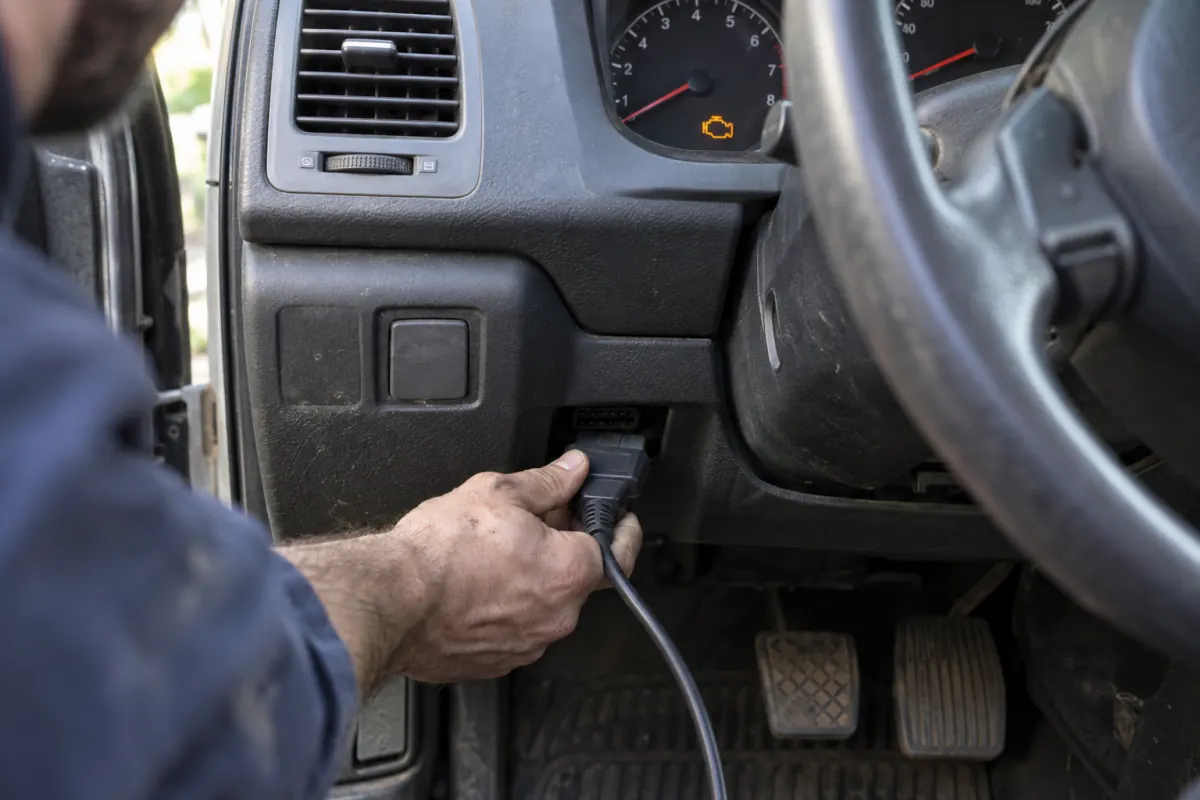
Should you fix the car or sell it as-is?
Get a diagnosis before deciding. Without one, buyers often assume the worst and reduce their offers accordingly. A paid inspection can give you a written fault description and estimate. You can then compare the likely repair cost with the increase in sale price.
Ask the shop to separate diagnostic charges, required repairs, and optional maintenance on the estimate. Find out whether the estimate includes parts, labor, taxes, and any follow-up drive cycle or emissions retest. If the technician cannot confirm the cause without more testing, the paperwork should say that. A clear estimate is useful even when you decide not to repair because it gives buyers something firmer than a guess.
A modest, well-documented repair may make sense if it clears the warning, allows required readiness monitors to complete, and makes the car easier to test-drive. An expensive engine, transmission, or emissions repair may not pay for itself on an older, high-mileage vehicle. In that case, an honest as-is sale can be reasonable.
Do the return-on-repair math with realistic numbers. Compare the car's likely sale price in its current condition with its likely price after a successful repair, then subtract the full repair and retest cost. Leave room for the possibility that the first repair uncovers another fault. Spending $1,200 to gain $700 in sale value does not make financial sense, even if the repaired car attracts more buyers.
Do not clear the code right before showing the car. An EPA technical report says disconnecting the battery or using a scan tool's reset feature clears codes and resets monitors to "not ready". The light may return during the buyer's drive, and a recently reset system may be rejected during an OBD inspection. It also creates avoidable distrust if the buyer later learns the code was deliberately erased.
If you are weighing repair costs against a direct sale, our guide to how to sell a car with mechanical issues explains the tradeoffs in more detail.
Skip repairs you do not want to manage
Cha-Ching Co can provide a free cash offer so you can compare an as-is sale with repairing the car first.
How to disclose the warning light to a buyer
Tell the buyer that the light is on before the test-drive. Share the scan code, inspection report, repair estimate, and service records you actually have. Be precise about the limits of your knowledge. "The shop retrieved code P0420, but I did not authorize further diagnosis" is clearer than "it only needs a sensor."
Put the known condition in the bill of sale. Include the vehicle identification number, mileage, sale price, date, names of both parties, and a short description of the warning and any diagnosis. Both parties should sign and keep a copy. Use your state's required forms when available.
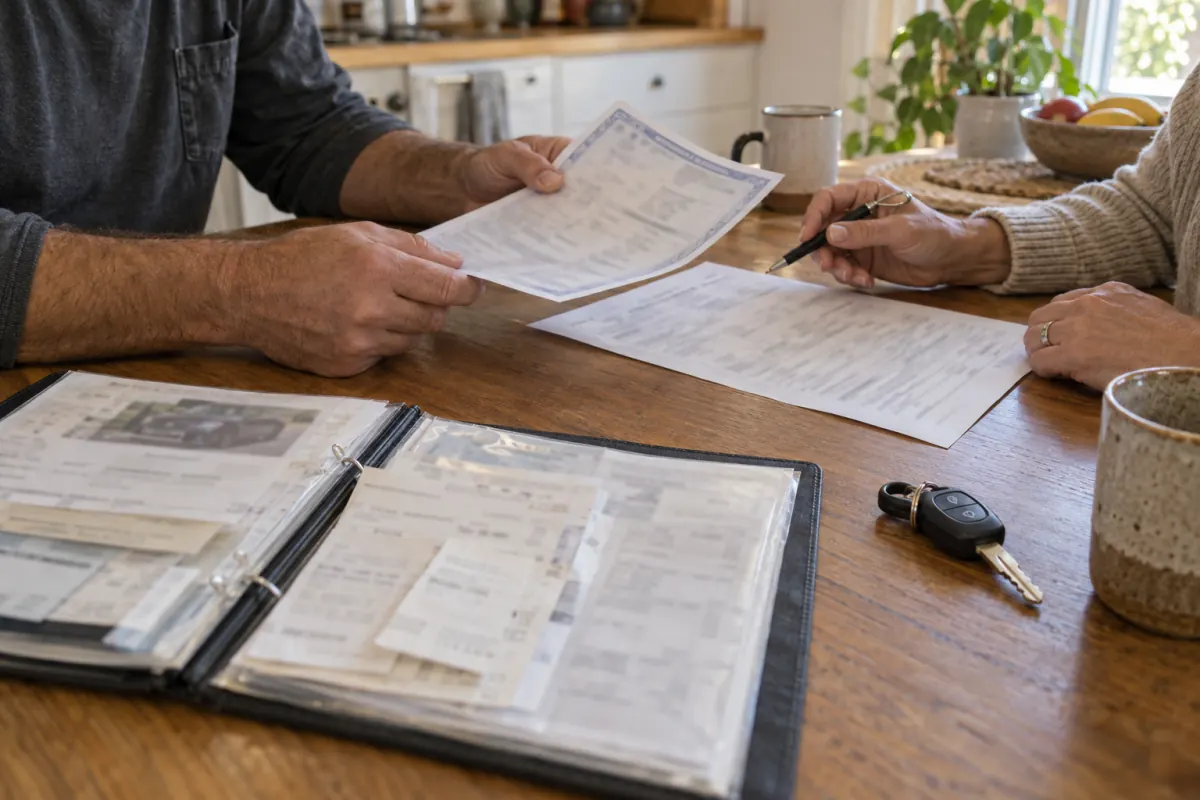
Never promise that the car will pass inspection unless it has completed the applicable test and the certificate is still valid. Do not call a vehicle mechanically sound when you know about a warning or drivability problem. Honest records protect the buyer and reduce the chance of a dispute after the sale.
Before handing over the keys, photograph the signed paperwork and the odometer. Remove personal items, garage remotes, saved navigation addresses, and paired phones from the vehicle. Give the buyer only the records that belong with the car, and keep copies of anything that documents the transaction.
How the warning light changes your selling options
Private-party sale
A private buyer may pay more than a dealer or as-is buyer, especially if the diagnosis is inexpensive and the vehicle is otherwise clean. Expect more questions, requests for an independent inspection, and negotiation. Give the buyer enough time to review the paperwork. Avoid anyone who asks you to hide the light or list a false sale price.
Plan the test drive around the car's actual condition. Verify that the driver has a license and that your insurance permits the drive. Ride along, choose a familiar route, and do not encourage highway speeds or heavy acceleration if a technician has warned against them. If you cannot offer a safe drive, say so before the buyer arrives and consider a mobile inspection instead.
Dealer trade-in
A dealership can appraise the car with the warning light on. The offer will usually account for diagnosis, repair risk, auction fees, and the dealer's margin. This route may be convenient if you are buying another vehicle, but compare the trade allowance separately from the new-car price and financing terms.
Cash or as-is buyer
An as-is buyer may accept cars with warning lights, failed inspections, high mileage, or other damage. The offer may be lower than a successful private sale, but you may avoid repairs, repeated showings, and uncertain negotiations. Confirm whether towing is included, when payment is made, and who files the title and release paperwork.
Our comparison of the best ways to sell a car can help you compare a private sale, trade-in, and cash offer without treating speed as the only factor.
Can you sell a car with check engine light on if it failed emissions?
Possibly, but a failed test can change the legal path. In a state where the seller must provide a passing certificate, you may need to repair the car or use a specific exemption or transfer process. Selling the car "as-is" may not shift that duty to the buyer. In a state where inspection happens after registration, the buyer still needs to know that the car may require repairs before it can be legally driven.
Keep the failed test report and any repair estimate. Ask the state motor vehicle or emissions agency whether the vehicle qualifies for an exemption, waiver, non-operational registration, dealer sale, or parts-only transfer. Get the answer from the agency, not from an online forum. The California Bureau of Automotive Repair's Smog Check guidance, for example, tells owners to repair an illuminated check engine light before testing because the vehicle will not pass with the light on.
When you call the agency, give it the model year, fuel type, county of registration, current title state, and planned buyer location. Ask who must obtain the inspection, how long a certificate remains valid, which exemptions apply, and what paperwork is needed if the car cannot pass. Also ask whether an out-of-state buyer, dealer, dismantler, or non-operational transfer follows a different process. Write down the agency page or form number you were given.
A practical seller checklist
- Scan the car and save the diagnostic codes.
- Get a professional diagnosis if the cause or safety risk is unclear.
- Check your state's title, disclosure, emissions, and inspection rules.
- Collect the title, lien release if applicable, service records, and required forms.
- Decide whether a repair is likely to add more value than it costs.
- Tell prospective buyers about the warning before they travel or test-drive.
- Write known defects and the agreed condition into the bill of sale.
- Complete the state's plate, notice-of-sale, and release-of-liability steps promptly.
The cleanest sale is not always the one with the biggest advertised price. It is the one where the buyer understands the car, the paperwork is correct, and you know exactly when ownership and responsibility transfer.
Compare an as-is cash offer
Get a free cash offer from Cha-Ching Co before deciding whether to diagnose, repair, trade, or sell your car privately.
Disclaimer: This article provides general educational information, not legal or mechanical advice. Vehicle sale, title, disclosure, and emissions rules vary by state and vehicle. Confirm current requirements with your state motor vehicle or emissions agency and consult a qualified mechanic or attorney when needed.