Selling a house with mold can feel like being asked to make a big financial decision before you even know how serious the problem is. You can usually explore a sale, including an as-is sale, but you need to understand the moisture source, describe what you know accurately, and check your state's disclosure rules. The next step is not automatically an expensive whole-house treatment. It is a careful look at what is actually wet, damaged, or growing.
This guide separates cleanup decisions from sale decisions. It explains what to document, how to compare repair and as-is offers, and where a local professional's advice matters. It does not promise that any particular buyer will accept the condition or that a repair removes a disclosure duty.
Want another sale option?
Ask Cha-Ching Co for a free cash offer, then compare it with your other options without pressure.
Can you sell a house with mold?
Often, yes, but a sale does not make the condition disappear. A buyer may ask for a price adjustment, a repair, a specialist's report, or time to investigate. A lender or insurer may have its own questions. What happens depends on the scope of the damage, the contract, the financing, and local law. An as-is listing generally describes the seller's proposed repair obligations; it should not be read as permission to hide a known problem. Because disclosure law varies by state and locality, ask a local real estate attorney or experienced licensed agent which forms and statements apply to your property.
Start by distinguishing a stain from an active water problem. A dark mark near a window may be old staining, visible growth, or something else. Do not diagnose the type of mold by color. Photograph the area, note where and when you found it, and look for the leak or condensation that made the surface damp. If water is still entering, arranging a qualified repair is more useful than covering the mark before a showing.
The EPA's homeowner guide puts it plainly: "The key to mold control is moisture control." It says to fix the water problem and clean up mold promptly. It also says to dry water-damaged areas and items within 24 to 48 hours to help prevent growth. Those are maintenance and cleanup recommendations, not a guarantee about resale value or a legal rule for every transaction.
Selling a house with mold: inspect before choosing a route
Before you spend money on remediation, gather the information a buyer will reasonably want. Make a simple file with dated photos, the location of any visible growth, past leaks, repair invoices, insurance correspondence, and any reports you have already received. Include the date the moisture source was fixed, if it was. Keep the original documents. An accurate record helps you compare bids and answer questions consistently; it cannot substitute for a required disclosure form.
If the area is small and the source is obvious, you may be able to address it yourself. EPA says a moldy area under about 10 square feet can often be handled by a homeowner following its guidance. That is not a universal cutoff: extensive water damage, sewage, suspected HVAC contamination, hidden growth, or health concerns change the decision. EPA recommends experienced professional help for contaminated water and consultation when the HVAC system may be involved. If you are uncertain about the extent, an independent inspector or qualified remediation professional can help define a scope before a contractor quotes work.
Visible mold does not automatically require an air test. EPA says sampling is unnecessary in most cases when growth is visible, and no federal mold-spore limit can establish that a home "passes" a federal mold standard. A targeted assessment can still make sense for hidden moisture, a disputed scope, or a buyer's specific request. Ask what question a proposed test will answer and how the result will affect your sale decision before paying for it.
Take cleanup safety seriously. CDC advises that people with allergies, immune suppression, asthma, COPD, or other underlying lung disease should not participate in mold cleanup. For those who do clean, CDC recommends at least a NIOSH-approved N95 respirator, protective gloves, and goggles. It also warns never to mix bleach with ammonia or other cleaners. If the damage is significant, do not let a desire to list quickly push you into unsafe demolition.
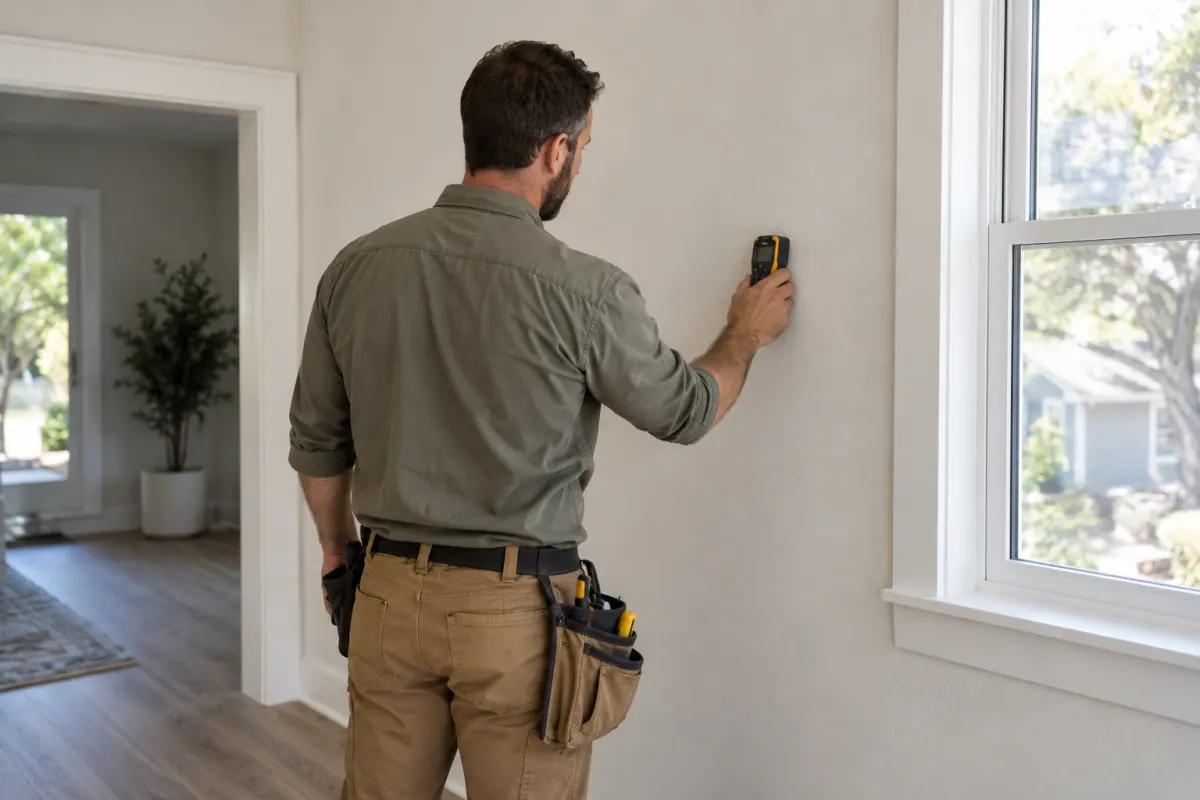
Repair first or sell as-is?
There is no single right answer. Repairing the water source and cleaning the affected material may make a conventional listing easier to explain and may reduce buyer uncertainty. Selling as-is may avoid managing repairs before closing, but buyers often price in the work and the risk that more damage will be found. Compare net proceeds, not just the first number on an offer sheet.
For a repair route, request a written scope that separates stopping the leak from removing damaged material and restoring finishes. Ask whether a wall must be opened, whether a plumber or roofer is needed, how long the area must dry, and what documentation you will receive. EPA says hard surfaces can be scrubbed with detergent and water and dried completely; porous materials such as carpet or ceiling tile may have to be discarded if moldy. It specifically cautions against painting or caulking over mold. A fresh coat of paint may improve a room's appearance but does not fix damp material underneath.
For an as-is route, ask at least two buyers to put their terms in writing. Compare the price, inspection period, contingencies, closing costs, proof of funds, deposit, and who pays for any cleanup or disposal. If a buyer advertises a fast close, ask when the funds would actually be available and what could delay closing. Our separate guide to selling a house as-is explains the broader tradeoffs. You can also review warning signs in cash home buyer offers before signing anything.
Imagine two proposals: a higher listed price that requires a repair and a lower cash offer with fewer contingencies. The useful comparison is each path's expected net amount after repair costs, concessions, fees, carrying costs, and the chance of renegotiation. Those inputs are specific to your home. Do not use an online average as a substitute for actual local bids. If you are under financial strain, it is reasonable to ask a trusted person to review the numbers with you before deciding.
Compare an as-is offer
A free cash offer can give you one more number to compare with repair and listing estimates.
What to disclose when selling a house with mold
There is no reliable nationwide one-line rule for mold disclosures in ordinary home sales. The National Association of Realtors notes that sellers face state and local environmental-disclosure requirements involving mold and other hazards. Your required form may ask about known water intrusion, repairs, past flooding, or known defects even if it does not have a box labeled "mold." The exact wording and duty depend on the location and transaction. A local real estate professional or attorney can tell you which form applies and how to answer it truthfully.
Do not assume that "as-is" means "no disclosure." Likewise, do not assume that completing remediation means you can answer a question about past water damage as though it never happened. Read the actual question. If it asks about history, answer the history. If you do not know the extent of a concealed condition, say what you do and do not know rather than guessing. Keep inspection and repair paperwork available so a buyer can understand what was observed and what was done.
If you find a problem after going under contract, tell your agent or attorney promptly and review the contract's notice provisions. They can help determine whether an updated disclosure, further inspection, repair agreement, price change, or cancellation right is involved. Do not improvise a legal answer from a general article. Timing and remedies vary widely by contract and jurisdiction.
A practical sequence before you list or accept an offer
- Stop ongoing moisture. Identify active leaks or condensation and arrange an appropriate repair. If water is entering from a roof, pipe, or foundation, cleaning a surface alone is unlikely to hold.
- Document the visible condition. Save dated photos, locations, prior invoices, and any reports. Do not remove a damaged material just to prevent a buyer from seeing it.
- Define the scope. Decide whether the EPA's small-area homeowner guidance is suitable or whether damage, hidden growth, contaminated water, health issues, or HVAC concerns call for professional help.
- Get comparable numbers. Request written repair scopes and sale offers. Note assumptions and deadlines, not only headline prices.
- Check disclosure obligations. Use your state's current forms and local advice. Tell the buyer what you actually know and retain the supporting paperwork.
- Review the final contract. Confirm the repair obligations, inspection rights, financing contingencies, and closing date before signing.
This order prevents one common mistake: deciding on a price before anyone knows whether the source of moisture has been fixed. It also keeps you from paying for a test that does not answer a useful question. You may still choose a quick as-is sale. The point is to make that choice with your eyes open.
Questions sellers often ask
Does a small patch mean the whole house needs remediation?
No. A small visible patch does not by itself establish whole-house damage. EPA's guide treats areas under about 10 square feet differently from larger or complicated problems, but the moisture source and surrounding materials matter. A musty smell, recurring leak, or damaged porous material may warrant further assessment. Avoid anyone who gives you a whole-house quote without explaining the observed scope.
Should I pay for a mold test before selling?
Not automatically. EPA says visible mold usually does not require sampling. Testing can have a purpose if a qualified professional identifies a specific unanswered question, but ask how the result would change remediation, disclosure, or the transaction. There is no federal pass/fail mold-spore number for homes.
Can I just paint over it and disclose the old leak?
Painting over a damp or moldy surface is not cleanup. EPA says to clean and dry the surface before painting and warns that paint over moldy material is likely to peel. A disclosure does not replace maintenance, and a cosmetic cover-up can make a buyer question the rest of the property's condition.
Will a cash buyer take a house with mold?
Some may consider it, but each buyer sets its own criteria and price. Ask whether the offer is truly for the property in its current condition, what inspections are permitted, and when the price can change. You are free to compare that offer against repairing and listing, or to decline it.
Make the decision that fits your situation
Mold is frustrating, especially when you were already preparing a move. You do not need to pretend the condition is harmless, and you do not need to assume it makes the house unsellable. Fix or document the moisture source, get a realistic scope, check your local disclosure rules, and compare written sale options. Those steps put you in a better position whether you repair first or sell as-is.
If you want one additional comparison point, you can request a free cash offer from Cha-Ching Co. Treat it as an option, not a deadline. Read the terms and compare your expected net proceeds with the other paths available to you.
See what an as-is offer looks like
Get a free cash offer and decide whether it fits your plans after comparing your options.
Disclaimer: This article is general information, not legal, medical, environmental, or financial advice. Mold cleanup and real estate disclosure requirements vary by property and jurisdiction. Consult qualified local professionals about your specific home, health concerns, and transaction.