Can you sell a car with a broken odometer? You may have a way to sell it, but do not present the displayed mileage as accurate when you know it is wrong. Before accepting payment, check the title agency's disclosure instructions for your vehicle and explain the defect to the buyer. California, for example, uses a "not actual mileage" designation for a broken odometer.
A frozen display is frustrating, especially when you are already trying to move an older car along. You do not need to guess how many miles it has traveled or promise a repair you cannot afford. Start with what you know, put it in writing, and confirm the paperwork before handing over the keys. This guide uses California examples; other states can have different forms and transfer requirements.
Considering an as-is sale?
Ask Cha-Ching Co about a free cash offer. Describe the broken odometer upfront so the condition is clear.
Can you sell a car with a broken odometer in California?
California's title procedures specifically account for broken odometers. The DMV's guide to information recorded on a title lists code N as "Not actual mileage" when the odometer is broken, has been replaced, or the owner is unsure of the true mileage. That is different from code A, which means actual mileage.
This does not mean every car with a failed display is automatically ready to transfer. Title ownership, liens, the vehicle's condition and other transfer requirements still matter. Before arranging a sale, ask DMV which mileage statement belongs on your particular title or transfer form. Give the vehicle's model year and explain whether the display is stuck, blank, or replaced. Ask about any applicable exemption rather than assuming that an older vehicle needs no disclosure.
If you live elsewhere, use your own state motor vehicle agency. A California title code is a useful example, not a nationwide instruction. For an out-of-state sale, check which agency will process the new title and what it needs from the seller.
Do not confuse a broken odometer with a rollover
The numbers on a stopped odometer can look perfectly ordinary. That does not make them a reliable lifetime total. Record what is visible, but keep the displayed reading separate from any statement about actual distance traveled.
California's guide distinguishes a broken odometer from one that exceeds its mechanical limits. Code E covers an odometer that has reached its highest available numbers and started over. Code N covers a broken or replaced odometer, or uncertainty about true mileage. A high-mileage car is not necessarily a rollover case, and a stopped display is not evidence that the mechanism rolled over.
A repair invoice or old service receipt can help explain the history, but avoid treating an estimate as a certified total. If a receipt recorded 140,000 miles before the display stopped, that document supports what was recorded on that date. It does not prove how many miles the car has covered since. Show the records to the buyer and ask the title agency how to complete the official statement when the total is unknown.
Can you sell a car with a broken odometer as-is?
Do not rely on the phrase "as-is" to handle mileage paperwork. A condition description and an official mileage disclosure do different jobs. California DMV's odometer disclosure instructions describe required signatures and submission of the original disclosure with the titling documents. A casual note in a listing does not complete those steps.
Describe the problem before a buyer takes time to visit. For example, an advertisement might say: "Odometer is inoperative. Display shows 143,210 miles. Actual mileage is unknown." Use that only if it accurately describes your car. If the display is blank, say it is blank. If you do not know when the failure occurred, do not invent a date.
You can repeat the same condition description in your sale records, alongside the vehicle identification number and sale date. Treat it as a plain-language record, not a substitute for your state's required title statement or legal advice about warranty terms. If a buyer asks you to mark actual mileage despite the known defect, pause the transaction and get guidance from the title agency.
Gather the documents before comparing offers
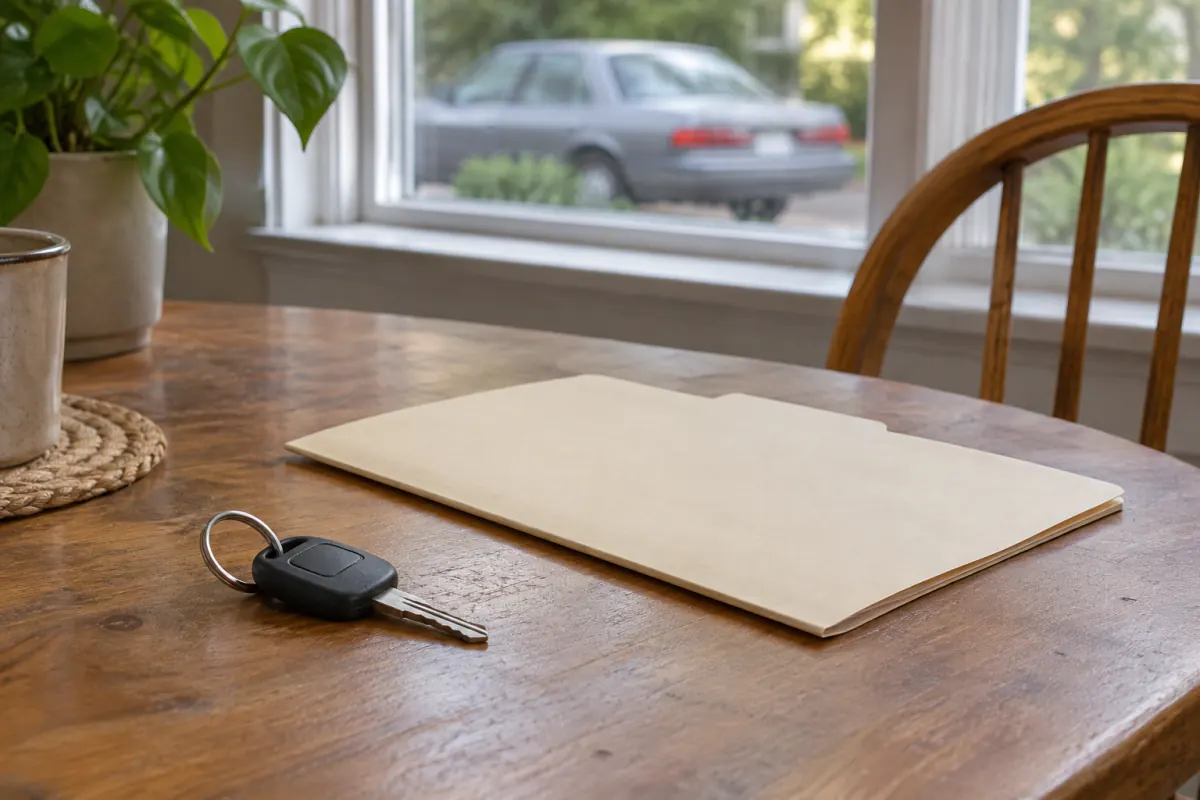
Find the title first. Check that the names match the owners who will sign and look for any lender information. Do not wait until pickup to discover that you cannot locate a required signature. California's title transfer guidance identifies the title and buyer and seller or lienholder signatures among the documents needed for a transfer.
Put repair records, earlier mileage readings and any dashboard replacement invoice in a folder. Keep the dates visible. Photographs of the present display can help document the condition you described, but they do not establish true mileage or replace a required form. Share copies rather than surrendering your only set of historical records without keeping a record yourself.
Ask the agency which original documents must be submitted. California's odometer instructions say the original disclosure must go to DMV with the titling documents; a photocopy is not acceptable for that submission. Copies may be used for the seller's or buyer's own records. Confirm how those instructions apply to your transaction before signing anything.
If another problem affects the sale, address it separately. Our guide to selling a car with mechanical issues can help you organize condition information. A failed mileage display does not answer questions about engine condition, title ownership or outstanding financing.
Compare your options before paying for repairs
Ask Cha-Ching Co about a free cash offer. Describe the broken odometer upfront so the condition is clear.
Should you repair the odometer before selling?
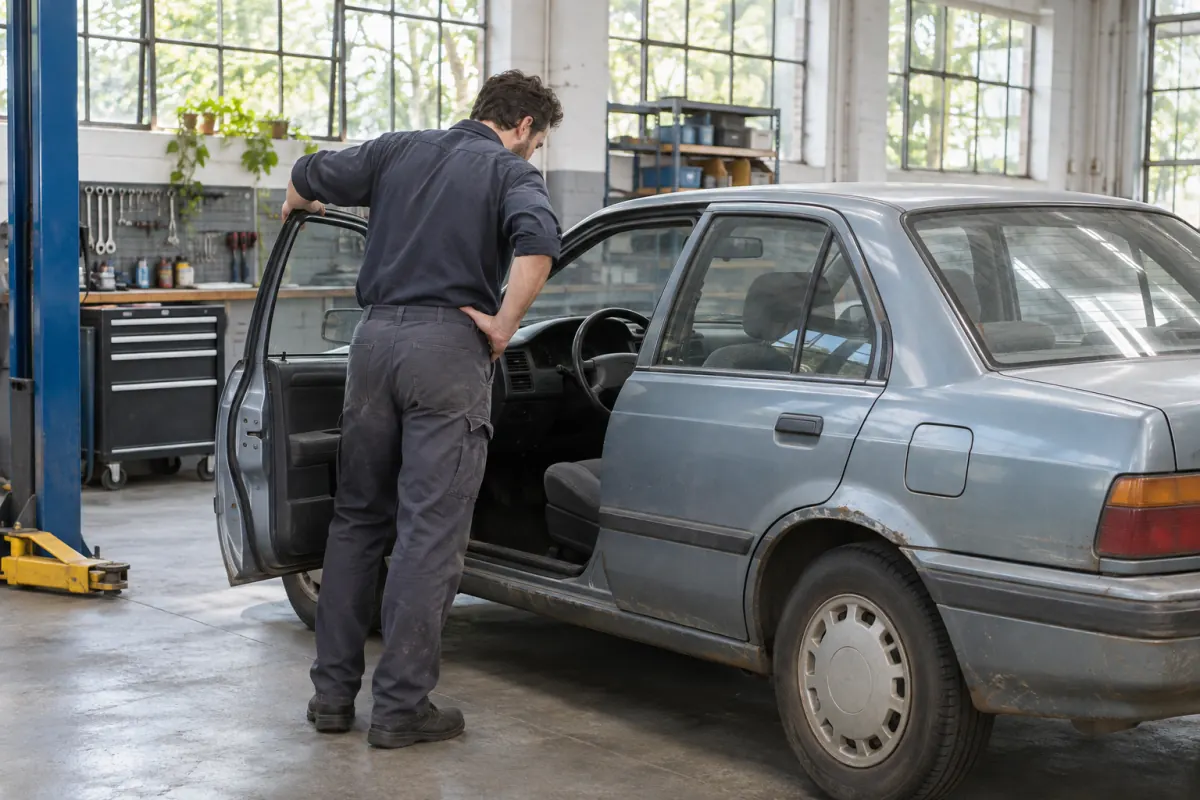
Get a diagnosis before deciding. A blank dashboard and a counter that stopped advancing may need different work; a photograph alone is not a repair estimate. Ask a qualified repair shop what failed, what the proposed repair includes, and what mileage records it can provide afterward. Do not reset a display yourself to make the car easier to market.
Then compare the written repair estimate with offers made using the disclosed condition. A repair may make the car easier for a buyer to assess, but do not assume you will recover its cost. Nor should you assume that a working replacement establishes the car's true lifetime mileage. California's title guide includes replaced odometers in its explanation of the not-actual-mileage code.
Here is a hypothetical budgeting example, not a market valuation: if a shop quotes $450 and a buyer increases an offer by only $200 after repair, the repair leaves you $250 behind before any other costs. If there is no firm revised offer, the increase is uncertain. Compare your actual written numbers and the time involved instead of relying on a generic resale estimate.
Compare buyers using the same information
Give each prospective buyer the same description: whether the odometer operates, what it displays, whether the actual total is known, and what records you have. An offer based on "143,210 actual miles" is not a useful comparison if you already told another buyer that the total is unknown. Ask for the written offer to reflect the disclosed condition.
Ask whether the buyer accepts vehicles with mileage discrepancies before scheduling a visit. Also ask who handles transfer paperwork and whether collection has a separate charge. Acceptance and pickup terms depend on the buyer; this article cannot promise that a particular vehicle will qualify or that collection will be free.
Private buyers may want time for an independent inspection. Allowing that discussion can be more useful than arguing over a mileage estimate neither side can verify. If the car is not safe or lawful to drive, discuss transport rather than suggesting a road test. For other condition-related choices, see our guide to selling a damaged car.
A practical handover checklist
- Confirm the required mileage statement with the title agency and complete the correct original documents.
- Check the vehicle identification number, buyer details and required signatures before exchanging documents.
- Keep copies of the signed sale records and the condition description you supplied.
- Confirm payment and agreed transport terms before releasing the vehicle.
- Complete your state's seller notice or release process within its deadline.
For a California sale, DMV says sellers must submit the Notice of Transfer and Release of Liability within five days. Its title guide also says ownership or lienholder changes must be reported within ten days. These are California instructions, not deadlines to apply to another state's transaction. Check the current process directly, especially if the vehicle or buyer is out of state.
What if the buyer says the paperwork is unnecessary?
A buyer's confidence is not a substitute for the agency's instructions. If the buyer says to leave the mileage section blank, certify the stopped reading as actual, or sign an incomplete document, do not rush. Explain that the odometer is inoperative and ask the title agency how the statement should be completed. It is reasonable to delay a handover until the documents are clear.
The goal is a sale both sides understand. Disclose what you know, identify what you cannot verify, and keep the written description consistent with the title paperwork. That gives you a better starting point than trying to turn an unknown total into a precise number.
Ready to ask about an offer?
Ask Cha-Ching Co about a free cash offer. Describe the broken odometer upfront so the condition is clear.
Disclaimer: This article provides general information, not legal, tax, financial or mechanical advice. Vehicle title, disclosure and transfer requirements vary by state and circumstances. Confirm the current requirements with your motor vehicle agency and consult a qualified professional when needed. Any offer is subject to the buyer's assessment and terms.