Can you sell a car with deployed airbags? A sale may be possible, but there is no blanket nationwide permission to sell every damaged vehicle as a roadworthy car. Federal guidance distinguishes airbags that deployed in a crash from equipment someone deliberately disables. State resale, disclosure, inspection and title rules still need checking. Tell any prospective buyer about the deployment before they make an offer, and arrange transport rather than a test drive.
After an accident, deciding what to do with the car can feel like another job you did not ask for. You do not need to commit to repairs just to begin comparing options. Start with the vehicle's actual condition, ownership documents and the requirements where the transaction will take place.
Compare an offer before committing to repairs
Request a free cash offer from Cha-Ching Co. Describe the deployed airbags and ask about eligibility and pickup arrangements for your vehicle.
Can you sell a car with deployed airbags under federal law?
In a December 13, 2006 interpretation letter, the National Highway Traffic Safety Administration explained that federal law did not require replacing airbags deployed in a used vehicle or prohibit selling the vehicle with airbags inoperative from a previous deployment. The letter addressed a used-car buyer's question and pointed the buyer toward Washington State authorities for state-law guidance.
That is a dated federal interpretation, not a current state-by-state clearance. It should not be shortened to “selling a car without airbags is legal everywhere.” It also is not permission to disable safety equipment, conceal damage or describe a vehicle as safe. The specific fact pattern matters: an airbag that deployed during a collision is different from a functioning system someone later tampers with.
The same letter strongly encouraged dealers and repair businesses to replace deployed airbags when repairing or reselling vehicles. Treat the legal question and the safety question separately. A possible ownership transfer does not establish that the car is ready to carry passengers or pass an inspection.
Can you sell a car with deployed airbags in your state?
Check the current rules with your state motor-vehicle agency before advertising a road-use sale. Ask about your exact title status and the intended transaction: private sale, sale to a licensed dealer, or sale to a dismantler. If the agency cannot answer the disclosure or airbag-resale question, ask which state consumer-protection office or attorney general resource covers it.
Useful questions include whether deployed airbags must be replaced before this type of transfer, which damage disclosures apply, whether an inspection is required, and whether any title brand limits registration. For an out-of-state buyer, ask which requirements apply at the sale location and at the buyer's destination. Do not assume a buyer's willingness to accept the car settles those questions.
This guide does not verify a particular state's permission or provide a contract that overrides state law. If you cannot get a clear answer, postpone the transfer or have a locally licensed attorney review the proposed transaction. You can gather offers while resolving the paperwork, provided you accurately describe the car and do not promise that it can be registered or driven.
Do not use a test drive to establish safety
NHTSA's current airbag safety guidance says airbags deploy only once and advises replacement at an authorized repair center before driving again. The page does not display a publication or update date. An engine that starts is not proof that the restraint system or the rest of a crashed vehicle is ready for use.
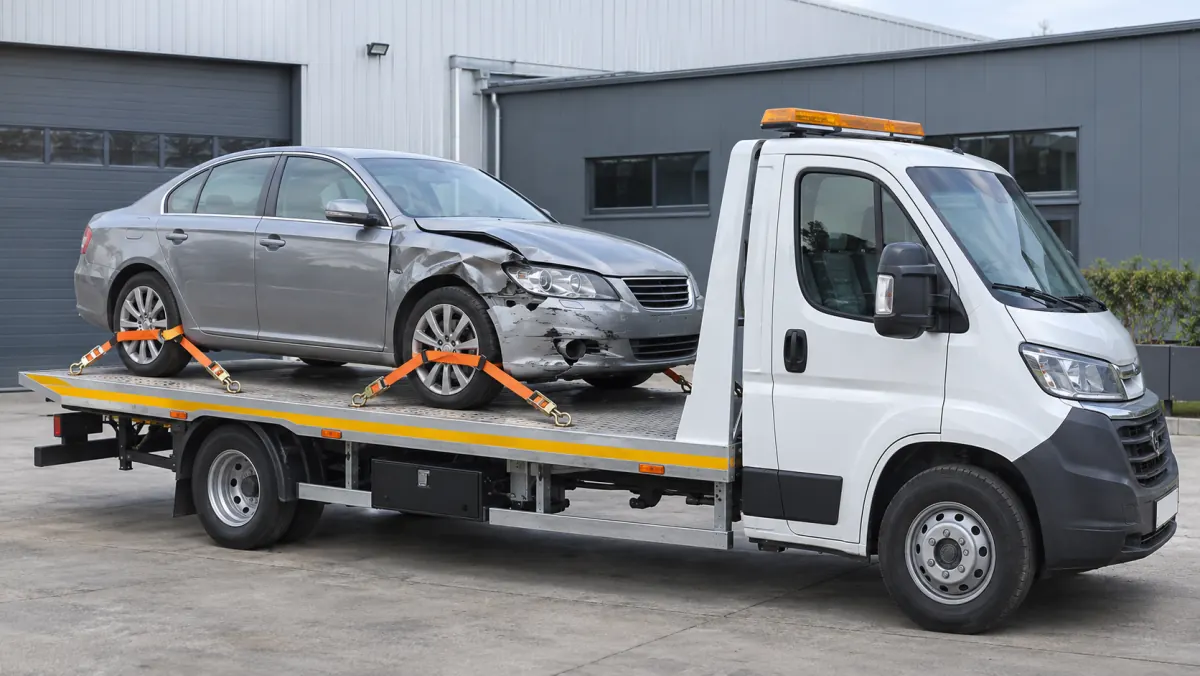
Arrange a tow or other appropriate vehicle transport for an inspection or collection. Ask the transport provider what it needs to know about the vehicle's condition and location. Tell buyers in advance that you are not offering a road test. Keep the keys and vehicle under your control until the agreed payment and transfer steps are ready.
Do not cut away airbags, clear warning lights or attempt a restraint-system repair to improve the listing photos. Have an authorized repair center assess that work. This article is a selling guide, not a diagnosis or a repair procedure.
Write a plain, specific condition description
Lead with the deployment, not with “runs great.” A proposed listing description might read: “Airbags deployed in a collision and have not been replaced. Vehicle is offered in its present damaged condition, subject to applicable transfer requirements. No road test; collection by suitable transport. Inspection welcome.” Adapt that wording to facts you can confirm and to the disclosures your state actually requires.
List what you know, then identify what remains unknown. If you know which airbags deployed, describe them. If a repair center has supplied a written estimate, share the estimate without presenting it as a guarantee of the final cost. If nobody has inspected the car, say that. Avoid calling it “only cosmetic damage” when you do not have evidence supporting that statement.
Photograph the visible damage and keep copies of your description and buyer communications. Let the buyer review available repair records and title documents. These are proposed recordkeeping steps, not a substitute for legally required forms. A buyer's acknowledgment is useful documentation, but do not assume it eliminates your obligations.
Put the actual condition in your offer request
Ask Cha-Ching Co about a free cash offer with the deployment disclosed. Confirm the buyer's terms before making a decision.
Compare repair and as-is options using written numbers
Ask an authorized repair center for a written assessment before budgeting for restoration. Request a clear explanation of what the estimate includes, what requires further inspection and which costs remain uncertain. Avoid treating an online airbag price as the full cost of making the vehicle ready for use.
For a simple comparison, write down the proposed repair cost, the expected proceeds after repair and any transport or selling expenses. Then compare that estimated net amount with written offers for the vehicle in its present condition. Label estimates as estimates. This exercise helps you compare choices; it does not predict what your car will sell for.
Consider your circumstances too. You may prefer to avoid managing repairs, or you may want a professional assessment before deciding. Neither choice needs to be made under pressure. Our broader guide to selling a car after an accident covers the larger sale decision; this article focuses on the airbag-specific safety and disclosure questions.
Ask each prospective buyer the same questions
Request an offer based on the disclosed deployment and available records. Ask whether the buyer is considering the car for repair, parts or dismantling, and whether that buyer can handle the transaction permitted by your title status. Confirm the buyer's identity and any license relevant to the proposed transaction through the appropriate state resource.
Ask who arranges transport, who pays for it, and whether the quoted amount can change after inspection. Get any conditions in writing before scheduling collection. Compare what you would actually receive, rather than the largest headline number. Do not assume every cash buyer accepts every damaged vehicle or offers free towing.
If an offer seems unclear, ask for an explanation or compare another offer. Be cautious about signing blank transfer forms or accepting a payment method you cannot verify. Use your bank's guidance for confirming payment; a message or screenshot from a buyer is not your own confirmation that payment has settled.

Resolve title and insurance questions before handing over the car
Have the title and any available insurance correspondence ready for review. Ask the insurer about unresolved ownership or claim issues before promising delivery. If there is a lien, confirm the release or payoff process with the lienholder. Do not promise a clear transferable title merely because you possess the vehicle.
Airbag deployment alone should not be used by a seller to guess the official title classification. Read the actual title and confirm its status with the motor-vehicle agency. If it has a salvage or rebuilt brand, ask about the requirements attached to that status. Our guide to selling a car with a salvage title addresses that separate paperwork issue.
Before collection, confirm the required transfer forms, notices and deadlines with the agency. Keep copies of completed documents and the agreed condition description. Ask how plates and registration should be handled in your jurisdiction. These details vary, so a generic online checklist should not be your final authority.
Questions sellers often ask
Does an as-is agreement settle everything?
Do not rely on those two words as permission to skip disclosure, inspection or title requirements. Ask the relevant state office or local legal adviser what an as-is sale means for your transaction. Describe the deployed airbags expressly even when the buyer has already seen the car.
Must I repair it before asking for offers?
You can ask prospective buyers about a damaged vehicle without promising an immediate sale. Whether the eventual transfer may proceed without replacement depends on applicable requirements and the transaction. Collecting information is different from representing the car as repaired or roadworthy.
What is the next practical step?
Gather your documents, disclose the deployment and confirm your state's transfer rules. Get an authorized repair assessment if you are considering repairs, then compare written offers with transport included or clearly priced separately. Leave time to resolve unanswered questions before handing over the vehicle.
Choose after you have the details
Request a free cash offer from Cha-Ching Co, disclose the airbags and compare the written terms with your other options. There is no obligation to accept.
Disclaimer: This article is general information, not legal, insurance, financial or vehicle-repair advice. Requirements vary by jurisdiction, vehicle status and transaction. Confirm current rules with your motor-vehicle agency and qualified local professionals. Do not drive a crash-damaged vehicle based on this article. Offers and purchase eligibility depend on the buyer's assessment and terms.