Can you sell a car without a catalytic converter? For a California private-party transfer that requires a Smog Check, a missing required converter prevents the car from passing that inspection. California DMV says the seller must give the buyer valid smog certification when required. The practical next step is to confirm the transfer's inspection requirement, arrange a compliant repair, and obtain the passing certification before completing that kind of sale.
This guide covers that specific situation, not every possible vehicle transaction. It does not establish rules for dealer purchases, dismantling, out-of-state transfers, or exempt vehicles. If your situation differs, ask DMV or the Bureau of Automotive Repair (BAR) about the requirements before agreeing to a handoff.
Considering your next step?
Ask Cha-Ching Co about a free cash offer. An offer does not replace DMV or Smog Check requirements.
Can you sell a car without a catalytic converter in a smog-required transfer?
The missing part is an inspection problem you need to resolve. BAR's Smog Check Manual, printed page 40, instructs inspectors to check that all required catalytic converters are present and appear properly installed. Inspectors also check the number and location of converters and look for tampering or defects.
That means a car does not satisfy the inspection simply because it starts or seems to run normally. The converter must actually be there when it is required. BAR's converter replacement guidance also says a replacement must be installed before the vehicle's next Smog Check.
For the transfer covered here, pair that inspection rule with the seller's certification responsibility. DMV's Smog Inspections page says sellers need to give the new owner valid smog certification when selling a vehicle, subject to applicable exceptions. A lower asking price does not supply that certificate. Plan the transaction around verified requirements rather than a buyer's willingness to accept the missing part.
Check whether a transfer Smog Check applies
Start with the vehicle's model year, fuel type, and the kind of transfer you are planning. Use BAR's current Smog Check guidance and confirm any uncertain case with DMV. Do not assume the rule on a registration renewal notice answers the separate change-of-ownership question.
BAR distinguishes two newer-vehicle exceptions for gasoline, hybrid, and alternative-fuel vehicles: eight model years and newer for registration renewal, and four model years and newer for change of ownership. The eight-year renewal exception should not be used as an eight-year transfer exemption. BAR says a smog transfer fee applies instead of the inspection for the newer vehicles covered by the transfer exception.
BAR also lists gasoline, hybrid, and alternative-fuel vehicles from model year 1975 and older, diesel vehicles from 1997 and older, diesel vehicles with a gross vehicle weight rating over 14,000 pounds, electric vehicles, and motorcycles among vehicles that do not need a Smog Check. These categories are a reason to check the actual vehicle, not permission to guess at an exemption.
If the vehicle falls outside the smog-required private-party situation, this article's repair-before-certification sequence may not answer your transaction. Ask DMV what applies. An inspection exemption alone is not a complete answer about every other requirement for selling a vehicle with missing equipment.
Can you sell a car without a catalytic converter by disclosing it?
For a transfer that needs certification, disclosure does not create a passing inspection. Tell a prospective buyer what you know, but keep the separate inspection requirement in view. A note saying the converter is missing is not a vehicle inspection report showing a pass.
A useful approach is to separate the conversation into two questions: what condition is the car in, and what must be completed before the planned transfer? Be clear when a repair estimate is still pending. Avoid describing a vehicle as ready for a smog-required transfer when you have not obtained the necessary certification.
Likewise, do not rely on an informal promise that the buyer will sort everything out later. DMV's guidance places the valid smog certification with the seller for the transaction covered here. If a buyer proposes a different arrangement, ask DMV to explain the applicable requirements before you proceed. This guide does not assess whether a particular contract changes anyone's legal obligations.
Arrange the right replacement, not just a replacement
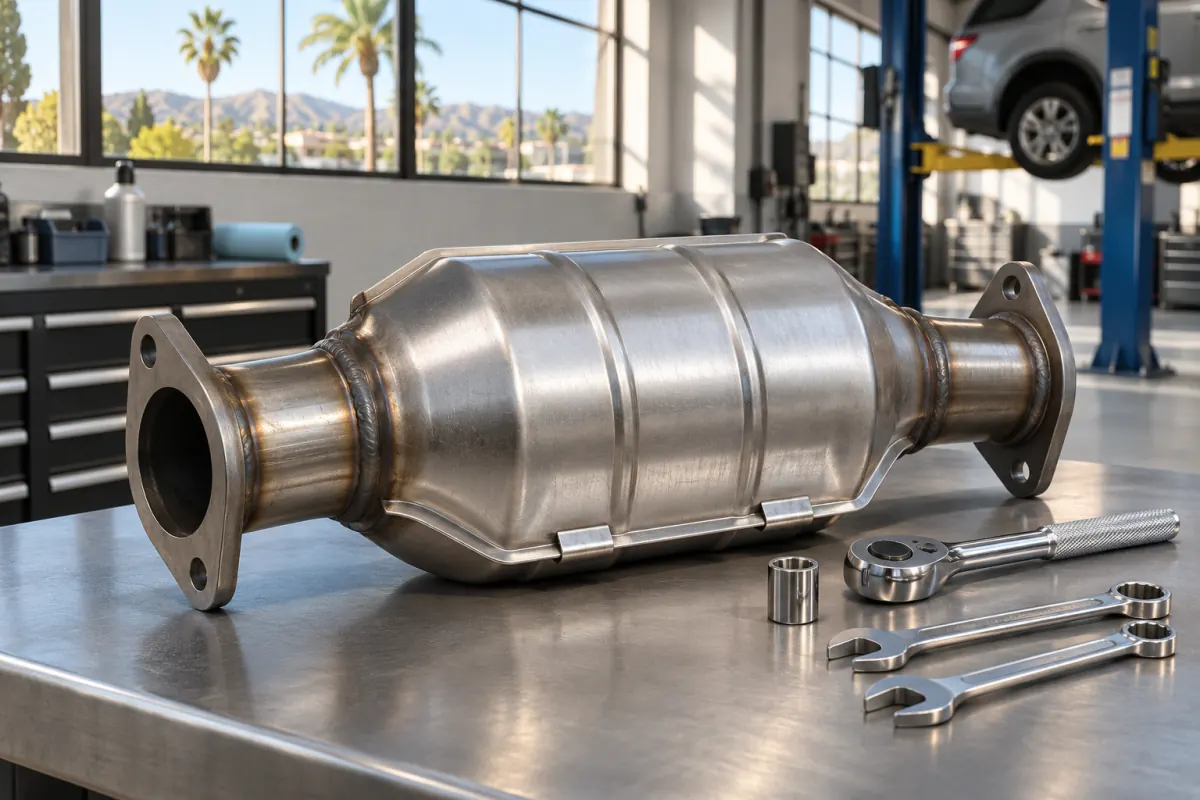
BAR says to take the vehicle to a licensed Smog Check station for replacement. The converter must be an original equipment manufacturer (OEM) part or a California Air Resources Board-approved aftermarket converter with an Executive Order (EO) number that meets the exact requirements for the vehicle.
Ask the station to verify the replacement application before you authorize the job. A part advertised as fitting a similar car is not enough to establish that it meets your vehicle's requirements. BAR says the station can help make sure the correct converter is properly installed. Its official page links to an Auto Shop Locator for finding a station.
When requesting an estimate, provide the vehicle information the shop asks for and explain whether the converter was stolen or is missing for another known reason. Ask what the estimate includes, whether the shop can perform the follow-up inspection, and whether any other issues need diagnosis. These are suggested questions to help you compare the proposed work, not a promise about the vehicle's condition or repair cost.
If a replacement is hard to find or on back order, BAR directs owners to the vehicle manufacturer or the Smog Check Referee for assistance. Do not assume a delayed part means the certification requirement has disappeared. Get case-specific guidance before setting a firm sale date.
Compare before you commit
You can ask Cha-Ching Co about a free cash offer while you confirm the repair and transfer requirements. No pressure to decide today.
Get the inspection report before the handoff
Repair and certification are separate steps. A replacement invoice records work performed; it is not the same document as a passing Smog Check report. BAR says the station supplies a vehicle inspection report after the inspection, identifying whether the vehicle passed or failed.
When the vehicle passes, the station issues a smog certificate and sends it electronically to DMV. BAR says the certificate is valid for 90 days. Its change-of-ownership guidance says a vehicle bought from a private seller must have passed a Smog Check within the last 90 days and tells buyers to request the inspection report.
Keep your copy and provide the buyer a copy. If the sale is delayed, check the inspection date again rather than assuming the certification is still valid. BAR also provides an online inspection-history tool, linked from its Smog Check page, that can help you check past results.
If the vehicle fails, review the report with the station, complete the necessary repairs, and have it inspected again. Replacing the converter alone is not a guarantee that every other inspection item will pass. BAR's published inspection description includes visual and functional checks and, depending on the vehicle, an on-board diagnostic check or tailpipe emissions test.
What if the repair is difficult to afford?
A missing converter can leave you with an expense you did not plan for. Get a written estimate before making a decision based on a guessed repair bill. BAR says inspection prices vary by station and are not regulated by BAR, so ask for the inspection cost separately if it is not clear in the estimate.
If the converter was stolen, BAR recommends checking with your insurance provider to find out whether your policy covers stolen auto parts. Do not assume coverage or a particular payout. BAR specifically says its Consumer Assistance Program does not cover replacement of a stolen catalytic converter.
For other failed-inspection circumstances, BAR describes repair assistance and vehicle retirement options with eligibility requirements. Confirm eligibility directly before counting on either option. This article does not establish that your car qualifies or that an alternative transaction is permitted without further steps.
If other mechanical problems are part of your decision, our guide to selling a car with mechanical issues can help organize your questions. For a related warning-light issue, see our check-engine-light selling guide. Those general discussions do not replace the official California guidance cited here.
A short plan for a California private-party seller
- Confirm with DMV or BAR whether your specific change of ownership needs a Smog Check.
- If a required converter is missing, ask a licensed station about the correct replacement and an estimate.
- Complete the appropriate repair and obtain a passing inspection, rather than treating the repair invoice as certification.
- Check the certification date and give the buyer the vehicle inspection report for the smog-required transfer.
The answer is narrow but useful: you cannot obtain the needed passing inspection while a required converter is missing. Establish the actual transfer requirement first, then make the repair and certification plan. For any proposed arrangement outside this scope, get a specific answer from DMV or BAR instead of extending this guidance to a different kind of sale.
Take the next step at your pace
Ask Cha-Ching Co about a free cash offer. Confirm the applicable vehicle requirements before agreeing to any transfer.
Disclaimer: This article is general information, not legal advice or a vehicle-specific inspection determination. It covers California private-party transfers that require a Smog Check. Confirm current requirements for your vehicle and transaction with California DMV and BAR.