Can you sell a house with lead paint? Yes. Lead paint does not automatically block a home sale, and federal law generally does not require a typical private seller to remove it before closing. If the home was built before 1978, however, you must follow federal disclosure rules and any stricter state or local requirements. The practical choice is whether to test, repair or stabilize problem areas, or sell the property as-is with honest disclosures.
Want to Sell Without Taking On a Major Renovation?
Cha-Ching Co can help you request a free cash offer for your house in its current condition.
Can You Sell a House With Lead Paint Legally?
In most cases, yes. The presence of lead-based paint is not a federal ban on selling a home. The main federal requirement is disclosure for most residential properties built before 1978. Before a buyer becomes bound by the sales contract, the seller must disclose known lead-based paint and known lead hazards, provide available reports and records, give the buyer an EPA-approved lead information pamphlet, and include the required warning language in the contract.
The buyer must also receive a 10-day opportunity to conduct a lead inspection or risk assessment, unless both parties agree in writing to a different period. The buyer may waive that opportunity. The EPA's Lead-Based Paint Disclosure Rule explains the federal requirements and provides sample disclosure forms.
Federal rules usually require you to disclose what you know. They do not create a general duty for an ordinary private seller to test every pre-1978 home or remove all lead paint before a sale. State and local laws may add duties, so your real estate agent or a local real estate attorney should review the rules where the property is located.
What Sellers Must Disclose About Lead Paint
Disclosure should happen before the buyer signs a binding contract. For a covered pre-1978 home, expect to complete these steps:
- Tell the buyer about any known lead-based paint or lead-based paint hazards.
- Share lead inspection, risk assessment, or remediation records that are available to you.
- Give the buyer the EPA pamphlet Protect Your Family From Lead in Your Home.
- Use the required Lead Warning Statement and disclosure language in the sales contract or an attached form.
- Allow the buyer 10 days to arrange an inspection or risk assessment, unless a different period is agreed to in writing.
- Make sure the buyer, seller, and involved agents sign the disclosure form.
Do not guess or state that the property is lead-free without reliable testing. If you have no knowledge of lead paint, the federal form allows you to say that you have no knowledge. That is different from certifying that no lead is present.
Keep the signed disclosure and related records with your transaction documents. Real estate professionals often retain these records too. Clear paperwork protects the buyer's ability to make an informed decision and reduces confusion after closing.
Do You Need a Lead Paint Test Before Selling?
Federal law generally does not force a typical seller to order a lead inspection before listing. Testing can still be useful when you need a clearer picture of the property's condition or want to reduce uncertainty during negotiations.
A lead-based paint inspection identifies whether lead-based paint is present and where it is located. A risk assessment looks for current lead hazards, such as deteriorated paint or contaminated dust, and suggests ways to address them. These are different services. A certified lead professional can explain which one fits your situation.
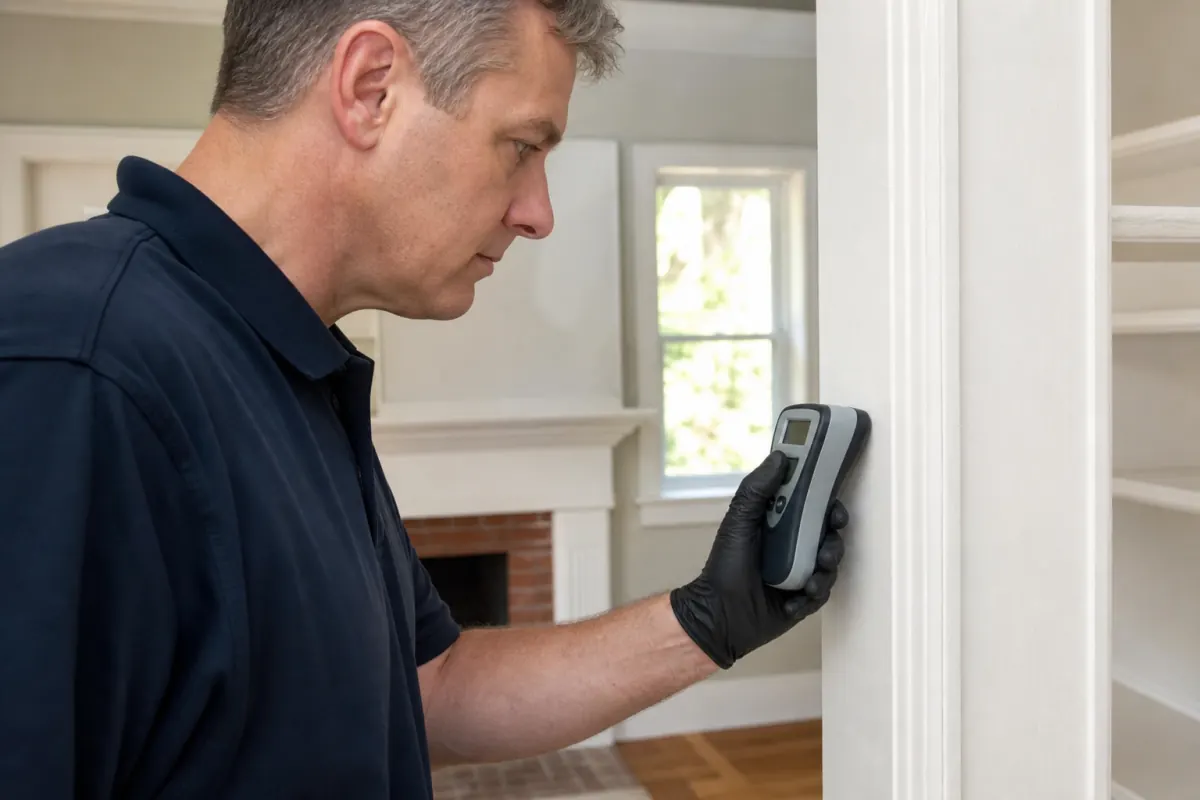
Testing has a tradeoff. A clean or limited result may reassure buyers and make pricing easier. A positive result becomes known information that must be disclosed. Still, hiding from a possible issue is rarely a sound plan. If paint is visibly peeling, chipping, or creating dust, an assessment can help you understand the scope before a buyer's inspector raises it.
Can You Sell a House With Lead Paint As-Is?
You can often sell as-is, provided you make all required disclosures. "As-is" means the seller does not promise to make repairs. It does not erase disclosure duties, prevent the buyer from inspecting, or protect a seller who conceals a known hazard.
An as-is sale may fit when the property needs other updates, you do not have the time or funds for specialized work, or you prefer a simpler transaction. Buyers may include cash investors, renovation-minded owner-occupants, or other purchasers comfortable evaluating an older home.

Price expectations matter. A buyer may account for inspection costs, paint stabilization, cleanup, future maintenance, and the possibility of broader repairs. If the property has several condition issues, review the practical choices in our guide to selling a house as-is.
Compare an As-Is Cash Offer
See what a direct sale could look like before deciding whether to repair or list.
Should You Repair Lead Paint Before the Sale?
Repairing every painted surface is not always necessary. The right response depends on the paint's condition, the property's age, your budget, and the likely buyer.
Leave intact paint alone
Lead paint that is intact and not on a high-friction or impact surface may sometimes be managed safely rather than removed. Painting over it is not automatically the same as abatement. A professional can tell you whether encapsulation, enclosure, stabilization, or another method is appropriate.
Address peeling or damaged areas
Peeling paint, damaged window components, and dust around doors or trim deserve attention. Do not dry-sand or scrape suspected lead paint without the right controls. Those methods can spread contaminated dust. Contractors who disturb paint in covered pre-1978 homes may need EPA Lead-Safe certification and must follow Renovation, Repair and Painting requirements.
Consider the sale path before spending
A retail buyer using financing may be more cautious about deteriorated paint, especially when an appraiser or inspector flags it. Some loan programs can require repairs as a condition of financing. A cash buyer may accept the condition and account for it in the offer. Get estimates before approving work, and compare the likely net proceeds instead of focusing only on the highest projected sale price.
How Lead Paint Can Affect Buyers, Financing, and Price
Lead paint affects transactions differently. One buyer may accept intact paint in an older home after an inspection. Another may walk away because a young child will live there. The condition of the paint usually matters more than the age of the house alone.
Financing can add another layer. Conventional loan requirements vary by lender and property condition. Government-backed appraisals may identify defective paint surfaces and require correction before closing. Ask the buyer's lender what is required rather than assuming every loan follows the same process.
For pricing, compare at least two scenarios: selling after targeted professional work and selling in the current condition. Include contractor costs, holding expenses, agent fees, concessions, and the time needed to complete repairs. If the home has several deferred-maintenance items, our guide to selling a fixer-upper without wasting money on the wrong repairs can help you sort them.
How Can You Sell a House With Lead Paint More Smoothly?
- Confirm the construction year. The federal disclosure rule generally applies to most housing built before 1978, with specific exemptions.
- Collect your records. Find old inspection reports, renovation invoices, warranties, and any lead-related correspondence.
- Look at the paint condition. Note peeling, chipping, friction surfaces, and recent renovation areas without disturbing them.
- Choose whether to test. Talk with a certified inspector or risk assessor if you need a reliable answer.
- Compare repair and as-is numbers. Get written estimates and compare net proceeds, time, and transaction certainty.
- Complete disclosures early. Give the buyer the required information before the contract becomes binding.
- Use qualified help. Hire lead-safe professionals for covered work and have a local professional review state-specific rules.
A direct sale is not automatically the best choice, but it can be useful to compare. A traditional listing may produce a higher price if the property is in good condition and you can wait. An as-is cash offer may reduce repair work and uncertainty. The honest comparison is what you receive after costs, concessions, and time.
Questions Sellers Often Ask
Can a buyer cancel because of lead paint?
That depends on the contract and inspection contingency. A buyer may have the right to cancel, request repairs, or renegotiate after an inspection. The federal 10-day opportunity itself gives the buyer time to assess the risk, but contract terms control what happens next.
Does an as-is clause replace the lead disclosure form?
No. An as-is clause does not replace federal or state disclosure requirements. Covered sellers still need to disclose known information and follow the required process.
What if the seller truly does not know whether lead paint exists?
The seller can disclose that there is no known lead-based paint or hazard and that no records are available, if that is truthful. The buyer must still receive the pamphlet, warning language, and inspection opportunity when the federal rule applies.
Do you have to remove lead paint before closing?
Not as a general federal rule for an ordinary private sale. A buyer, lender, insurer, local law, or negotiated contract may require repairs in a particular transaction.
See Your As-Is Option
Request a free cash offer and compare it with the cost and timing of a traditional sale.
Disclaimer: This article provides general educational information and is not legal, health, environmental, or real estate advice. Lead rules and disclosure duties vary by location and transaction. Consult a licensed real estate professional, qualified attorney, certified lead professional, and relevant government agencies for guidance about your property.