Is silver plated silverware worth anything? The honest answer is yes, but usually not because of the silver itself. Most silver-plated forks, spoons, and knives contain only a thin layer of silver over a base metal. A matched set can still have resale value when the maker, pattern, age, condition, and completeness appeal to collectors or buyers who want usable vintage tableware.
Not Sure What Your Silverware Is Worth?
Cha-Ching Co can help you understand your selling options and request a free cash offer.
Is Silver Plated Silverware Worth Anything Today?
Silver-plated silverware can be worth something as a complete tableware set, a collectible pattern, or replacement pieces. It generally has little melt value. Unlike sterling silver, which is typically 92.5% silver, plated flatware has a base of nickel silver, brass, copper, or another alloy covered by a thin layer of silver.
That distinction changes how buyers price it. A precious-metal buyer usually pays sterling pieces according to weight and silver purity. A buyer of silver plate cares more about whether someone wants that exact set or pattern. In other words, the object may have market value even when the metal content is modest.
There is no reliable flat price per pound for plated silverware. Mixed, worn, incomplete pieces may bring very little. A clean service for eight or twelve in a sought-after pattern can do better, particularly if it includes serving utensils and its original chest. Individual forks, spoons, or specialty servers may also sell as replacement pieces to people completing a set.
How to Tell Whether Silverware Is Plated or Sterling
Start with the marks on the back of a handle. Use bright light and a phone camera or magnifying glass. Check several pieces because knives, serving utensils, and replacement pieces may carry different marks.
- Sterling or 925: These marks usually indicate sterling silver. The number 925 means 925 parts silver per 1,000.
- EPNS: This means electroplated nickel silver. Despite its name, nickel silver is a copper, nickel, and zinc alloy, not solid silver.
- EP, silver plate, A1, AA, or triple plate: These generally point to plated ware. Terms such as A1 or triple plate described a plating grade or process, not sterling purity.
- Manufacturer and pattern marks: A company name, symbol, or pattern number can help identify the set. The absence of 925 or sterling does not prove an item is plated, especially with older or imported pieces, so research the full mark.
A magnet can provide a clue, but it is not a final test. Strong attraction often suggests steel underneath, while no attraction could mean sterling or a nonmagnetic base metal such as brass. Acid testing can damage the surface if done carelessly. If a piece may be valuable, let a jeweler, reputable metals buyer, or appraiser test it.
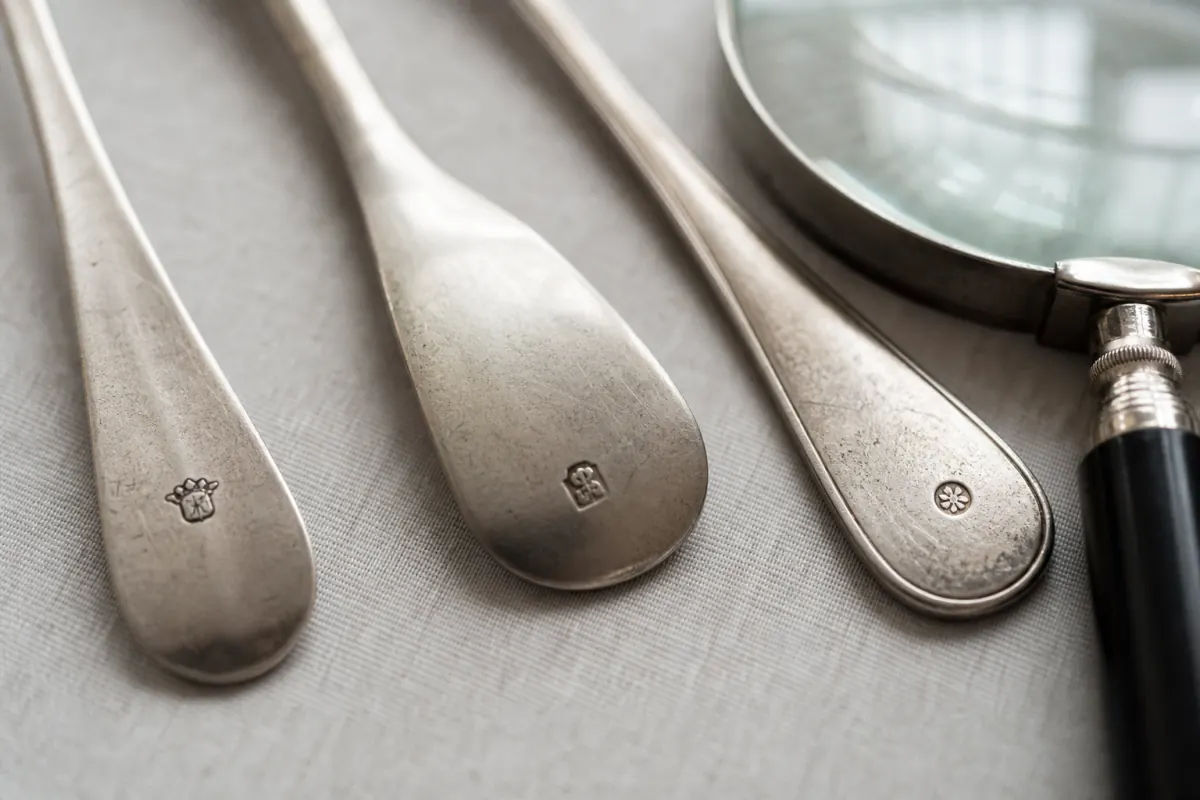
Do not assume that tarnish proves an item is solid silver. Both sterling and silver plate can tarnish. Copper-colored or yellow metal showing through on raised areas is a stronger sign that the silver layer has worn away.
What Makes Silver-Plated Silverware Worth More?
The best price usually comes from identifying what you have before accepting an offer. Buyers tend to look at a handful of practical details.
Maker and pattern
Recognizable makers and discontinued patterns can attract collectors. Search the exact wording and symbols stamped on the piece, then compare the shape and decoration with confirmed examples. Pattern names matter because replacement buyers often search by name, not by a broad phrase such as antique silverware.
Completeness
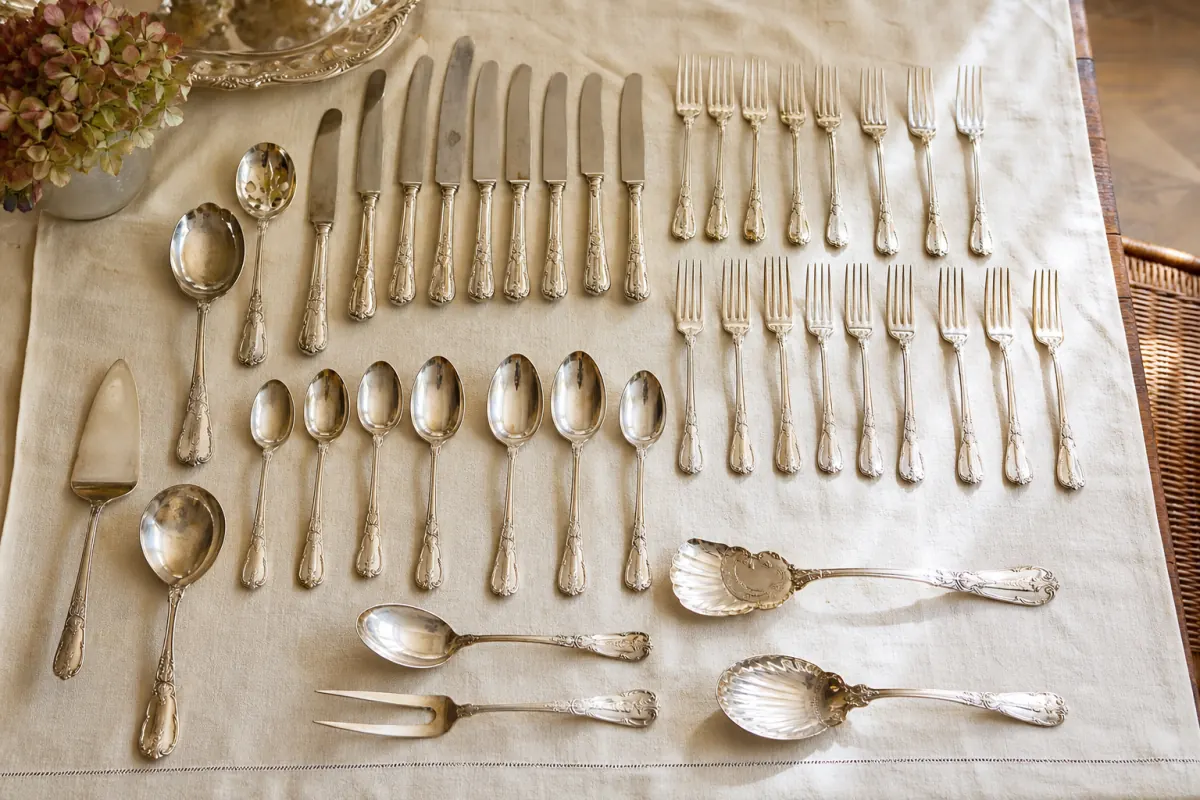
A coordinated set is easier to sell than a box of unrelated pieces. Sort the flatware by pattern and count dinner forks, salad forks, teaspoons, soup spoons, knives, and serving pieces separately. Photograph the full set laid out so a buyer can see exactly what is included.
Condition
Light tarnish is normal and can often be removed. Deep scratches, pitting, corrosion, bent tines, loose knife handles, and large areas of plate loss reduce value. Monograms are not always a deal breaker, but they narrow the pool of buyers. A fitted storage chest helps presentation, although a damaged or generic chest may not add much.
Age and design
Age alone does not guarantee value. A decorative Victorian serving piece may interest collectors, while a common twentieth-century dinner set may sell mainly as usable tableware. Unusual serving utensils, ornate designs, and patterns that are hard to replace can command more than ordinary pieces from the same set.
How to Estimate the Value Before You Sell
- Separate sterling from plate. Look for sterling, 925, EPNS, EP, silver plate, and maker marks. Keep uncertain pieces aside.
- Group matching pieces. Do not mix several patterns into one listing unless you clearly label them as a mixed lot.
- Identify the pattern. Search the maker, every stamped word, and a description of the handle design. Replacement-flatware catalogs can help with visual matching.
- Check sold prices. Active asking prices tell you what sellers hope to receive. Completed or sold listings show what buyers have actually paid. Compare the same pattern, piece count, and condition.
- Account for selling costs. Marketplace fees, payment fees, packing materials, shipping, and the time needed to list individual pieces reduce your net amount.
A replacement retailer's asking price is not the amount you should expect from a dealer. Retailers photograph, catalog, store, and guarantee individual pieces, so their price includes overhead and profit. A direct sale to an end buyer can pay more, but it also takes more work and may take longer.
Compare an Offer Without Listing Every Piece
Tell Cha-Ching Co what is in your set and request a no-obligation offer to compare with your other selling options.
Where Can You Sell Silver-Plated Flatware?
The right sales channel depends on whether you have a collectible set, useful tableware, or miscellaneous worn pieces.
- Online marketplaces: These offer access to collectors and replacement buyers. They work best when you know the maker and pattern and can take clear photographs.
- Replacement-piece buyers: Businesses that specialize in discontinued tableware may buy wanted patterns or individual pieces. Their inventory needs change, so not every pattern receives an offer.
- Antique dealers and auction houses: These may suit older, unusual, or high-quality sets. Ask about commissions, minimum values, and whether the sale is outright or consignment.
- Local resale: Estate sales, consignment stores, and local marketplaces can avoid shipping. Expect price-sensitive buyers and be careful when arranging in-person meetings.
- Cash buyers: A direct offer can be convenient when speed and simplicity matter more than maximizing every dollar. Ask how the buyer identified and priced the pieces.
Scrap yards and refiners are rarely the best first stop for ordinary silver plate because recovering the thin silver coating is often uneconomical. Confirm that pieces are not sterling before treating them as low-value scrap. If you also have solid silver, read this guide on how to sell silver coins, flatware, bars, and jewelry.
Should You Polish Silver Plate Before Selling?
Gentle cleaning can make markings easier to read and improve photographs. Start with mild dish soap, warm water, and a soft cloth, then dry the pieces fully. If you polish, use a product labeled safe for silver plate and follow its directions.
Aggressive polishing can wear through the plated layer, especially on high points and edges. Avoid steel wool, abrasive powders, harsh dips, and improvised chemical treatments on anything old or potentially collectible. Some buyers prefer original patina, and a dealer can assess condition without a mirror finish.
Common Mistakes That Lower Your Payout
- Calling a set sterling without checking its marks
- Selling a desirable pattern as an unidentified mixed lot
- Comparing your incomplete set with the price of a complete service
- Using asking prices instead of completed-sale prices
- Polishing so aggressively that the base metal shows through
- Forgetting fees and shipping when comparing offers
Be wary of any buyer who will not explain whether an offer is based on metal content, collectible demand, or resale value. If the set appears rare or an offer feels surprisingly low, getting a second opinion is reasonable. For more selling context, see the comparison of a pawn shop versus a specialist precious-metal buyer.
So, Is Silver Plated Silverware Worth Anything?
Yes, silver-plated silverware can be worth money, but its value usually comes from the maker, pattern, completeness, condition, and usefulness rather than its recoverable silver. Common worn pieces may have limited demand. A matched or collectible set can be worth the time it takes to identify and compare it properly.
Check the marks, separate possible sterling pieces, count every item, and compare genuine sold listings before deciding. Those few steps can keep a collectible pattern from being priced like scrap.
Turn an Unused Set Into Cash
If selling piece by piece is not for you, ask Cha-Ching Co about a free cash offer. You are never required to accept.
Disclaimer: This article is for general informational purposes only and is not a professional appraisal, financial advice, or a guarantee of value. Silverware prices and buyer demand vary by item, condition, location, and market. Have potentially valuable or uncertain pieces evaluated by a qualified professional before selling.