If you need to sell car with body damage, you do not automatically have to repair every dent, scrape, or crushed panel first. The better choice depends on whether the damage is cosmetic or structural, what the car was worth before the damage, the cost of a proper repair, and how quickly you want to sell. A newer vehicle with one repairable panel may justify a body-shop visit. An older car with damage across several panels may leave you with more money through an honest as-is sale.
The goal is not to make the car look perfect at any cost. It is to choose the path with the best net result after repairs, towing, storage, listing time, inspections, and negotiation. Here is how to judge the damage, compare the numbers, prepare the car, and choose a buyer without hiding its condition.
Want an As-Is Offer Before Repairing Anything?
Cha-Ching Co can review the condition and provide a free cash offer so you have a real number to compare with repair estimates.
How to sell car with body damage based on severity
Start by separating visible body damage from damage that may affect safety or the vehicle's structure. A scraped bumper cover, shallow door dent, chipped paint, or small hail dents are usually cosmetic. They can reduce an offer, but they do not necessarily change how the car drives.
Structural damage is different. Modern cars commonly use unibody construction, so the body and underlying structure work together. A hard collision can affect rails, pillars, suspension mounting areas, or other load-bearing sections. Possible warning signs include uneven panel gaps, doors that no longer close normally, unusual tire wear, pulling while driving, or visible creases near structural seams. Those signs do not prove frame damage, but they justify an inspection by a qualified collision professional.
Do not promise a buyer that damage is "only cosmetic" unless a credible inspection or estimate supports that statement. If the vehicle may be unsafe to drive, arrange an inspection or towing instead of testing it on public roads. Automotive guidance from Kelley Blue Book and CARFAX also recommends professional assessment when structural damage is possible.
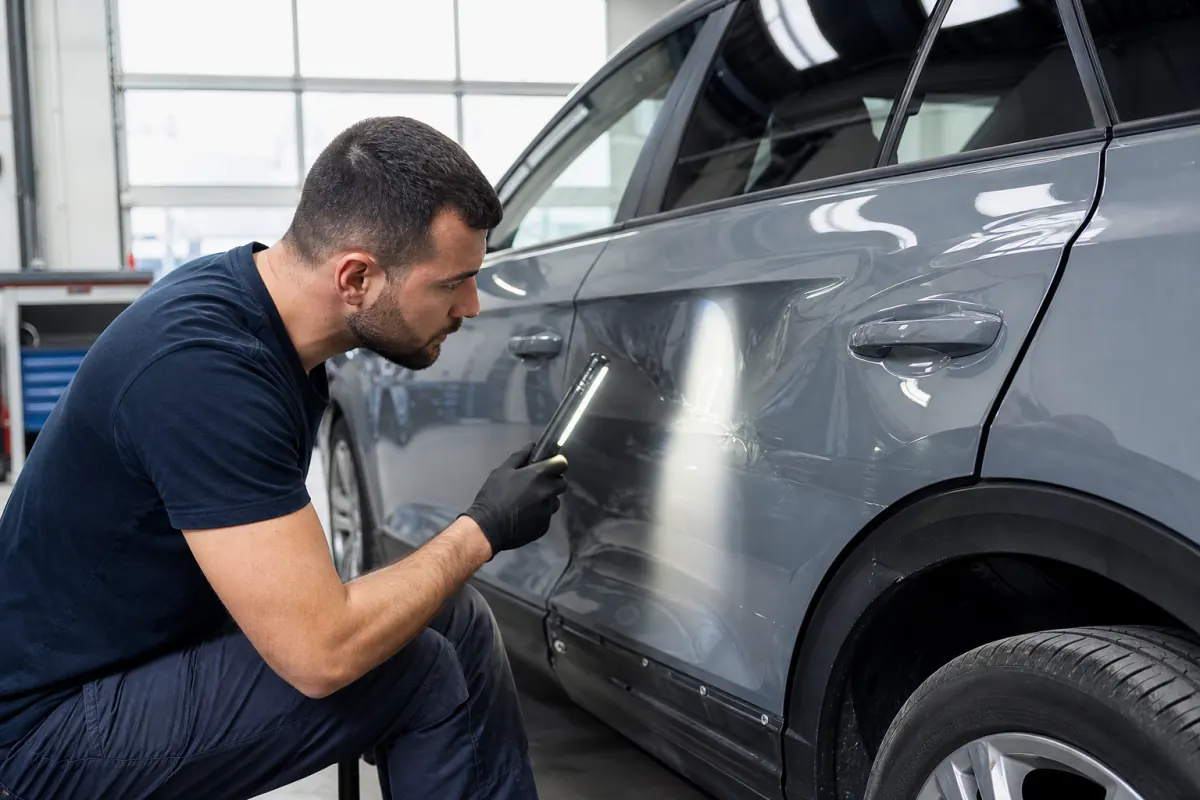
Should you repair body damage before selling?
Repairing first makes sense only when the likely increase in sale price is comfortably greater than the full repair cost. Sellers often compare a repair estimate with the car's undamaged retail value. That misses the real question: how much more will an actual buyer pay after the repair?
Get at least one written body-shop estimate, then collect two or three as-is offers. Estimate the car's value in both its current condition and repaired condition. Use conservative numbers because paint blending, damaged sensors, hidden clips, alignment work, and damage behind a panel can raise the final bill after work begins.
Imagine an older sedan worth about $6,000 in clean condition. If several panels require $3,500 in work, the repair may not create $3,500 of added selling value. The accident may still appear on a vehicle history report, and buyers may discount the car even after a proper repair. In that situation, selling as-is can produce the better net result.
A repair is more likely to help when the car is newer, has strong demand, holds a clean title, and needs one contained cosmetic fix. Paintless dent repair or replacement of a bolt-on mirror may improve presentation at a reasonable cost. Large collision repairs, structural work, airbag replacement, and multiple-panel paint work need much more caution. Kelley Blue Book notes that large repair bills immediately before a dealership sale often do not pay off.
Compare the two paths:
- Repair path: expected repaired sale price minus repair cost, transportation, and selling expenses.
- As-is path: best verified offer minus towing, storage, loan payoff, and title costs.
The higher number is not always the better choice if it requires weeks of work and carries a real chance of hidden costs. Put a reasonable value on your time and certainty too.
What body damage does to your car's value
Buyers subtract the expected repair cost, but they may also subtract a risk margin because estimates can miss damage. A dealer may account for auction fees, transport, reconditioning, and the chance the vehicle sits unsold. Accident history can also reduce value after repairs.
The size of the deduction depends on the car. A dented door on a popular late-model truck may still attract strong interest. The same repair bill on an older high-mileage sedan can represent a large share of its total value. Damage near lights, cameras, parking sensors, or radar areas may cost more than the outside appearance suggests.
Do not rely on one clean-condition online value and assume every buyer should match it. Compare actual offers from buyers who received the same photos and condition details. That gives you a useful market range instead of one hopeful number.
Compare the Numbers Before Choosing a Body Shop
A free Cha-Ching Co offer gives you an as-is baseline to compare with repair estimates and private-sale expectations.
Where to sell car with body damage
Each buyer path trades some potential price for speed, convenience, or certainty.
Private buyer
A private sale can bring the highest price when the car runs well and the damage is easy to understand. It works best for desirable vehicles, repairable cosmetic damage, or buyers who do their own body work. Expect questions, safe meeting arrangements, inspections, and negotiation. Show the damage clearly and put known issues in writing.
Dealership or trade-in
A dealer sale is convenient, especially when you are buying another vehicle. The offer may be lower because the dealer has to account for repair or wholesale disposal. Dealers that regularly sell your make or vehicle type may value it differently, so compare more than one appraisal.
Specialty, cash, or salvage buyer
Some licensed buyers specialize in repairable vehicles. Cash buyers may consider repair potential, parts demand, the engine and transmission, and the local market. Salvage yards usually focus more heavily on parts and scrap value. Verify the business, ask when payment occurs, and understand who completes the title transfer.
For a broader comparison beyond exterior damage, read our guide on how to sell a damaged car. You can also compare private, dealer, and direct-sale routes in our guide to the best way to sell a car.
Prepare an honest body-damage listing
Good documentation reduces surprises and gives buyers less reason to lower the price at pickup. Gather the VIN, title or lender payoff information, registration, service records, extra keys, repair invoices, insurance paperwork, and any written collision estimate. Requirements vary by state and transaction type, so check your motor vehicle agency's current title and bill-of-sale rules.
Photograph the entire vehicle in daylight before taking close-ups. Include all four corners, both sides, the roof, interior, odometer, tires, dashboard, and every damaged area. Then take close photos from several angles so dents and paint damage are not hidden by reflections.
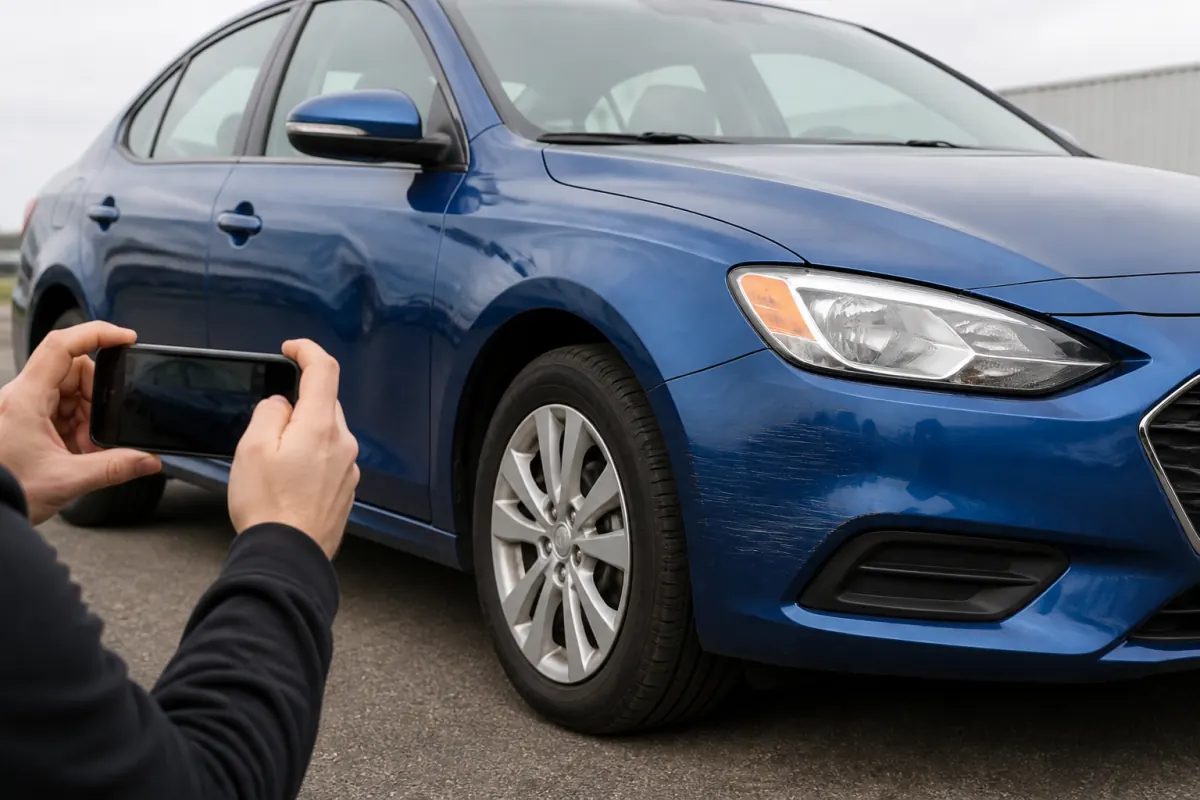
Describe what you know and what you do not know. A useful description might say: "Rear passenger door and quarter panel were damaged in a low-speed collision. Door opens and closes. No structural inspection has been completed. Written body-shop estimate available." That is more trustworthy than calling the damage minor without evidence.
If an insurer declared the vehicle a total loss, or the title is salvage, rebuilt, flood, or otherwise branded, say so clearly. Title treatment and disclosure duties differ by state. Never conceal or misrepresent a title brand. If the vehicle has a lien, contact the lender for the payoff and transfer process before accepting payment.
Steps to get a fair as-is offer
- Confirm ownership and title status. Find the title or obtain lender payoff details before shopping the car.
- Check whether the car is safe to move. Use a qualified shop when damage may involve steering, suspension, airbags, or structure.
- Collect a repair estimate. A written estimate helps you understand the likely cost and answer buyer questions.
- Document the condition. Take clear photos and list known mechanical, warning-light, and body issues.
- Request multiple offers using the same facts. Consistent information makes the offers easier to compare.
- Compare net proceeds. Include towing, storage, repair, listing, payoff, and transportation costs.
- Confirm payment and transfer. Complete required title documents, keep copies, and submit any seller notice required by your state.
Be cautious if a buyer gives a high quote based on vague information, then plans to inspect only after loading the car. Ask whether pickup is free, what can change the offer, who handles paperwork, and when you receive payment. A legitimate buyer should explain the process before arrival.
Sell as-is without underselling the car
Selling as-is does not mean accepting the first number. Clean out the car, wash it if doing so will not worsen exposed damage, gather records, and remove personal data from the infotainment system. Small presentation improvements can show that the vehicle was cared for even when the body needs work.
Avoid spending heavily just to make the car easier to photograph. Your strongest position comes from accurate information, a reasonable repair estimate, and competing offers. If the car is safe and the damage is mostly cosmetic, a patient private sale may bring more money. If it has extensive panel or structural damage, hidden issues, or a low pre-damage value, selling to a specialist or cash buyer may produce the better net result.
Ready to Sell Your Car in Its Current Condition?
Tell Cha-Ching Co about the body damage and get a free cash offer with no obligation to repair first.
Disclaimer: Cha-Ching Co provides cash offers for cars, property, gold, and jewelry. Offer amounts vary based on condition, market values, title status, and location. This article is for informational purposes only and does not constitute financial, legal, insurance, mechanical, or safety advice. Vehicle sale, disclosure, title, and inspection requirements vary by state. Consult qualified local professionals and your state motor vehicle agency when needed.