You can sell car with dead battery problems still unresolved. A dead battery does not prevent you from transferring ownership, and many private buyers, dealers, junkyards, and cash car buyers will consider a vehicle that will not start. The real question is whether the battery is the only problem. A quick diagnosis, honest disclosure, and a little price math can help you avoid spending money that you will not recover.
Want to sell without replacing the battery first?
Tell Cha-Ching Co about your car and request a free cash offer with no obligation.
Can you sell a car with a dead battery legally?
Yes, in general. A battery is a replaceable vehicle component, not an ownership document. You still need the paperwork your state requires, usually a properly assigned title and a bill of sale. Some states also require an odometer disclosure, emissions documentation, a release of liability, or notarized signatures.
A lien is a separate issue. If a lender is listed on the title, the loan usually must be paid or handled through an approved payoff process before the buyer can receive clear ownership. Check your state motor vehicle agency's current rules because forms and transfer deadlines vary.
Be direct about the car's condition. If you know it needs more than a battery, say so. Do not claim that a vehicle "just needs a battery" unless you have tested it. A seller can create an avoidable dispute by making a confident diagnosis that turns out to be wrong.
Before you sell a car with a dead battery, confirm the cause
A car that does not crank may have a discharged or failed battery, but it could also have corroded terminals, a bad starter, a charging-system fault, damaged wiring, or another electrical problem. That difference matters because buyers price uncertainty more harshly than a documented repair.
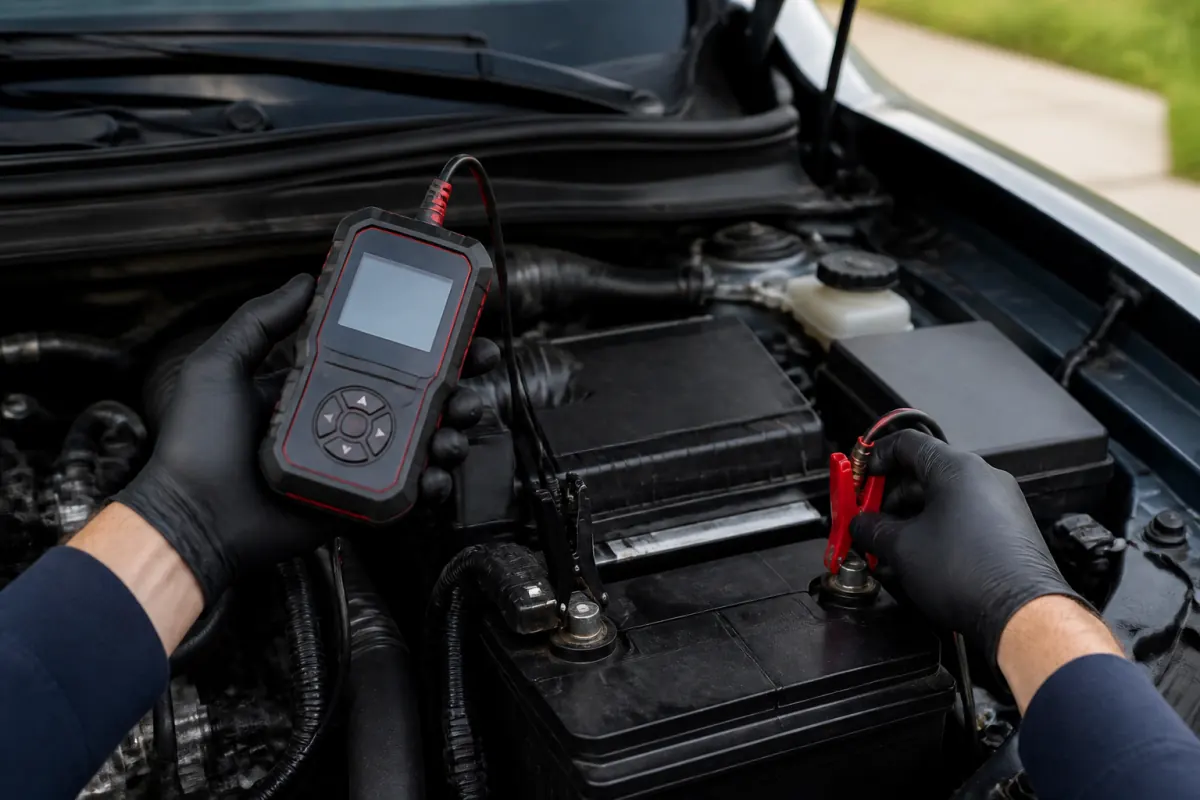
Look for simple battery clues
Common clues include dim interior lights, rapid clicking when you turn the key, or electronics that briefly work and then fade. Check the battery case for swelling, cracks, or leakage. Do not touch leaking material. If the case is damaged, arrange professional handling instead of trying to jump-start it.
Inspect the terminals only when the vehicle is off. Heavy corrosion or a loose connection may keep an otherwise usable battery from delivering power. If you are not comfortable working around a battery, a mobile mechanic or roadside service can test it safely.
Try a jump-start only when it is safe
Follow the owner's manual because connection points and procedures differ by vehicle. Hybrids, electric vehicles, and cars with batteries in unusual locations may have specific instructions. Do not jump a frozen, leaking, cracked, or swollen battery. Keep sparks and flames away from it.
If the car starts with a jump but dies again soon, the battery may not be holding a charge or the alternator may not be charging it. If it has strong lights but will not crank, the starter or another circuit may be involved. A battery and charging-system test gives a buyer better information than guesswork.
Write down what you actually tested
Keep any battery-test receipt, diagnostic printout, or mechanic's estimate. A simple record can support your asking price. It also lets you describe the problem accurately: "Battery tested bad on August 24" is more useful than "probably an easy fix."
Should you replace the battery before selling?
Replace it when the repair cost is clearly lower than the extra amount a running car will bring. A car that starts can be test-driven, moved without a tow, and evaluated more easily. That convenience can widen your buyer pool.
Still, a new battery does not always pay for itself. If the car has major engine, transmission, collision, or electrical issues, a battery may only reveal the next expensive fault. That is why diagnosis comes before buying parts.
Use a simple calculation:
Expected running sale price minus battery and installation cost minus your time should be greater than the best as-is offer.
For example, suppose a verified battery replacement would cost $220 and likely raise the offer by $500. Replacing it may make sense. If the buyer will add only $100, selling as-is is the cleaner choice. Get both numbers before deciding.
If the car has other known defects, see our guide to selling a car with mechanical issues for a broader repair-versus-sell framework.
Compare the cost of a battery with an as-is offer
A free Cha-Ching Co offer gives you a real number to compare before you pay for parts.
Where to sell a car with a dead battery
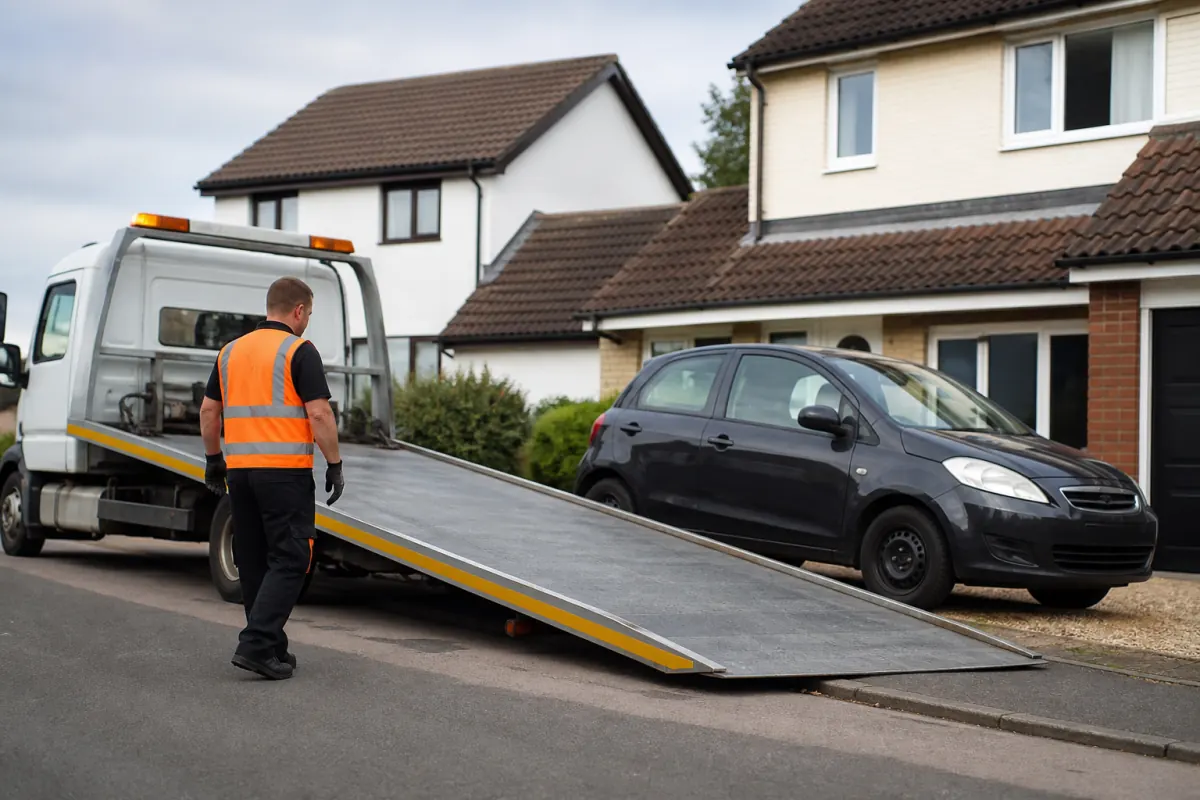
The best outlet depends on the car's age, condition, value, and your patience. Get more than one offer and make sure each buyer understands that the vehicle may need towing.
Private buyer
A hobbyist or mechanic may pay more for a desirable model, especially when you can show that the battery is the only known fault. Private sales take more work. You may need to answer messages, arrange inspections, verify payment, complete state forms, and handle removal.
Put the no-start condition near the top of the listing. State whether the vehicle has been tested, whether keys and title are available, and whether it is parked somewhere a tow truck can reach. Do not let an unknown buyer take the signed title before payment is confirmed.
Dealer or trade-in
A dealer may accept the car, but a vehicle that cannot be driven onto the lot is less convenient and may receive a lower appraisal. Call before arranging transport. Ask whether the quote assumes the vehicle starts and whether towing will be deducted.
Cash car buyer
A cash buyer can be a practical fit when speed and pickup matter more than squeezing out the highest private-party price. Give the year, make, model, mileage, title status, location, and all known damage. Ask whether the offer is firm after inspection and whether pickup is included.
Junkyard or recycler
For an end-of-life vehicle, a licensed recycler may value it for parts and scrap. Quotes can depend on weight, parts demand, completeness, title status, and towing distance. Removing parts before pickup can reduce an offer, so ask first. If towing is the main concern, read what sellers should expect from cash for cars with free towing.
How to price a car with a dead battery
Start with the value of the same car in running condition, then subtract more than the retail price of a battery. The buyer is taking on diagnosis, transport, repair time, and the risk that another problem is hiding behind the no-start symptom.
Useful pricing inputs include:
- Year, make, model, trim, mileage, and local demand
- Title status and whether a lien remains
- Body, interior, tire, engine, and transmission condition
- Battery age and any written test result
- Whether the car starts with a jump
- Towing access and pickup distance
Compare at least two as-is quotes with realistic private-sale proceeds. A high advertised price is not the same as the amount you will collect. Include listing fees, towing, parts, and the value of your time.
How to sell a car with a dead battery step by step
- Gather the documents. Locate the title, lien release if applicable, registration, identification, service records, and any state transfer forms.
- Test the battery safely. Use a reputable parts store, roadside provider, or mechanic when possible. Ask for the result in writing.
- List every known issue. Note the no-start condition, warning lights, accident damage, missing parts, and how long the car has been sitting.
- Request comparable offers. Give each buyer the same facts so you can compare the numbers fairly.
- Confirm towing terms. Ask who pays, when pickup will occur, and whether the final amount can change on arrival.
- Use a secure payment method. Follow your bank's advice for verifying funds. Be cautious with overpayments, gift cards, payment links, and buyers who send someone else to collect the car.
- Complete the transfer. Sign the title exactly as required, keep copies, remove plates when your state requires it, and file a release of liability or notice of sale promptly.
What to tell the buyer
A clean disclosure can be short: "The vehicle does not currently start. The battery tested dead on [date]. I have not confirmed whether any other electrical or mechanical problem is present. It is being sold as-is, subject to applicable law." Adjust that statement to match what you know and your state's requirements.
Do not erase diagnostic codes right before an inspection or hide a known defect. An as-is label does not excuse fraud or override disclosure laws. When the vehicle's value is high or the ownership situation is complicated, ask your state motor vehicle agency or a local attorney which forms you need.
Frequently asked questions about selling a car with a dead battery
Will a dead battery lower the offer?
Usually. The buyer must account for the battery, towing, diagnostic work, and the chance of a larger electrical problem. A written test showing that the rest of the charging system works may reduce that discount.
Can a buyer test-drive a car with a dead battery?
Only if the vehicle can be started safely and is otherwise legal and safe to drive. Do not allow a road test if the battery is damaged, the car stalls, or you suspect another safety problem.
Can I sell it without buying a new battery?
Yes. Disclose that it does not start, price it accordingly, and arrange a safe pickup. Many as-is buyers and recyclers can collect non-running vehicles.
Should I call it a junk car?
Not based on the battery alone. A healthy, valuable car with a failed battery is usually a repairable used car. A severely damaged or end-of-life vehicle may be better suited to a recycler.
Bottom line
You do not have to repair a dead battery before selling. Confirm what you can, disclose what you know, compare the likely net proceeds, and put the title and towing details in order. If a small, verified repair produces a meaningfully higher net price, fix it. If the diagnosis is uncertain or the car has other costly problems, an honest as-is sale may save time and money.
Ready to compare an as-is cash offer?
Share your vehicle's condition with Cha-Ching Co and request a free offer before you spend money on repairs.
Disclaimer: This article is for general informational purposes only and is not legal, tax, mechanical, or financial advice. Vehicle title, disclosure, emissions, plate, and transfer requirements vary by state and situation. Confirm current requirements with your state motor vehicle agency and consult a qualified professional when needed. Any offer depends on the vehicle's actual condition, ownership documents, location, and inspection.