Can you sell a house with knob and tube wiring? Yes. There is no blanket federal rule that prevents the sale of a home simply because this older wiring is present. The harder questions are whether the system is still active, what condition it is in, whether the buyer can obtain insurance and financing, and what your state requires you to disclose. Finding those answers before listing can prevent a late repair demand or a canceled closing.
Want to Compare an As-Is Sale?
Cha-Ching Co can help you explore a free cash offer without requiring you to rewire the house first.
Can You Sell a House With Knob and Tube Wiring Legally?
In many parts of the United States, knob and tube wiring is not automatically illegal just because it is old. It was commonly installed from the late 1800s into the first half of the 1900s. The system uses separate hot and neutral conductors supported by porcelain knobs and protected by porcelain tubes where wires pass through framing.
HUD's residential inspection guide says properly installed knob and tube wiring that is protected, capable, and undamaged can be acceptable, while also telling owners to check local codes and insurance requirements. That distinction matters. Existing wiring may be allowed to remain even when the current electrical code would not permit the same system in new construction.
Local rules still control. A city may require permits and inspections when circuits are replaced, a panel is upgraded, or walls are opened during renovation. A purchase contract can also require repairs even when the local building department does not. Ask a licensed electrician and your local building office what applies to your property rather than assuming age alone decides the issue.
Why Knob and Tube Wiring Can Complicate a Home Sale
The wiring itself does not always stop a sale. Insurance and financing are more common sticking points. An insurer may decline the property, charge more, require an electrical inspection, or agree to issue a policy only if the buyer replaces active knob and tube wiring within a set period. Standards vary by carrier, so one rejection does not prove that every insurer will say no.
This affects financed buyers because lenders generally require acceptable property insurance before closing. Fannie Mae, for example, requires lenders to verify evidence of property insurance that meets its rules. If the buyer cannot bind a policy, the loan may not fund even if the lender has no separate rule that bans knob and tube wiring.
Appraisers may note visible old wiring or related safety concerns, but an appraisal is not a full electrical inspection. An underwriter can ask for an electrician's report or repairs when the appraisal or home inspection identifies exposed conductors, damaged insulation, an undersized service, improper additions, or another condition that affects safety or marketability.
Get an Electrical Inspection Before You Choose a Selling Plan
A licensed electrician can tell you whether the old wiring is active and how much of the house it serves. Some homes still have knob and tube circuits throughout. Others have modern panels and updated receptacles but retain a few older lighting circuits in walls or ceilings. That difference can change the scope and price of the work.
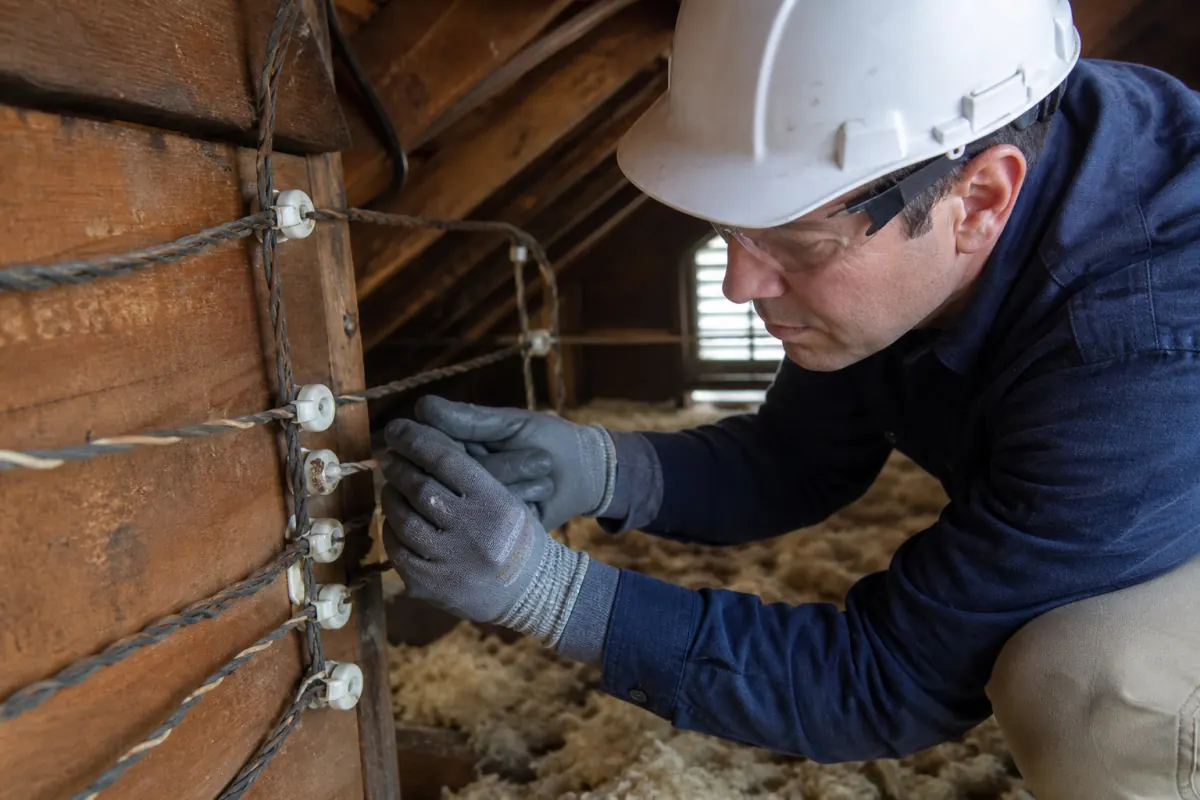
Ask the electrician to look for:
- brittle, cracked, missing, or heat-damaged insulation;
- improper splices and modern wiring added without suitable junction boxes;
- circuits protected by oversized fuses or breakers;
- wiring buried in insulation or disturbed by past renovations;
- ungrounded receptacles and appliances that need grounding;
- insufficient panel or service capacity for current electrical loads; and
- visible evidence of overheating, arcing, or amateur repairs.
Knob and tube wiring does not include an equipment grounding conductor. A three-slot receptacle is not proof that a circuit is grounded. Do not remove receptacle covers, enter an unsafe attic, or test old conductors yourself. Ask for a written report that separates urgent defects from recommended upgrades and identifies which circuits remain active.
Can You Sell a House With Knob and Tube Wiring As Is?
You can often sell as is, but "as is" does not erase disclosure duties or give a seller permission to hide a known defect. It generally means the seller does not agree in advance to make repairs. The buyer may still inspect the property, renegotiate under the contract, or walk away if a contingency allows it.
Your realistic options are to replace the wiring before listing, offer a negotiated credit where the buyer's lender permits it, accept a lower price that reflects the work, or seek an as-is buyer. A cash buyer may avoid lender requirements, but the buyer will still consider repair cost, risk, and future insurability when making an offer.
If you are weighing repairs against a quicker sale, read our guide to selling a house as is. For a property with several age-related issues, our guide to selling a fixer-upper house can help you decide which improvements are worth doing.
Skip the Rewiring Guesswork
Request a free cash offer, then compare it with the likely net proceeds from repairing and listing the property.
Disclosure Rules When Selling a House With Knob and Tube Wiring
Seller disclosure laws differ by state. They often focus on known material facts and known defects rather than requiring a seller to guarantee that every concealed wire is modern. State forms may ask directly about electrical system defects, wiring, service capacity, permits, or prior repairs.
Disclose what you actually know, including active knob and tube wiring, written inspection findings, failed insurance inspections, known damage, unpermitted electrical work, and repairs completed during your ownership. Provide invoices, permits, and final inspection records when available. Do not cover exposed wiring, give vague answers, or claim that the entire house was rewired unless records support that statement.
California added an electrical-system advisory for covered residential sales with offers accepted on or after January 1, 2026. Washington's statutory seller disclosure form asks about defects in the electrical system. These are examples, not a complete statement of the law in every state. Your agent or a local real estate attorney can explain the form and exemptions that apply to your transaction.
How Much Does Knob and Tube Replacement Cost?
There is no useful one-price answer. A 2025 Lawrence Berkeley National Laboratory presentation used a rough range of $10,000 to $20,000 for knob and tube replacement or rewiring, but that is not a national quote. A small home with open basement and attic access can be much easier than a larger house with plaster walls, finished ceilings, and many concealed circuits.
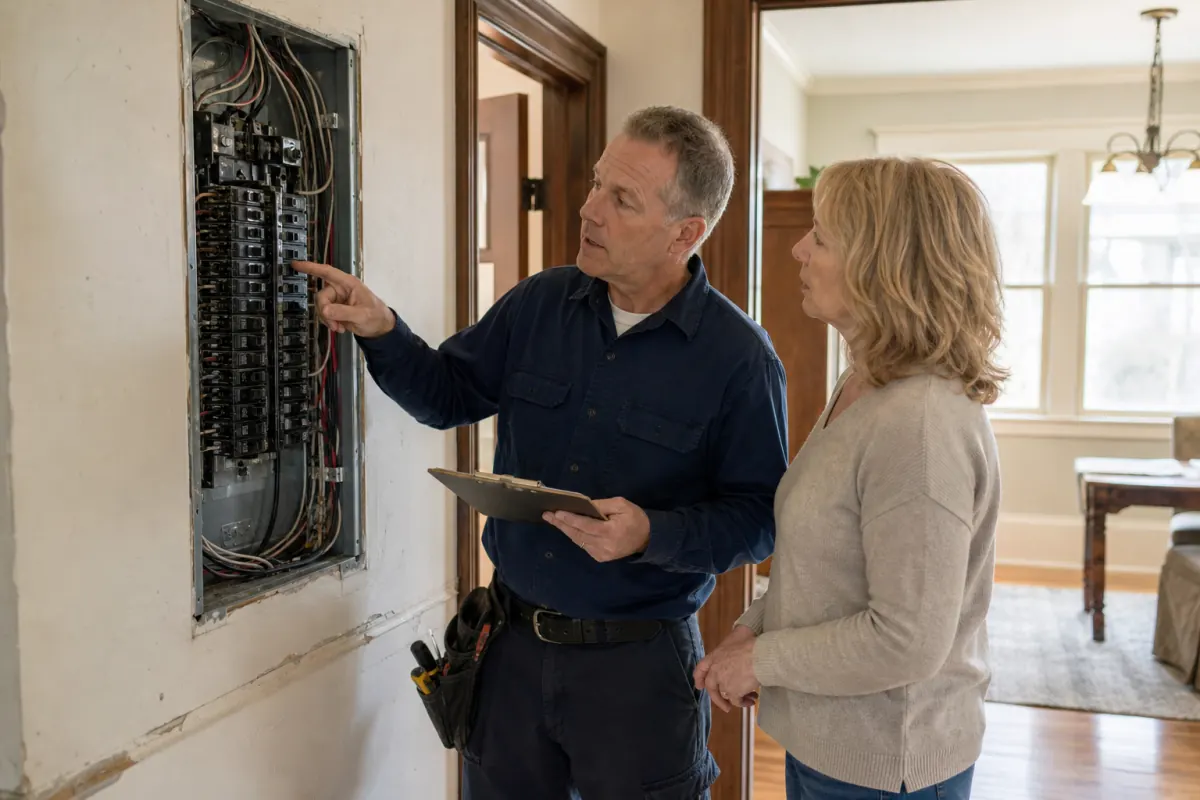
The estimate may include only electrical work. Ask whether it also covers:
- a new panel or service upgrade;
- permits and the final municipal inspection;
- opening and patching plaster or drywall;
- painting and finish carpentry;
- new switches, receptacles, fixtures, and smoke alarms;
- lead-safe or asbestos-related precautions; and
- temporary power or occupant relocation.
Get two or three itemized bids from licensed electricians who regularly work on older homes. Ask each contractor to price the same scope. A low bid that excludes wall repair and panel work may cost more in the end than a higher, complete proposal.
Should You Rewire Before Listing?
Rewiring before listing can widen the pool of buyers and remove an insurance problem, but the project does not always return its full cost in the sale price. It makes more sense when the wiring has confirmed defects, most of the home is affected, local buyers commonly use financing, or other planned renovations already require walls to be opened.
Selling without rewiring may make sense when you need a simpler timeline, the home already needs substantial renovation, or the likely repair cost is hard to recover. The tradeoff is a smaller buyer pool and a price that accounts for uncertainty.
A credit is not always a clean compromise. Some lenders will not allow a buyer to postpone a safety-related repair, and some insurers will not bind coverage based on a promise to rewire later. Before agreeing to a credit or escrow holdback, have the buyer confirm the plan with the lender and insurer in writing.
A Practical Plan for Selling the Property
- Collect your records. Find permits, repair invoices, inspection reports, panel information, and any proof of prior rewiring.
- Hire a licensed electrician. Confirm what remains active and request a written condition report with repair options.
- Request itemized bids. Separate essential electrical work from panel upgrades, wall repair, and cosmetic restoration.
- Check local requirements. Ask the building department which permits and inspections are required.
- Talk to insurers early. If you plan to market to financed buyers, learn what documentation or repairs carriers commonly request in your area.
- Choose the sale path. Compare the estimated net proceeds and timing of rewiring, listing as is, and accepting a cash offer.
- Disclose known facts. Complete the required forms accurately and attach professional reports where appropriate.
- Set expectations in the contract. State clearly whether repairs, credits, or an as-is condition are part of the deal.
Do this work before the buyer's inspection period if possible. It is easier to price the house around a known scope of work than to negotiate after an insurer or underwriter raises the issue days before closing.
Questions Homeowners Often Ask
Will every insurance company reject knob and tube wiring?
No. Underwriting varies by company and state. One insurer may decline, another may require an electrician's certification, and another may provide conditional coverage with a replacement deadline. The buyer should obtain a bindable quote early.
Can a conventional or FHA buyer purchase the house?
Possibly. Current lender, insurer, property-condition, and local requirements all matter. Historical FHA guidance allowed knob and tube wiring in acceptable condition under stated conditions, but buyers should rely on their current lender and underwriter rather than an old rule summary.
Does the seller have to replace all old wiring?
Not automatically. Replacement may be required by a contract, insurer, lender, local authority, or the actual condition of the system. An electrician should identify the active circuits and defects before anyone promises a full or partial replacement.
Will knob and tube wiring lower the sale price?
It can. Buyers may subtract the expected repair cost and an allowance for disruption or uncertainty. A clear electrician's report and itemized bids help buyers evaluate a real scope instead of assuming the worst.
Compare Your Options Before You Spend
Get a free Cha-Ching Co cash offer and decide whether selling as is fits your timeline and finances.
Sources and Further Reading
- HUD Residential Rehabilitation Inspection Guide
- National Association of Insurance Commissioners homeowner insurance guidance
- Fannie Mae property insurance evidence requirements
- Lawrence Berkeley National Laboratory electrical upgrade cost presentation
Disclaimer: This article provides general educational information and is not legal, electrical, insurance, lending, tax, or real estate advice. Wiring condition, disclosure rules, building codes, insurance underwriting, loan requirements, and repair costs vary by property and location. Consult a licensed electrician, local building department, insurance professional, lender, real estate agent, and attorney for advice about your sale.