Selling a house with termite damage is possible, but the best path depends on whether the infestation is active, how much wood has been affected, and how quickly you need to sell. Some owners treat and repair the property before listing. Others disclose the problem and sell as-is to a buyer prepared to handle the work. The right choice is the one that gives you a realistic net result after costs, delays, and closing risks are considered.
Termite damage can feel overwhelming because the visible evidence may not show the full scope of the problem. A small patch of damaged trim could be limited, while soft floor joists, sill plates, or framing may point to a larger repair. Before choosing a selling strategy, separate three questions: Are termites active now? What structural damage exists? What will your likely buyer and lender require?
Want to Compare an As-Is Cash Option?
Cha-Ching Co can help you explore a free cash offer without requiring you to finish a long list of repairs first.
Selling a House With Termite Damage Starts With the Right Inspection
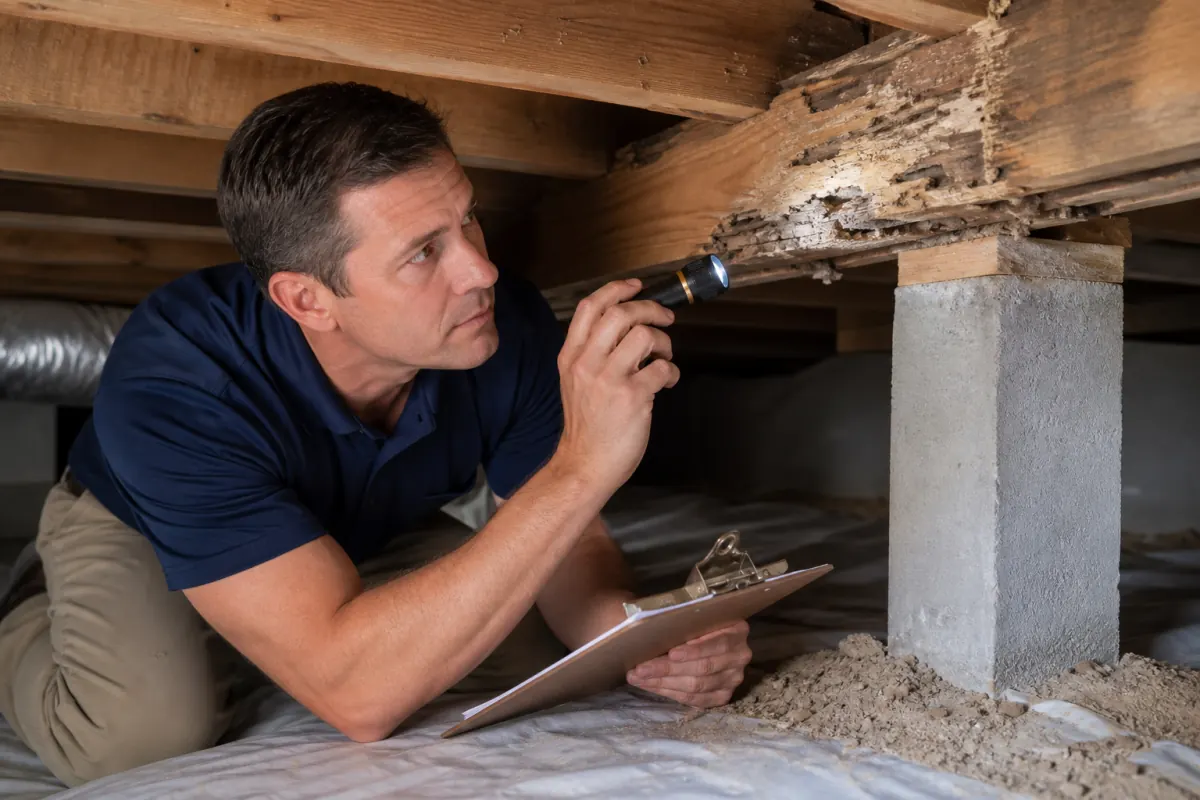
A standard home inspection may identify suspicious wood, moisture, mud tubes, or other warning signs, but it is not the same as a wood-destroying-insect inspection. A licensed pest professional can determine whether there is visible evidence of active termites, prior infestation, or conditions that make another infestation more likely.
The commonly used wood-destroying-insect report is limited to visible and accessible areas. Damage can exist behind walls, beneath flooring, inside crawlspaces, or in other areas an inspector cannot reach. That is why a pest report should not be treated as a structural repair estimate. If the inspector finds damage near load-bearing framing, floors, a foundation sill, or roof supports, ask a qualified contractor or structural engineer to evaluate the affected components.
Try to collect the following before deciding whether to repair or sell as-is:
- A written termite or wood-destroying-insect inspection report
- A treatment proposal from a licensed pest control company
- An itemized repair estimate from a qualified contractor
- Any records from previous treatments, warranties, or annual renewals
- Photos of visible damage and the areas inspected
The U.S. Environmental Protection Agency lists liquid soil treatments, bait systems, and wood treatments among the professional approaches used for termites. The proper method depends on the termite species, construction type, soil conditions, and location of activity. Treatment controls the infestation. It does not rebuild damaged wood.
Should You Repair Termite Damage Before Selling?
Repairing before listing can make sense when the damage is limited, the treatment plan is straightforward, and you have the time and cash to complete the work properly. A treated and repaired house may attract more financed buyers because there is less uncertainty for the buyer, appraiser, insurer, and lender.
A repair-first plan usually follows this order:
- Confirm the type and location of the infestation.
- Complete the recommended professional treatment.
- Open affected areas when needed to determine the true repair scope.
- Replace or reinforce damaged structural and finish materials.
- Complete any required permits or inspections.
- Obtain a follow-up report, clearance, or transferable warranty when available.
The main advantage is a cleaner transaction. Buyers can review paid invoices, treatment documents, repair permits, and warranty information instead of guessing about the cost. The main disadvantage is that the scope can grow once walls, floors, or crawlspace areas are opened. An estimate based only on visible damage may not be the final bill.

Avoid relying on a broad national repair-cost estimate. Termite repairs can range from replacing a small section of nonstructural wood to rebuilding joists, subflooring, framing, or foundation-adjacent components. Local labor rates, access, permits, and the extent of hidden damage matter more than a generic average.
If the house also needs other major work, review our guide to selling a fixer-upper without wasting money on the wrong repairs. Spending heavily on cosmetic updates while structural questions remain is usually the wrong order.
When Selling a House With Termite Damage As-Is Makes Sense
An as-is sale may be a better fit when you need a faster closing, do not have funds for treatment and construction, or simply do not want to manage contractors. It may also make sense when the property has several repair issues and fixing only the termite damage would not make it conventionally market-ready.
As-is does not mean the problem disappears. It generally means the seller is not agreeing to complete repairs as part of the sale. The buyer can still inspect the property, negotiate, cancel under a valid contingency, or face lender requirements. You also may still have disclosure duties under state law.
The likely tradeoff is price. A buyer taking on uncertain repairs will usually account for treatment, construction, carrying costs, and risk. Cash buyers and experienced investors may be more comfortable with that uncertainty than a retail buyer using a mortgage. The offer may be lower, but you avoid paying for repairs upfront and reduce the chance that months of work will uncover additional problems.
See What an As-Is Sale Could Look Like
Compare the cost and delay of repairs with a free cash offer for the property in its current condition.
Can a Buyer Get a Mortgage on a House With Termite Damage?
Possibly, but financing can become more difficult when active infestation or serious damage is documented. Loan requirements vary by program, property location, appraisal findings, and lender policy.
For FHA financing, evidence of wood-destroying insects can lead to an inspection by a qualified pest specialist. Active infestation may need treatment, and related property defects may need correction before the loan can close. VA requirements also vary by state and local conditions. Conventional lenders may require repairs when the condition threatens the property’s safety, soundness, or value.
An as-is contract does not force a lender to accept the property as-is. A buyer might be willing to take responsibility for the repairs, but the lender is still deciding whether the house is acceptable collateral. If the appraisal is made subject to treatment, inspection, or repair, a price reduction alone may not solve the issue.
Possible transaction structures include:
- Seller completes treatment and required repairs before closing
- Seller provides a credit when the lender and contract allow it
- Parties use an approved repair escrow for eligible work
- Buyer changes to a renovation loan or other suitable financing
- Seller accepts a cash offer that is not dependent on property-condition underwriting
Before accepting a financed offer, give the buyer’s agent and lender the available reports early. Finding out one week before closing that a lender requires treatment or structural work can delay the sale or cause it to fail.
Do You Have to Disclose Termite Damage?
Disclosure rules are different in every state, and some local jurisdictions add requirements. Many seller disclosure forms ask about active termites, prior damage, treatment history, wood rot, or structural repairs. Selling as-is generally does not erase the duty to disclose known material facts.
Complete the current disclosure form used in your state and answer it honestly. Provide relevant inspection reports, treatment records, invoices, warranties, permits, and repair documents. If you are unsure what must be disclosed, ask a local real estate attorney or licensed real estate professional familiar with your state’s rules.
Do not cover damaged wood, paint over evidence, remove inspection markers, or describe an unresolved infestation as repaired. Clear records protect the buyer and reduce the risk of a dispute after closing.
How Termite Damage Affects Your Sale Price
The price impact is based less on the word “termites” and more on uncertainty. A documented past treatment with completed repairs and a current warranty is different from active termites with unknown structural damage.
Buyers typically consider:
- Whether activity is current or historical
- The location and severity of visible damage
- Whether structural components are affected
- The estimated treatment and repair costs
- The chance of concealed damage
- Financing, insurance, and appraisal conditions
- The time and inconvenience of managing the work
To compare your options, calculate the expected net proceeds rather than focusing only on the listing price. A higher retail price may come with treatment bills, construction costs, agent commissions, utilities, taxes, insurance, and months of carrying expenses. An as-is offer may be lower but simpler. Our overview of what buyers look for in an as-is house explains how condition and convenience affect the tradeoff.
A Practical Checklist for Selling a Termite-Damaged House
- Get a pest inspection. Confirm active infestation, visible evidence, inaccessible areas, and the recommended treatment.
- Get a separate repair opinion. Ask a contractor or engineer to evaluate damaged structural materials when needed.
- Review your timeline and cash. Decide whether you can absorb repairs and wait for completion.
- Compare net proceeds. Estimate your repair-first net against a realistic as-is sale.
- Prepare disclosures and records. Organize reports, invoices, permits, warranties, and photographs.
- Choose the likely buyer pool. A repaired listing may fit financed buyers, while an as-is property may fit cash buyers or renovation financing.
- Put agreements in writing. Treatment, repairs, credits, reinspections, and deadlines should appear in signed contract documents.
- Confirm lender conditions early. Do not assume a repair credit will satisfy the appraisal or underwriting requirements.
The Bottom Line
Selling a house with termite damage does not require one fixed strategy. Treating and repairing can increase buyer confidence and support a traditional sale when the scope is manageable. Selling as-is can reduce upfront spending and shorten the process when the damage is extensive, uncertain, or part of a larger repair burden.
Start with reliable reports, disclose what you know, and compare the true net result of each path. A clear paper trail and realistic expectations can prevent last-minute surprises, regardless of which option you choose.
Sell Without Taking On Every Repair
Request a free cash offer from Cha-Ching Co and compare it with the cost, time, and uncertainty of repairing termite damage.
Disclaimer: This article provides general information and is not legal, financial, structural, pest-control, or real estate advice. Termite disclosure rules, inspection standards, treatment requirements, and loan conditions vary by state, locality, property, and lender. Consult qualified local professionals before making a selling or repair decision.