If you are searching for how to sell car with mechanical issues, you can still find a buyer without paying for every repair first. The safest approach is straightforward: understand the problem, describe it honestly, price the car for its current condition, and choose a buyer who is comfortable purchasing it as-is. A bad transmission, warning light, oil leak, overheating problem, or intermittent starting issue changes the value, but it does not automatically make the car unsellable.
Skip the Repair Shop and Request an Offer
Cha-Ching Co helps owners explore a free cash offer for vehicles in their current condition.
How to Sell a Car With Mechanical Issues Honestly
Start by writing down every problem you know about. Include symptoms, recent diagnoses, repair estimates, dashboard warning lights, fluid leaks, unusual sounds, and whether the car can be driven safely. You do not need to diagnose the vehicle yourself, and you should not guess at a specific failure if a mechanic has not confirmed it. Saying “the engine makes a knocking sound when cold” is more accurate than claiming the engine only needs a cheap sensor.
Keep copies of maintenance records and repair invoices. If a shop inspected the car, ask for a written estimate. That paperwork helps a buyer understand what has already been checked and can make your asking price easier to defend. It also reduces confusion about what you did and did not know at the time of the sale.
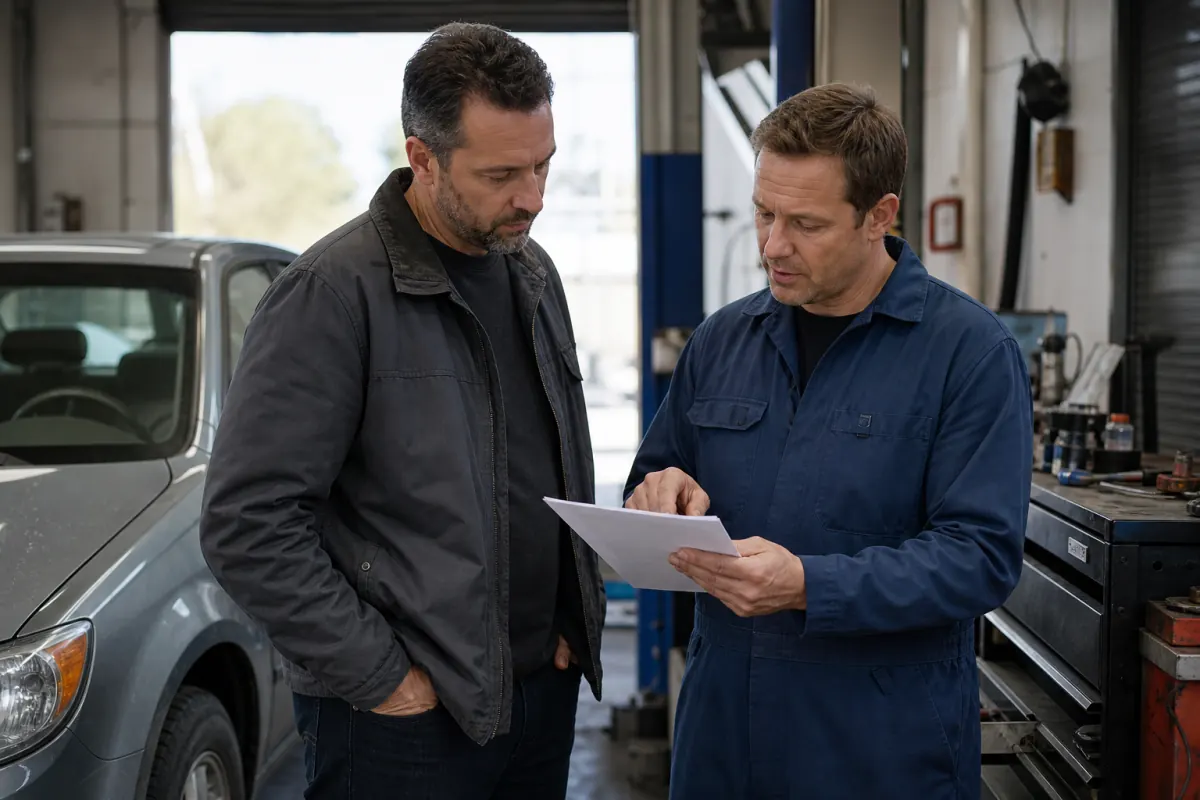
Disclosure requirements vary by state, so check your state motor vehicle agency and attorney general guidance before completing a private sale. An “as-is” statement can clarify that you are not providing a warranty, but it is not permission to hide a known problem or make a false claim. Put known defects in writing and have both parties keep a copy of the signed sale documents.
Decide Whether Repairs Make Financial Sense
Do not approve a major repair simply because a mechanic quoted it. Compare the likely increase in sale price with the full repair cost, the time needed, and the chance that another problem appears after the work begins.
For example, replacing a dead battery or a damaged tire may make the car easier to test-drive and transport. Spending several thousand dollars on an engine or transmission may not produce the same return, especially on an older vehicle with high mileage. If the transmission is the main issue, our guide to selling a car with transmission problems explains the tradeoffs in more detail.
Ask a shop to separate urgent safety work from optional maintenance. Then compare three numbers:
- Value if repaired: A realistic private-party value for a similar car in working condition.
- Total repair cost: Parts, labor, diagnostic charges, taxes, towing, and possible follow-up work.
- As-is offer: What a private buyer, dealer, cash buyer, or recycler will pay today.
If the repaired value minus the repair cost is only slightly higher than an as-is offer, selling now may be the cleaner choice. Your time and risk have value too.
Price a Car With Mechanical Problems
Begin with the market value of the same year, make, model, trim, mileage, title status, and general condition. Then subtract the expected repair cost and an additional amount for buyer risk. Buyers know that a visible problem may lead to related repairs, so an as-is car usually sells for less than the working value minus the exact shop estimate.
Get more than one estimate when possible. A dealer trade-in quote, an online cash offer, and a local private-party comparison can give you a usable range. Be careful with listings that have been sitting unsold for weeks. Asking prices are not the same as completed sale prices.
Price also depends on whether the car runs, moves under its own power, and can be transported safely. A vehicle that starts but overheats after ten minutes is different from a car that cannot be driven at all. If yours is fully inoperable, see who buys cars that do not run and what each buyer type usually needs.
Compare Your As-Is Options
Request a free cash offer before deciding whether a repair is worth the cost.
Choose the Best Buyer for the Vehicle
Private-party buyer
A private sale may bring the highest price, particularly if the car is desirable and the issue is well documented. It also requires the most work. You may need to answer detailed questions, arrange inspections, manage test drives, confirm payment, and complete state paperwork. Do not allow a test drive if the car is unsafe. If it can be driven, verify the driver’s license and insurance and accompany the buyer when appropriate.
Dealer trade-in
A dealer can simplify the transaction when you are purchasing another vehicle. Dealers typically account for repairs, reconditioning, auction costs, and profit in the offer, so convenience may come with a lower price. Tell the appraiser about known issues even if the dealer performs its own inspection.
Cash car buyer
A cash buyer may be a practical fit when you want a quick as-is sale or the vehicle needs towing. Ask whether the quoted amount is firm, whether towing is included, and what documents are required. Confirm the buyer’s identity and business information before releasing the title or vehicle.
Junkyard or automotive recycler
Recycling may make sense when repair costs exceed the vehicle’s usable value, severe damage affects major systems, or the car has little private-party demand. Offers may be based on reusable parts, metal value, location, completeness, and towing cost. Remove personal belongings and confirm whether plates stay with the seller under your state’s rules.
Write a Clear Listing That Attracts Serious Buyers
A useful listing saves time by answering the questions a serious buyer will ask. Include the year, make, model, trim, mileage, title status, overall condition, recent maintenance, known mechanical symptoms, and whether the vehicle runs and drives. Add clear photos of the exterior, interior, dashboard, tires, engine bay, and any visible damage.
Avoid phrases such as “easy fix,” “only needs a sensor,” or “perfect car” unless you have documentation to support them. A stronger listing might say: “Starts and drives, but the check-engine light is on and a repair shop diagnosed a misfire. Written estimate available. Selling as-is.” That language is specific without overstating what you know.
Complete the As-Is Sale Properly
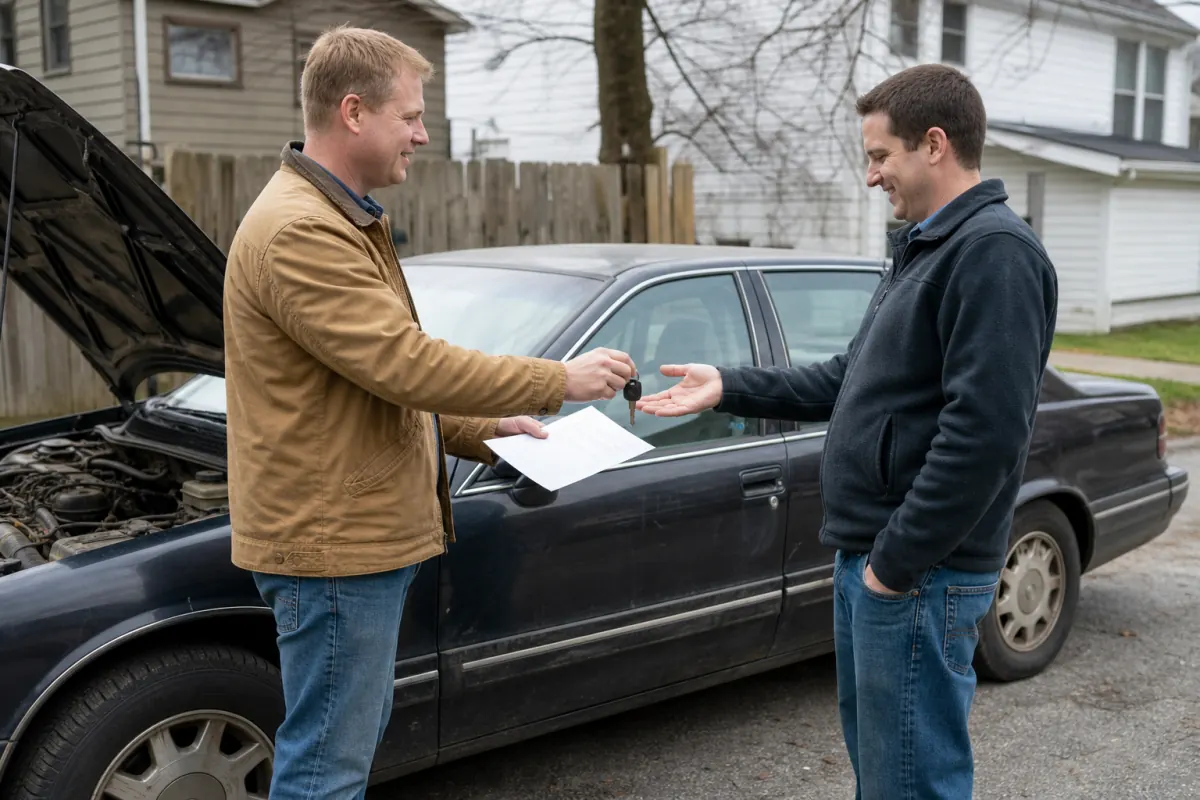
Before meeting a buyer, gather the title, lien release if applicable, registration, maintenance records, repair estimates, keys, and your state’s bill of sale or transfer forms. If a lender still has a lien, contact the lender before accepting payment. You generally cannot deliver clear ownership until the lien is satisfied or the lender provides an approved payoff and title-transfer process.
Your bill of sale should identify the buyer and seller, vehicle identification number, year, make, model, mileage, sale price, date and time, known issues, and as-is terms. Odometer disclosure and emissions or safety documents may also be required. Requirements differ by state and vehicle age, so use the forms and instructions published by your state motor vehicle agency.
Use a payment method you can verify. Meet at the buyer’s bank for a large cash or cashier’s check transaction when possible. Do not rely on screenshots of transfers, overpayment arrangements, or a stranger’s preferred vehicle-history website. Complete the title carefully, make copies of signed documents, submit any required seller notice or release of liability, and confirm what to do with the license plates.
Common Questions About Selling a Problem Car
Can I sell a car that needs major repairs?
Yes. Private buyers, dealers, cash buyers, rebuilders, and recyclers purchase cars that need major work. The best option depends on the vehicle’s value, title status, repair cost, and whether it can be transported safely.
Should I get a mechanic inspection before selling?
An inspection is not always required, but it can help you describe the problem accurately and set a defensible price. A written diagnosis is especially useful when the symptoms are unclear or a buyer might assume the worst.
Does selling as-is protect the seller?
As-is language can show that no warranty is being offered, but state rules vary and false statements can still create problems. Disclose known defects in writing and follow your state’s transfer requirements. If you need advice about a dispute or a state-specific legal obligation, consult a qualified local professional.
Can I sell the car if it is not safe to drive?
You can sell an unsafe or non-running vehicle, but do not encourage a buyer to drive it. Arrange a trailer or tow truck and describe the transport requirement before the buyer arrives.
A Simple Checklist Before You Sell
- List every known symptom and confirmed diagnosis.
- Collect repair estimates, maintenance records, and title documents.
- Compare repair costs with several as-is offers.
- Describe the condition accurately in the listing and bill of sale.
- Do not allow an unsafe test drive.
- Verify payment before signing over the title.
- File the required seller notice or release with your state.
- Keep copies of all signed documents and buyer information.
Selling a car with problems is mostly about setting accurate expectations. When the buyer knows what is wrong, the price reflects the condition, and the paperwork is complete, an as-is sale can be reasonable for both sides.
Ready to Sell the Car in Its Current Condition?
See whether Cha-Ching Co can provide a straightforward cash option without requiring repairs first.
Disclaimer: This article provides general educational information and is not legal, tax, mechanical, or financial advice. Vehicle sale, disclosure, emissions, title, lien, odometer, and release-of-liability rules vary by state. Check your state motor vehicle agency and consult a qualified professional when needed.