How much do gold buyers pay for 14K gold? Most buyers start with the metal's melt value, then offer a percentage of that amount. Since 14K gold is about 58.3% pure gold, your payout depends on the item's weight, the live gold price, the buyer's payout rate, and whether the piece has resale value beyond scrap. There is no universal price, but you can calculate a reasonable range before accepting an offer.
Want a Simple Cash Offer?
Cha-Ching Co helps people explore cash offers for unwanted valuables without pressure or complicated sales steps.
How Much Do Gold Buyers Pay for 14K Gold Compared With Melt Value?
A buyer usually does not pay the full theoretical melt value of 14K jewelry. The buyer needs room for testing, refining, price movement, operating costs, and profit. A competitive offer may land somewhere around 70% to 90% of melt value, while less competitive buyers may offer substantially less. Larger lots of clean, easy-to-test gold can sometimes receive a stronger percentage than a single lightweight item.
That range is a practical comparison tool, not a guarantee. The exact percentage can change by buyer, location, item type, total weight, and market conditions. Ask the buyer to show the weight, purity, spot price, and payout percentage separately. If the shop only gives you one unexplained dollar amount, you cannot tell whether the offer is fair.
If you want to understand the buyer's margin in more detail, read our guide to what percentage gold buyers take.
Why 14K Gold Is Worth Less Than the 24K Spot Price
The market spot price is quoted for pure gold, commonly described as 24K. Fourteen-karat gold is an alloy. It contains gold mixed with metals such as copper, silver, zinc, nickel, or palladium to improve strength, color, and wear resistance.
The basic purity calculation is:
14 ÷ 24 = 0.5833
That means 14K gold is theoretically 58.33% pure. Many pieces are marked 14K or 585. The Gemological Institute of America also describes 14K gold as approximately 58.5% pure. The remaining weight is alloy metal, which generally is not valued at the gold spot price.
This distinction matters because a 10-gram 14K bracelet does not contain 10 grams of pure gold. Its estimated pure-gold content is about 5.83 grams before considering stones, clasps, springs, solder, dirt, or testing adjustments.
How Much Do Gold Buyers Pay for 14K Gold by Gram?
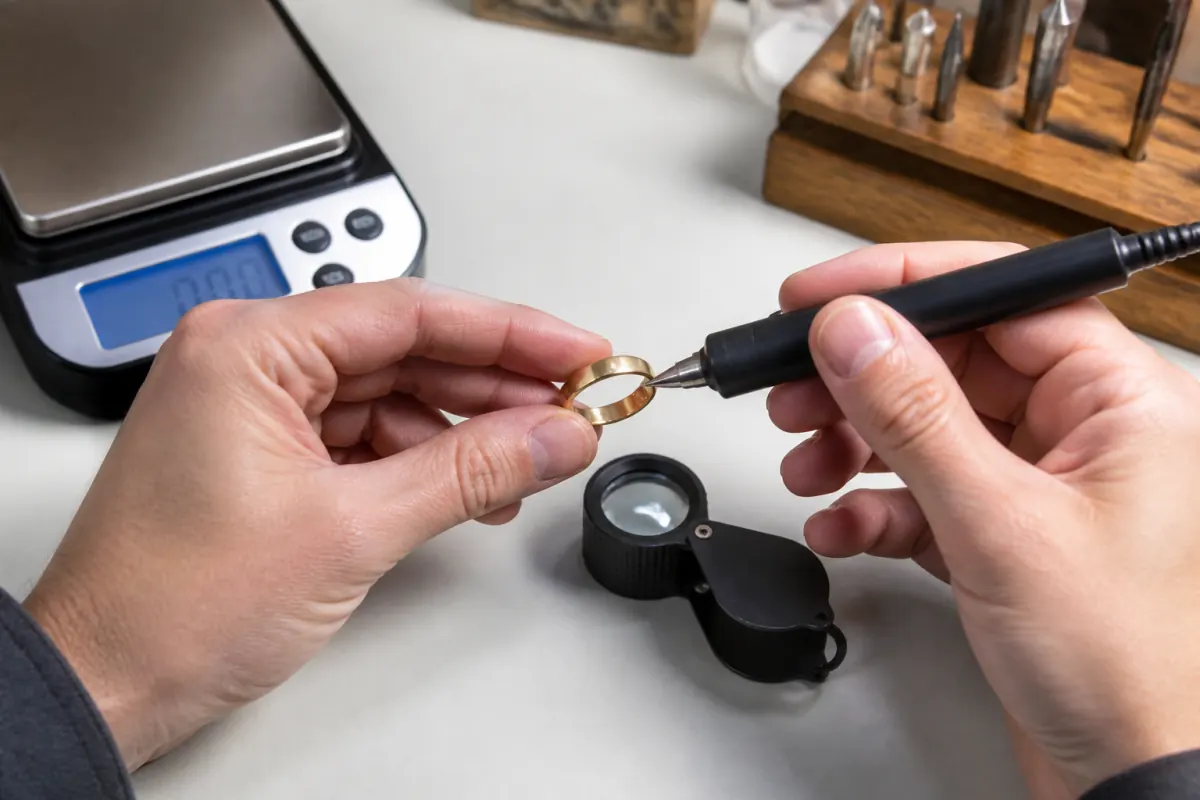
You can estimate the metal value per gram with a short formula:
Gold spot price per troy ounce ÷ 31.1035 × 0.5833 = estimated 14K melt value per gram
Then multiply the result by the item's eligible gold weight. Finally, multiply the melt value by the buyer's payout percentage.
| Step | Illustrative Calculation |
|---|---|
| Example spot price | $3,000 per troy ounce |
| Pure gold value per gram | $3,000 ÷ 31.1035 = $96.45 |
| Estimated 14K melt value per gram | $96.45 × 0.5833 = $56.26 |
| Offer at 80% of melt | $56.26 × 0.80 = $45.01 per gram |
The $3,000 spot price above is only an easy example, not today's quote. Gold prices move throughout the trading day. Use the live spot price shown by a recognized precious-metals market source or ask the buyer which price and timestamp they used. Our separate guide on how much gold buyers pay per gram explains the per-gram calculation across different karats.
Example Payouts for Common 14K Gold Weights
Using the same illustrative $56.26 melt value per gram, the table below shows how the payout percentage changes the offer. These examples assume the full listed weight is testable 14K gold with no stones or non-gold components.
| 14K Gold Weight | Estimated Melt Value | 70% Offer | 80% Offer | 90% Offer |
|---|---|---|---|---|
| 5 grams | $281.30 | $196.91 | $225.04 | $253.17 |
| 10 grams | $562.60 | $393.82 | $450.08 | $506.34 |
| 20 grams | $1,125.20 | $787.64 | $900.16 | $1,012.68 |
Do not compare your real offer to this table without replacing the example spot price. A change in the gold market changes every number. Also, a kitchen scale may not be precise enough for lightweight jewelry. A buyer should use a calibrated trade scale and weigh each karat group separately.
Compare Before You Commit
Knowing the melt value gives you a baseline. A clear cash offer gives you another option to compare.
What Can Reduce a 14K Gold Offer?
Two pieces with the same total scale weight may receive different offers. Common reasons include:
- Stones and non-gold parts: Gemstones, watch movements, steel springs, filled sections, and other components may be deducted from the payable weight.
- Purity test results: A 14K stamp is useful, but buyers may verify the item with acid, electronic testing, or X-ray fluorescence. Gold-plated and gold-filled pieces are not solid 14K gold.
- Small lot size: A tiny item can cost nearly as much to test and process as a larger lot, so some buyers use a lower payout rate.
- Refining and transaction costs: Buyers account for refining charges, shipping, insurance, labor, and price volatility.
- Buyer type: Pawn shops, jewelry stores, coin dealers, mail-in buyers, and refiners have different business models and overhead.
- Unclear deductions: A high advertised percentage may be less attractive after fees. Compare the final amount you receive, not only the headline rate.
When 14K Jewelry May Be Worth More Than Scrap
Melt value should not automatically decide the selling price. Some 14K items have value as wearable jewelry, collectibles, antiques, or branded pieces. A signed designer bracelet, desirable vintage ring, quality watch, or piece with valuable natural gemstones may deserve an appraisal or specialist resale quote.
Before selling a potentially valuable piece for scrap, look for maker's marks, brand signatures, model numbers, original boxes, receipts, grading reports, and unusual craftsmanship. Removing stones or melting a collectible piece can permanently destroy value.
Ordinary broken chains, mismatched earrings, damaged settings, and unbranded jewelry are more likely to be priced mainly for metal content. Even then, it is reasonable to get more than one quote.
Should You Clean 14K Gold Before Getting an Offer?
Light cleaning is fine, but it usually does not increase the scrap value. Melt-based buyers care about tested purity and eligible gold weight, not surface shine. You can wipe a piece with a soft cloth or use mild soapy water when appropriate, then dry it completely. Avoid harsh chemicals, abrasive polishing, or home acid tests that could damage the jewelry.
Do not remove gemstones or take apart a piece unless a qualified professional recommends it. A buyer can explain whether stones will be weighed separately. Keeping the item intact also protects possible resale or collectible value. Bring any boxes, receipts, appraisals, grading reports, or brand paperwork you already have, but do not pay for new paperwork until you know the piece may be worth more than its metal.
How to Tell Whether a 14K Gold Offer Is Fair
- Separate your jewelry by stamp. Keep 10K, 14K, 18K, and unknown pieces in different groups.
- Weigh the 14K group. Use a gram scale for a rough estimate, understanding that stones and non-gold parts may be excluded.
- Check the live spot price. Record the source and time because the market can move.
- Calculate the melt value. Use the formula above with 58.33% purity.
- Ask for the payout percentage. Divide the cash offer by your calculated melt value to find the effective percentage.
- Request itemized deductions. Ask what weight was removed and whether any testing, assay, shipping, or refining fee applies.
- Compare two or three offers. Use the same day's spot price when possible so the comparison is meaningful.
A professional buyer should be comfortable explaining the calculation. You do not need to accept an offer on the spot. If the numbers are unclear, take your jewelry back and compare elsewhere.
Questions to Ask a Gold Buyer
- What live gold price are you using?
- What purity did the item test at?
- What is the payable gold weight after stones or other parts are removed?
- What percentage of melt value does this offer represent?
- Are there any fees or deductions after the quoted amount?
- Will you return the item if I decline?
- Is the piece being valued only as scrap, or did you consider resale value?
For mail-in services, also review insurance limits, tracking, acceptance deadlines, return-shipping rules, and what happens if you reject the offer.
How Much Do Gold Buyers Pay for 14K Gold: Bottom Line
Gold buyers calculate 14K gold from its eligible weight, roughly 58.33% purity, and the live pure-gold price. The resulting melt value is the ceiling for a typical scrap transaction, not the amount most buyers hand to the seller. A strong offer often represents a clear, competitive percentage of melt value, while the best selling route may be different for branded, antique, or gemstone jewelry.
Run the calculation before you sell, ask the buyer to show the same inputs, and compare the final payout after all deductions. Ten minutes of preparation can make the difference between an understandable offer and a number you have no way to evaluate.
See What Your Items Could Be Worth
Explore a free cash offer from Cha-Ching Co and compare it with your own melt-value estimate.
Disclaimer: This article is for general educational purposes only and is not financial, legal, appraisal, or tax advice. Gold prices, purity test results, fees, and buyer offers vary. Verify current market prices and consider an independent qualified appraisal for valuable, branded, antique, or gemstone jewelry before selling.