Selling a car with a rebuilt title is legal in many situations, but the sale needs more proof and clearer disclosure than a clean-title sale. A rebuilt title generally means the vehicle was once declared salvage or seriously damaged, then repaired and approved for road use under a state process. The exact name, inspection standard, and transfer paperwork depend on the state. Before you list the car, confirm the brand shown on the current title and gather the records a careful buyer will want to see.
Want a straightforward option for your rebuilt-title car?
Request a free cash offer, then compare it with your private-sale and trade-in options.
What selling a car with a rebuilt title really means
A rebuilt title is not the same as a clean title, and it is not always the same as a salvage certificate. The usual sequence is that an insurer or state brands a badly damaged vehicle as salvage. Someone repairs it, completes the required state process, and receives a rebuilt, reconstructed, or revived-salvage title. State terminology varies. The California DMV, for example, says a revived salvage vehicle is one that was repaired and reregistered.
That brand remains material to the sale even when the car looks good and drives normally. The federal National Motor Vehicle Title Information System records title brands reported by state agencies, including salvage and flood history. A buyer can reasonably expect the title, the vehicle history, and your description to agree.
Do not advertise the car as having a clean title, "clear history," or "minor prior damage" if the current title is branded. Do not assume a state inspection proves every repair was done perfectly. Florida's rebuilt process, for example, includes an examination tied to vehicle identity and major component parts. That is different from a complete mechanical evaluation of every system.
Can you legally sell a car with a rebuilt title?
Often, yes, if the vehicle has a valid rebuilt title and you follow the transfer and disclosure rules that apply to the transaction. The details are state-specific. California says sellers, including dealers, must disclose a vehicle's salvage title and history. Florida states that a rebuilt vehicle cannot knowingly be offered for sale until the required rebuilt-title application and examination conditions have been met.
Start with the motor-vehicle agency in the state that issued the current title. Ask what brand should appear, whether a separate written disclosure is required, which signatures need notarization, and what odometer or bill-of-sale forms apply. If the buyer lives in another state, the buyer should also check whether that state will accept and register the branded title.
A vehicle that still has only a salvage certificate may not be ready for ordinary road use or registration. A certificate of destruction can be even more restrictive. Florida's current procedure says vehicles with certificates of destruction are only good for parts or scrap. Read the actual document in your hand instead of using "salvage" and "rebuilt" interchangeably.
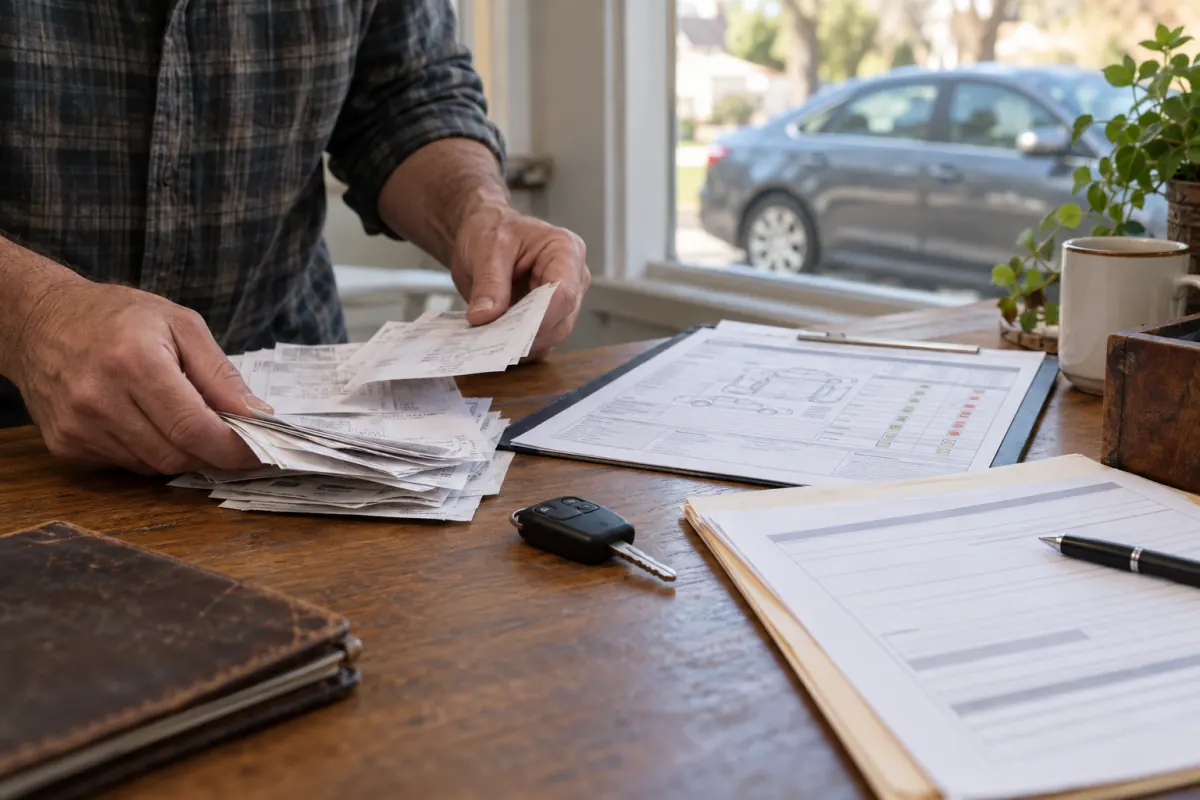
Paperwork to gather before listing the car
A thin folder of solid records can answer more questions than a long sales pitch. Gather these items before the first buyer contacts you:
- The current title. Confirm your name, the VIN, any co-owner, the exact brand, and whether a lien is still recorded.
- State inspection records. Keep the rebuilt or revived-salvage inspection paperwork and any decal information your state issued.
- Repair invoices. Receipts should identify the shop, dates, parts, and work completed. Records for airbags, structural work, suspension, brakes, and electrical repairs are especially useful.
- Before-and-after photos. Original damage photos give context that a history report may not provide. Avoid cropping out the affected area.
- A current vehicle history report. Pull the report yourself so you can correct a VIN error or unexpected brand before the buyer finds it.
- Maintenance records. Oil changes, tires, brakes, and later repairs help separate the car's current condition from its old loss event.
- Transfer forms. Prepare the bill of sale, odometer disclosure, damage disclosure, and seller notice required by your state.
If you cannot document a repair, say so. "I do not have the invoice for that work" is more credible than guessing. Also check that the VIN on the dashboard, door label, title, and records matches. A mismatch is a reason to stop and contact the title agency before showing the car.
Prefer to skip weeks of buyer questions?
See what your car may be worth with a free, no-pressure cash offer.
How to price a rebuilt-title car honestly
There is no single percentage that every rebuilt vehicle loses. The title brand matters, but so do the model, age, mileage, original damage, repair quality, documentation, local demand, and whether buyers can insure or finance the car. A blanket claim such as "rebuilt cars are always worth 30 percent less" is not a reliable appraisal.
Begin with local asking prices for the same year, trim, drivetrain, and mileage. Treat clean-title listings as an upper reference, not as your price. Then look for actual rebuilt-title comparables. If those are scarce, request several real offers: one or two dealers, a vehicle buyer, and private-market feedback. Ask each buyer what drove the number.
Account for current defects separately. Worn tires, warning lights, an oil leak, or a weak air conditioner still affect value even if they are unrelated to the original damage. Our guide to selling a car with mechanical issues explains how to disclose and compare repair-versus-sale choices.
Price transparency can save time. In the listing, state that the title is rebuilt near the top, summarize the known damage and repairs, and note which records are available. That will reduce the number of shoppers who disappear after seeing the title and make room for buyers who are comfortable evaluating a branded vehicle.
Give buyers a fair way to verify the car
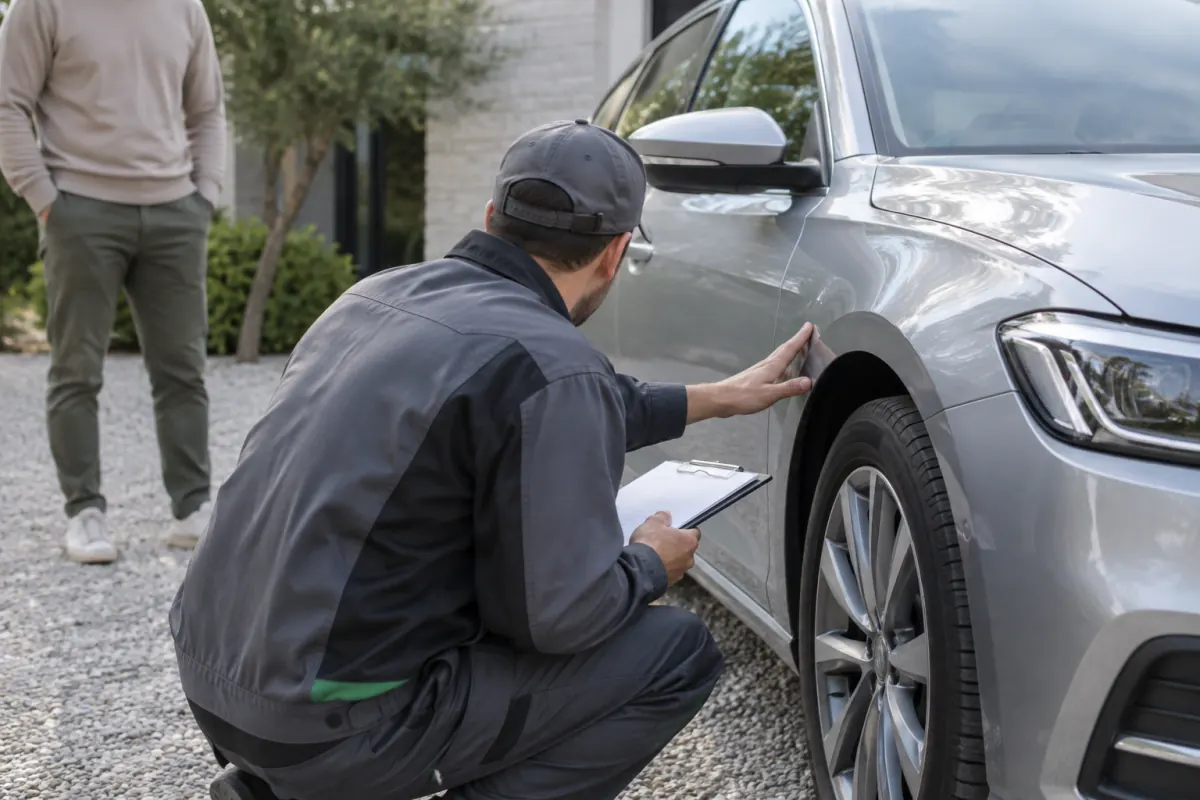
Expect serious buyers to ask for the VIN, a history report, a test drive, and an independent inspection. Those requests are sensible. The Federal Trade Commission says a vehicle history report is not a substitute for an independent vehicle inspection because reports may show accidents or flood damage while omitting mechanical problems.
Let the buyer choose a qualified repair shop when practical. For a vehicle with known structural damage, a collision-repair specialist may be appropriate in addition to a general mechanic. Ask for a written report. If a problem appears, you can fix it, adjust the price, or decline the deal without arguing about what the inspection found.
You can also invite the buyer to verify insurability before paying. Coverage availability and terms depend on the carrier, state, vehicle, and requested coverage. Do not promise that a buyer will get full coverage or a particular premium. The same caution applies to financing. Let the buyer's lender make that decision.
Choose the right way to sell
A private sale may produce the strongest price when the car is presentable and your documentation is complete. It also requires more messages, inspections, scheduling, and caution around payment. Build time for the buyer to verify the title and records.
A dealer trade-in is simpler, but some dealers will not retail rebuilt-title vehicles and may base the offer on a wholesale outlet. Ask whether the title brand changed the appraisal and compare the net trade value, not just the new car's monthly payment.
A cash or specialty vehicle buyer may be useful when speed and certainty matter more than finding the highest possible private buyer. Get the offer in writing, confirm whether towing or pickup has a fee, and ask what title documents are needed. For a broader comparison, see our guide to the best way to sell a car.
A safe sale and transfer checklist
- Verify the current title brand, ownership names, VIN, and lien status.
- Check the seller rules with the issuing state and the registration rules in the buyer's state.
- Disclose the rebuilt status in the ad and again in the written sale paperwork.
- Share records and allow a reasonable independent inspection.
- Agree in writing on the price, included items, known condition, and any promises.
- Use a payment method you can verify. Do not rely on a screenshot of a transfer or check.
- Complete the title assignment, odometer disclosure, bill of sale, and any brand-specific forms.
- Remove plates if your state requires it, file the seller notice or release of liability, and keep copies.
If a lender still appears on the title, contact it before taking a deposit. Get the payoff and lien-release steps in writing. A buyer may reasonably ask to complete the payoff at the lender or title office. Never alter a title, cover a brand, or sign a buyer's name. If the title has an error, ask the issuing agency how to correct it.
The bottom line on selling a car with a rebuilt title
Selling a car with a rebuilt title can be a normal transaction when the paperwork is valid and the history is disclosed plainly. Verify the exact title status, collect repair and inspection records, set the price from real comparisons, and give the buyer room to order an independent inspection. State rules differ, so confirm the transfer steps before money and keys change hands. The strongest sales pitch is a title and record set that tell the same honest story.
Compare your selling options today
A free cash offer gives you a real number to compare with a private sale or trade-in.
Disclaimer: This article is general information, not legal, tax, insurance, mechanical, or title-transfer advice. Title brands, inspections, disclosures, odometer rules, registration, and seller-notice requirements vary by state and can change. Confirm the current requirements with the relevant state motor-vehicle agencies, lienholder, insurer, and a qualified local professional when needed.