How do gold buyers make money? In most scrap-gold transactions, the buyer earns a gross spread between the amount paid to you and the amount recovered from a refiner or later sale. That spread is not pure profit. It has to cover testing, staff time, secure handling, shipping, insurance, refining, rent, payment costs, and the risk that the gold price moves before the metal is sold.
Want a Clear Cash Offer?
Cha-Ching Co can give you a free cash offer to compare with your own estimate.
How Do Gold Buyers Make Money on Scrap Gold?
A scrap-gold buyer starts by estimating how much pure gold is actually in an item. The number on the scale is only one input. Karat, stones, clasps, springs, solder, and other non-gold parts can change the payable gold weight. The buyer then compares that estimated metal value with the amount it expects to receive downstream.
The basic idea is simple:
Expected resale or refinery payment - seller payment - business costs = potential profit
Suppose a group of jewelry contains $1,000 worth of recoverable gold at the price used for the transaction. A buyer offers $800 and later receives $950 from a refiner. The buyer's gross spread is $150. From that amount, the buyer still has to pay its operating costs. This is only an illustration, not a standard industry margin or a promise of what any buyer will offer.
The refinery payment may also be less than the full theoretical metal value. For example, Midwest Refineries publicly states that it pays 95% of the pure gold content in an order. That is one company's published term, not a universal rate. Different refiners use different fee and payout structures.
How Do Gold Buyers Make Money From the Offer Spread?
The spread gives the business room to operate. It also compensates the buyer for uncertainty. A stamped piece can test below its apparent karat, a chain may contain a steel spring, or a ring's total weight may include a large stone. The market price can move between the time the customer is paid and the time the lot is refined or sold.
A large spread does not automatically mean the buyer made a large net profit. A small local shop and a high-volume mail-in business may have very different expenses. Still, understanding the spread helps you ask a useful question: what percentage of the item's estimated melt value does the offer represent?
Our guide to the percentage gold buyers take explains how to calculate that figure. Use the same weight, purity, and spot-price assumptions when comparing offers. Otherwise, two percentages can appear comparable while being based on different numbers.
Testing and Assaying Affect the Final Value
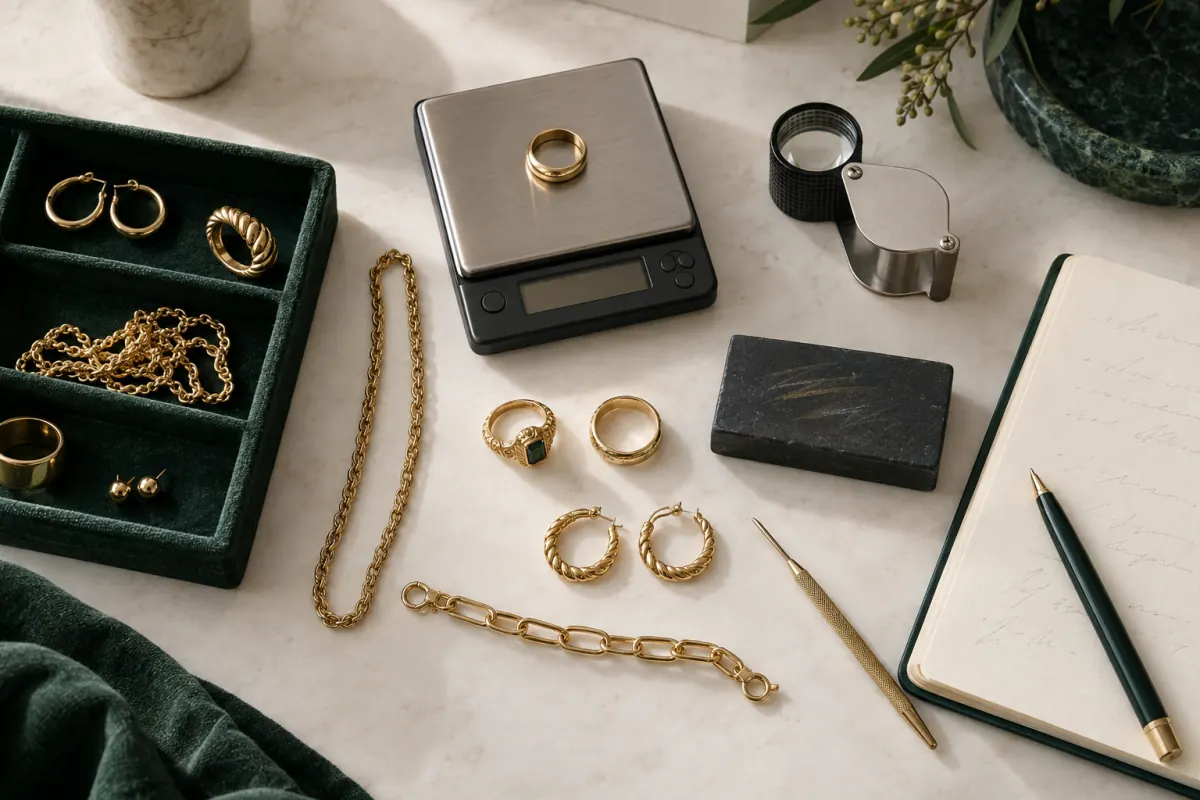
Hallmarks are a helpful starting point, but professional buyers often test the item. Common methods include a touchstone and acid, an electronic tester, or X-ray fluorescence. Refiners may melt a larger lot and assay a representative sample before settlement.
Midwest Refineries describes its process as weighing incoming material, choosing an assay method, and providing a settlement report with the determined metal content, spot price, and payout calculation. Its published process also notes that larger lots may be smelted before a laboratory sample is analyzed.
This is why a buyer may be cautious about paying from a stamp alone. A 14K mark suggests that an item is 14 parts gold out of 24, or about 58.3% gold by weight. It does not prove that every part of the piece is solid 14K gold. Gold-filled, plated, hollow, repaired, and mixed-metal items need closer inspection.
Where a Gold Buyer's Costs Come From
It is easy to look at a cash offer and the day's gold price and assume the difference goes straight into the buyer's pocket. In practice, the business may have several costs before it knows the final result:
- Testing and labor: Someone has to sort, weigh, inspect, and test each item. Small mixed lots can take more time per gram than larger uniform lots.
- Refining: Scrap jewelry must be processed to separate recoverable precious metal from alloys and contaminants. The refiner may retain a percentage or charge for certain services.
- Secure shipping and insurance: Moving valuable material requires tracking, packaging, insurance, and careful recordkeeping.
- Store and payment expenses: Rent, payroll, card or banking fees, security, licensing, and compliance all reduce the gross spread.
- Price risk: Gold trades throughout the day. The eventual sale or settlement price can be different from the price used when the customer was paid.
- Non-gold weight: Stones, watch movements, springs, and base-metal parts may add scale weight but little or nothing to a scrap-gold settlement.
A buyer who handles a high volume may be able to work with a smaller spread. A buyer processing occasional small lots may need more room. That does not tell you which offer is best, but it explains why offers can differ even when each shop checks the same market price.
Compare the Final Number
A free cash offer gives you a real number to compare with the estimated melt value and other quotes.
Some Gold Buyers Resell Jewelry Instead of Melting It
Not every gold item belongs in a refinery lot. A wearable designer bracelet, antique ring, collectible watch, or piece with a valuable natural gemstone may bring more as a complete item than as scrap. In that case, the buyer may make money by reselling it to another dealer, at auction, online, or directly to a retail customer.
Resale creates a different set of costs. The buyer may have to authenticate the item, clean or repair it, photograph it, list it, store it, accept returns, and wait for the right customer. A resale offer can be higher than a scrap offer, but it will normally remain below the buyer's expected retail selling price because the buyer is taking on that work and risk.
Before accepting a melt-based offer for a potentially special piece, look for maker's marks, model numbers, original packaging, receipts, grading reports, or an appraisal you already have. Do not pay for a new appraisal until you have reason to believe the item has value beyond its metal. For ordinary broken or unbranded jewelry, the recoverable gold content may remain the main source of value.
How the Gold Buyer's Math Works
You can make a rough estimate before requesting an offer. First, find the pure-gold price per gram by dividing the price per troy ounce by 31.1035. Then multiply by the item's expected purity and eligible gold weight.
Spot price per troy ounce ÷ 31.1035 × purity × eligible weight = estimated melt value
For 14K gold, the theoretical purity factor is 14 ÷ 24, or about 0.5833. For 18K gold, it is 18 ÷ 24, or 0.75. Replace those figures if testing shows a different purity. Also subtract stones and obvious non-gold components from your estimate when possible.
Then compare the actual offer with your melt estimate:
Cash offer ÷ estimated melt value × 100 = estimated payout percentage
A calculator can provide a useful benchmark, but it cannot inspect the jewelry. JM Bullion's scrap calculator, for example, labels its result as melt value rather than a payment estimate. Your actual result can change after the buyer verifies purity and payable weight.
How Do Gold Buyers Make Money Without Showing Every Fee?
Some buyers quote a single net offer instead of listing a separate testing fee, refining fee, and margin. The business can still earn money because its expected spread is built into the offer. Other buyers may advertise a high payout rate but subtract shipping, assay, or return costs elsewhere in the transaction.
That is why the final amount matters more than one attractive percentage. Ask whether the quote is the amount you will actually receive. For a mail-in sale, check the insurance limit, return-shipping policy, offer deadline, and what happens if you decline. For an in-person sale, ask to see the weight and test result before agreeing.
A clear buyer should be able to explain the basic inputs without pressuring you. You can walk away if the weight, purity, deductions, or payment terms do not make sense.

Questions to Ask Before You Sell Gold
- What gold price and timestamp are you using?
- How did you test the karat or purity?
- What weight is eligible for payment after stones and other parts are excluded?
- What is the estimated melt value?
- What percentage of that value does the offer represent?
- Are there any fees or deductions after the quoted amount?
- Is the piece being valued for scrap, resale, or both?
- Can I decline and take the item back without a charge?
Get two or three quotes for a meaningful lot or a piece that may have resale value. Try to compare them on the same day because the gold price can move. Keep your jewelry in sight during an in-person evaluation, and get a receipt that identifies what you sold and how you were paid.
Bottom Line: How Do Gold Buyers Make Money?
Gold buyers generally make money from the difference between what they pay a seller and what they eventually receive from refining or resale, after business costs. Testing, refining, secure transport, staff time, and market risk all come out of that gross spread. Some buyers also earn a return by reselling desirable jewelry as finished pieces.
You do not need to know a shop's exact profit to judge your offer. Estimate the melt value, ask how the buyer measured weight and purity, confirm the final amount after fees, and compare more than one quote when the value justifies the effort. A transparent explanation is worth more than a headline percentage with unclear math.
See What Your Gold Could Be Worth
Request a free cash offer from Cha-Ching Co and compare it at your own pace.
Disclaimer: This article is for general educational purposes only and is not financial, legal, appraisal, or tax advice. Gold prices, testing results, fees, refinery terms, and buyer offers vary. Verify current market information and consider an independent qualified appraisal for valuable, branded, antique, collectible, or gemstone jewelry before selling.