If you are wondering how much do gold buyers pay per gram, the honest answer is that there is no single fixed rate. A buyer usually starts with the live value of pure gold, adjusts for your item's karat and payable weight, then offers a percentage of that calculated melt value. The number you should compare is the final written offer after all fees, not a flashy advertised rate.
Want a Straightforward Cash Offer?
Cha-Ching Co can help you understand your selling options and request a free cash offer.
How Much Do Gold Buyers Pay Per Gram?
Gold buyers pay according to a formula, not a universal price list:
Live gold price per gram × verified purity × buyer payout percentage = estimated offer per gross gram
Gold's wholesale benchmark is normally quoted per troy ounce. One troy ounce equals about 31.103 grams. That is different from the 28.35-gram household ounce used for groceries and many other products. To find the fine-gold value per gram, divide the current troy-ounce price by 31.103.
Next comes purity. The Federal Trade Commission explains gold karat markings: 24-karat gold is pure gold, while 18-karat gold contains 18 parts gold out of 24. A 14K piece is 14/24 gold, or about 58.33% pure.
Finally, the buyer applies its payout rate. Buyers rarely pay the full theoretical melt value because they have testing, refining, shipping, insurance, market-price risk, and operating costs. They also need a profit margin. There is no government-set nationwide payout percentage.
How Much Do Gold Buyers Pay Per Gram by Karat?
The table below shows the purity factor used in the calculation. It deliberately does not use a fixed dollar amount because gold prices can change throughout the day.
| Mark | Approximate purity | Theoretical fine-gold value |
|---|---|---|
| 10K or 417 | 41.67% | Fine-gold price per gram × 0.4167 |
| 14K or 585 | 58.33% | Fine-gold price per gram × 0.5833 |
| 18K or 750 | 75% | Fine-gold price per gram × 0.75 |
| 22K or 916 | 91.67% | Fine-gold price per gram × 0.9167 |
| 24K or 999 | About 99.9% | Fine-gold price per gram × 0.999 |
Suppose the live fine-gold value is $X per gram. The theoretical melt value of one gross gram of 14K gold would be about $X × 0.5833. The cash offer would then be that result multiplied by the buyer's payout percentage. Stones, steel springs, solder, watch movements, and other non-gold parts may reduce the payable weight.
A stamp is a useful clue, but it is not proof. Pieces can be plated, altered, repaired with lower-karat solder, or mismarked. A reputable buyer should test the item and explain the result.
What Percentage of Melt Value Is a Fair Offer?
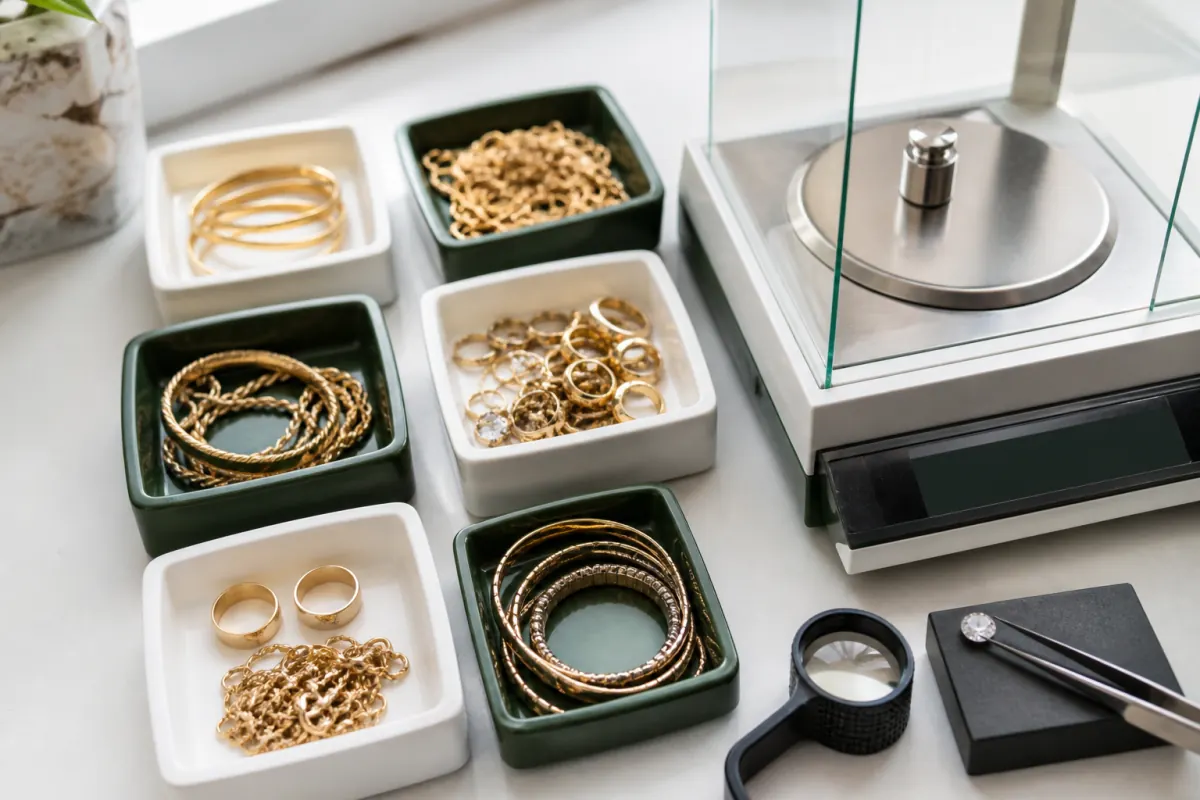
You may see commercial buying guides quote broad ranges around 70% to 90% of melt value. Treat those figures as market guidance, not a promise. The actual percentage depends on the item, quantity, buyer type, refining relationship, and current market conditions. Pawn shops, local jewelers, mail-in services, refiners, and specialist resale buyers can produce very different offers.
A higher percentage is not always a higher net payment. One buyer may advertise a strong per-gram rate but charge an assay, handling, shipping, or return fee. Another may quote a slightly lower rate with no deductions. Ask for the net dollar amount you will receive.
For ordinary broken gold jewelry, melt value is a useful comparison. It may be the wrong measure for a signed designer piece, an antique, a collectible coin, or jewelry with valuable stones. Those items may be worth more intact. If you are unsure, get a resale opinion or independent appraisal before selling for scrap. Our guide to calculating what your gold may be worth explains the broader factors.
Compare Your Options Before You Commit
A free cash offer gives you another number to compare without pressure.
How Gold Buyers Calculate the Payable Weight
Good buyers separate items by karat and weigh each group. Ask to watch the scale and make sure the display starts at zero. The scale should show grams, or the buyer should clearly state the unit and conversion.
Some jewelers use pennyweights, abbreviated dwt. Twenty pennyweights equal one troy ounce, and one pennyweight is about 1.555 grams. Confusing grams, pennyweights, household ounces, and troy ounces can make an offer look better or worse than it is. Put every quote into the same unit before comparing it.
Payable weight may be lower than the item's total weight when it includes gemstones, non-gold clasps, steel watch parts, filled sections, or attached materials. Ask the buyer to show each deduction. Mixed-karat pieces should not simply be weighed together and priced at the lowest karat without an explanation.
Before visiting a buyer, make a simple inventory. Photograph each item, note every visible stamp, and weigh the pieces at home if you have a reasonably accurate gram scale. Your home reading is only a rough check, but a large unexplained difference deserves a question. Keep matching sets together until the buyer explains whether they have resale value. Do not clean antique or collectible pieces aggressively because polishing can affect their condition and value.
How Gold Purity Is Tested
Common methods include visual inspection of hallmarks, magnet checks, touchstone and acid testing, electronic testing, and X-ray fluorescence, often called XRF. The Gemological Institute of America describes touchstone testing as a quick way to estimate karat.
No method is perfect by itself. XRF mainly reads near-surface composition, so heavy plating can distort the result. Acid testing may require a small scratch or filed area. A buyer should tell you what test will be performed and ask permission before filing, cutting, removing stones, or using any destructive method.
If you decline an offer, your property should be returned under the agreed terms. Mail-in sellers should read the return policy before shipping anything, including who pays return postage and what happens if the package is lost.
How to Compare Gold Buyer Offers Per Gram
Get at least three same-day offers when practical. Gold prices move, so quotes from different dates are harder to compare. Ask each buyer to put these details in writing:
- The tested karat or fineness for each group of items
- The payable weight and unit used
- The spot-price reference and time of the quote
- The calculated melt value
- The percentage of melt being paid
- Every fee or deduction
- The final net amount you will receive
If the buyer will not show the scale, explain the test, or itemize the offer, walk away. Other warning signs include switching units mid-conversation, weighing all karats together at the lowest grade, vague “up to” rates, pressure to accept immediately, and unclear return terms.
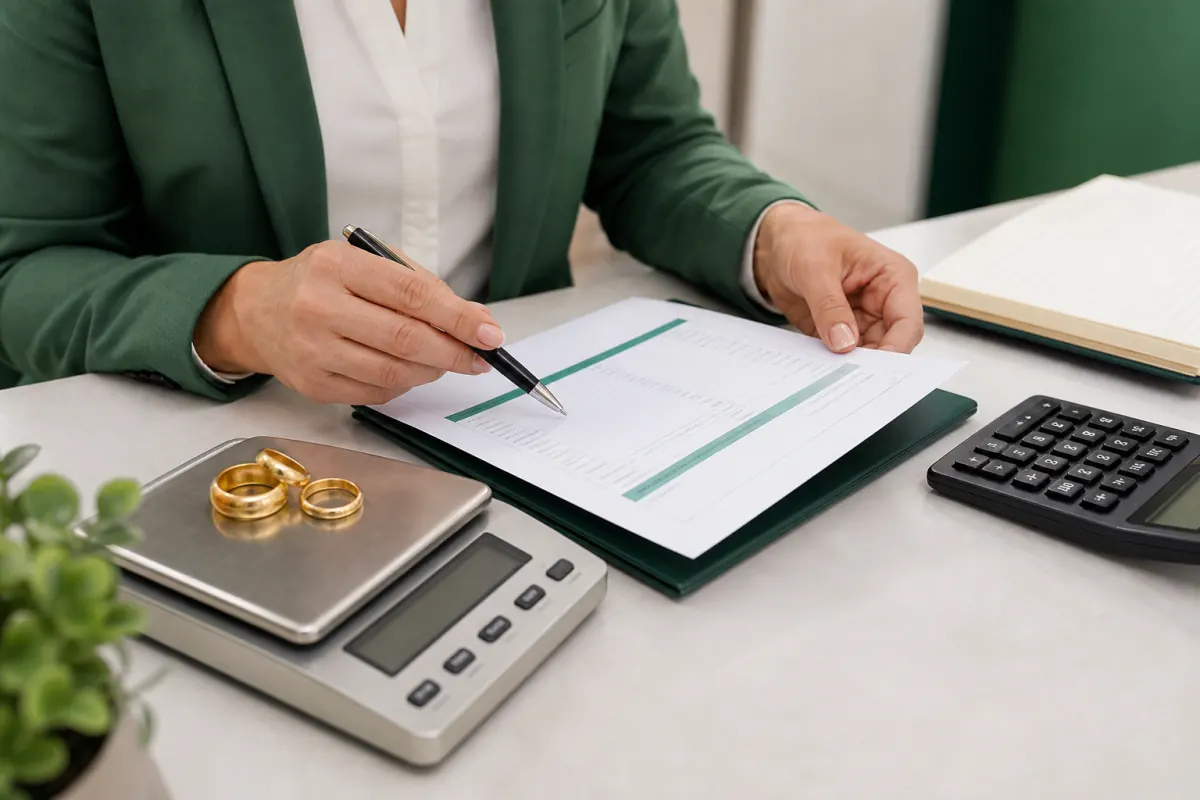
Research the business name with words such as “complaint” and “review,” confirm its physical address, and check any licensing rules that apply in your state or city. Secondhand-dealer, pawn, identification, holding-period, and scale-inspection rules vary by location.
Ask how and when payment is made. Cash, check, ACH, and store credit are not equivalent. Store credit may carry a higher headline amount but is useful only if you want to buy from that business. For mailed items, record the package contents, use tracking and appropriate insurance, and keep copies of the buyer's terms. Find out how long you have to reject an offer and whether rejection triggers a return fee.
When Price Per Gram Does Not Tell the Whole Story
Gold jewelry can have value beyond its metal. Brand, maker, age, condition, rarity, craftsmanship, gemstones, and demand can all matter. A scrap buyer may reasonably value only the recoverable gold, while a jewelry specialist may see an intact piece it can resell.
This is especially important for coins, watches, estate jewelry, signed pieces, and unusual antiques. Do not allow a buyer to remove stones or melt an item until you understand whether it has collectible or resale value. If your piece is mainly ordinary or broken jewelry, our guide on how to sell gold jewelry without overlooking value can help you prepare.
Taxes can matter, too. In general, a gain on personal-use jewelry may be taxable, while a loss on personal-use property is usually not deductible. Investment bullion and collectible coins can be treated differently. Save purchase records, inherited-value documentation, appraisals, and the final sales receipt. A tax professional can apply the rules to your situation.
How Much Do Gold Buyers Pay Per Gram: Bottom Line
The best answer is a transparent calculation. Start with the live fine-gold price per gram, multiply by verified purity, then multiply by the buyer's disclosed payout percentage. Subtract only clearly explained fees and non-gold weight. A trustworthy buyer should be willing to show you every part of that math.
Do not judge an offer by the headline rate alone. Compare same-day written net offers, protect any collectible value, and take your time. You are allowed to decline.
Ready to See What Your Items Could Bring?
Request a free cash offer from Cha-Ching Co and compare it with your other options.
Disclaimer: This article is for educational purposes only. Estimates exclude stones and collectible or resale value and are not an offer, appraisal, legal advice, or tax advice. Gold prices, assays, fees, laws, and buyer percentages change. Verify the live benchmark and written net offer. Gains on personal-use property may have tax consequences, while personal-use losses generally are not deductible. Consult a qualified tax or legal professional about your circumstances.