If you are wondering is gold filled jewelry worth anything, the short answer is yes, but usually not as much as solid gold. A gold-filled piece can have value as wearable jewelry, a vintage or branded item, or precious-metal scrap. The amount depends on its markings, total weight, condition, design, and whether a buyer wants the piece intact or only for refining.
Have jewelry you no longer wear?
Request a free cash offer from Cha-Ching Co and compare it with your other selling options.
Is gold filled jewelry worth anything as jewelry or scrap?
Gold-filled jewelry is not solid gold, and it is not the same as ordinary gold plating. It has a layer of gold alloy mechanically bonded to a base metal. Under the Federal Trade Commission's Jewelry Guides, an item described as "Gold Filled" must use a gold-alloy layer of at least 10 karat on significant surfaces, and that layer must equal at least 1/20 of the item's metal weight. A mark such as "1/20 14K GF" describes both the fraction and the fineness of that layer.
That gives the item real gold content, though much less than a solid 14K piece. It also means value cannot be estimated by multiplying the entire item's weight by the spot price of 14K gold. Most of the weight is base metal. Clasps, springs, stones, and other components may further complicate a scrap estimate.
There are two possible value paths:
- Resale as jewelry: A wearable necklace, bracelet, brooch, watch case, or signed vintage piece may be worth more intact than its recoverable gold.
- Sale as scrap: Worn, broken, mismatched, or tangled pieces may interest a specialty refiner, especially when sold in a larger lot.
For one attractive piece, condition and buyer demand often matter more than the tiny amount of pure gold it contains. For a jar of damaged gold-filled items, markings and total qualifying weight matter more.
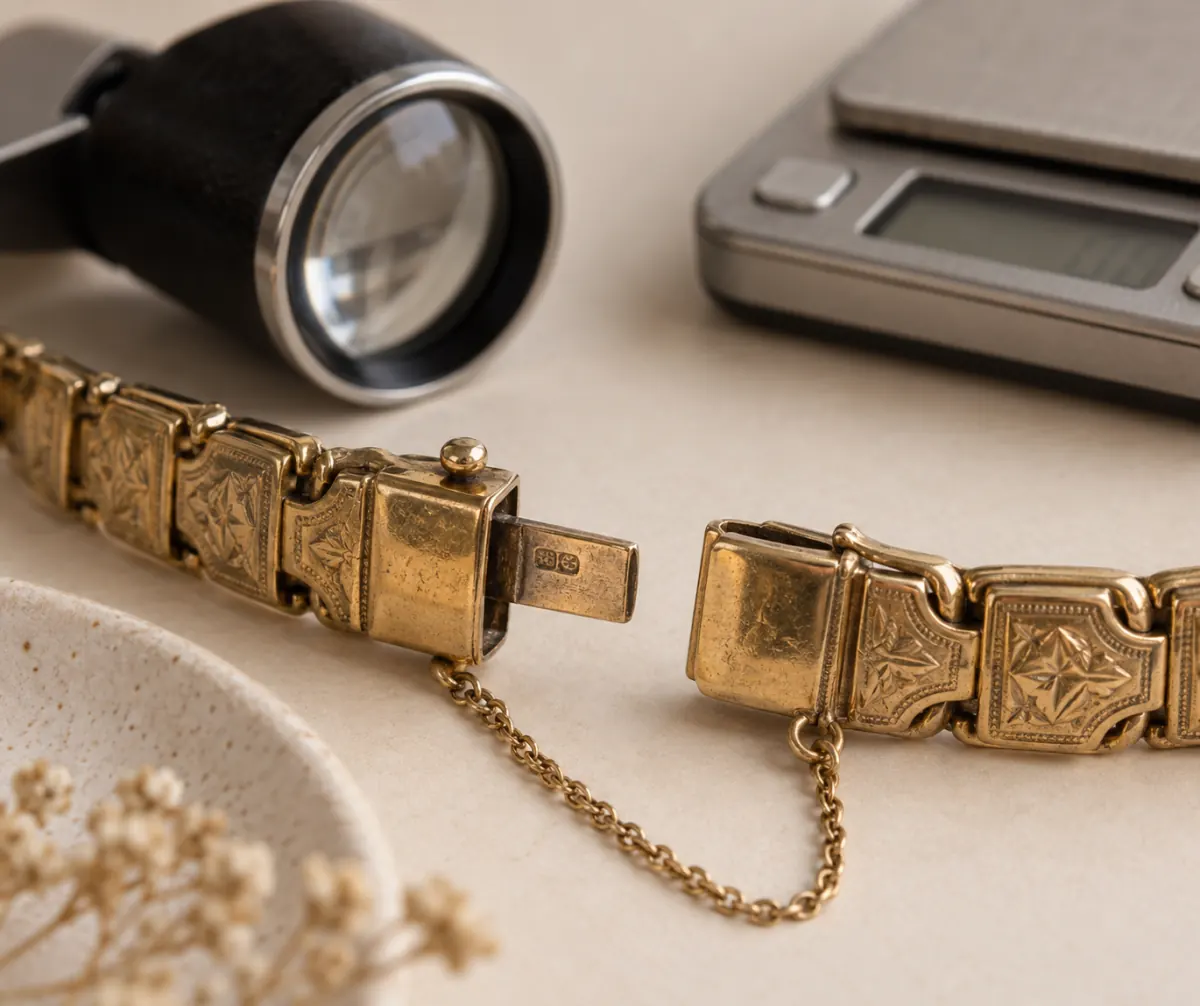
What gold-filled markings tell you
Check the clasp, inside edge, pin stem, watch case, or back of the piece with a loupe. Common marks include "GF," "Gold Filled," "RGP" for rolled gold plate, and a fraction paired with a karat number. Examples include 1/20 10K GF, 1/20 12K GF, 1/20 14K GF, and 1/10 14K GF.
The fraction applies to the weight of the gold alloy, not pure gold. For example, 1/20 means the gold-alloy layer is nominally 5% of the item's metal weight. A 14K alloy is 14/24 gold. So 1/20 14K GF has a nominal pure-gold content of about 2.92% of qualifying metal weight before accounting for non-gold-filled parts:
1/20 x 14/24 = 0.0292, or about 2.92%
A 20-gram item marked 1/20 14K GF would therefore have a rough theoretical maximum of about 0.58 gram of pure gold if all 20 grams qualify under the marking. Real recovery can differ. Stones, steel springs, solder, wear, and other materials can reduce the amount a refiner measures. This calculation is a sorting estimate, not an appraisal or a promised payout.
Do not assume a piece is gold-filled based on color alone. "14K GP," "GEP," "HGE," and "electroplate" describe plated items, which generally have a much thinner gold coating. A plain "14K" mark ordinarily indicates karat gold, but marks can be missing, worn, or counterfeit. When the difference could affect a meaningful sale, ask a qualified jeweler or precious-metal buyer to test it.
How much is gold filled jewelry worth?
There is no single per-gram price for gold-filled jewelry. The live gold price changes, buyers use different testing and settlement methods, and an individual piece may sell for its style rather than its metal. A sensible estimate starts with four questions.
1. Is the piece wearable and appealing?
A clean vintage bracelet with a working clasp may attract a collector or secondhand buyer. A broken chain may not. Brand, age, craftsmanship, unusual design, and a complete set can add resale value, but only when a buyer recognizes and wants those traits. Never polish an old signed piece aggressively before learning whether its patina matters.
2. What does the mark say?
A clear fraction and karat mark gives a buyer more information. Photograph it in focus. If no mark is visible, that does not prove the item has no value, but testing becomes more important. Keep in mind that marks identify intended construction, not current condition after decades of wear.
3. What is the qualifying metal weight?
Weighing the whole piece is only a starting point. Remove nothing if doing so could damage the jewelry. A professional buyer may need to exclude stones, nonmetal inserts, watch movements, steel springs, or other components before estimating recoverable content. Refiners may also prefer several pounds of gold-filled scrap because separating a small gold fraction from base metal takes time and energy. Arch Enterprises, for example, says it handles large-volume gold-filled lots and does not value rarity or collectability.
4. What are the buyer's written terms?
Ask whether the offer is for the item as jewelry or as scrap. For scrap, ask how the buyer determines weight, fineness, fees, minimum lot size, and final settlement. A headline payout percentage is meaningless unless you know what amount that percentage applies to. Get the net offer in writing before agreeing.
Compare before you sell
A free cash offer gives you one more number to compare without requiring you to accept it.
Is gold filled jewelry worth anything to a pawn shop?
Some pawn shops buy gold-filled jewelry and some do not. A shop may be interested in a wearable, recognizable piece but decline a small amount of low-grade scrap. The decision depends on local demand, the shop's testing equipment, and whether it has a refining outlet.
Call first and describe the marking, item type, condition, and approximate weight. Ask whether the shop buys gold-filled items specifically. Saying only that you have "gold jewelry" can lead to confusion when the piece is not solid gold. If the first buyer is not interested, that does not prove the item is worthless. It may simply be outside that buyer's business model.
If you are comparing a pawn shop with a precious-metal dealer, read our guide to pawn shops versus gold buyers. For a mixed jewelry box that includes solid karat items, our guide on estimating what gold may be worth explains how weight and purity affect a separate solid-gold calculation.
How to check gold-filled jewelry before selling
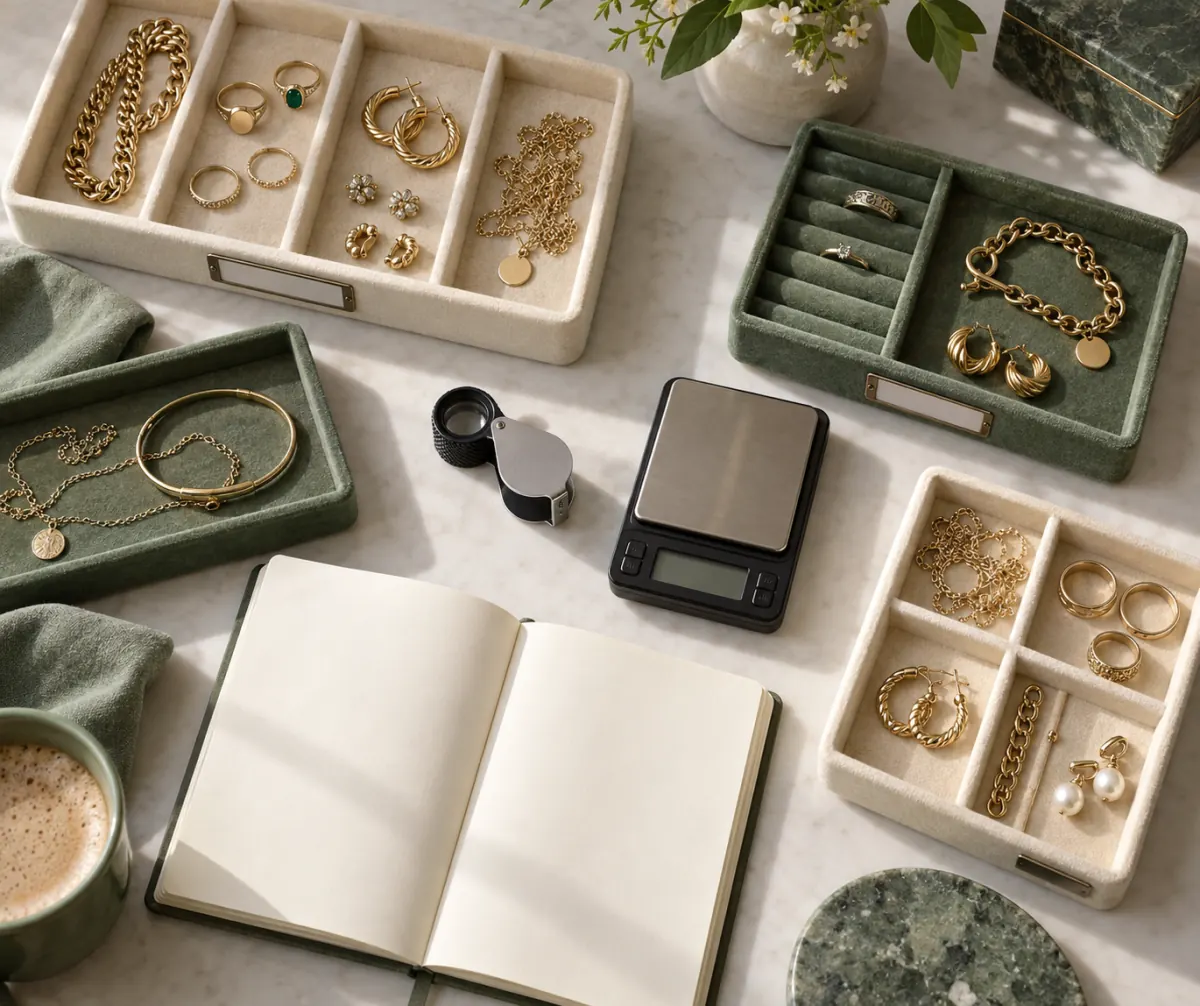
- Sort by marking. Keep 1/20, 1/10, GF, RGP, plated, and solid-karat pieces in separate groups.
- Photograph each piece. Capture the front, back, clasp, maker's mark, fraction, karat mark, and visible damage.
- Weigh groups carefully. Use a scale that reads grams, but label your number as gross weight when stones or other materials remain.
- Check for a maker or signature. Search completed sales for the same maker and a similar item. Asking prices alone do not show what buyers paid.
- Request more than one offer. Compare the net amount, payment timing, shipping risk, return policy, and whether the buyer values the item intact.
- Keep records. Save photographs, the buyer's written terms, shipping receipt, tracking number, and settlement statement.
Avoid destructive acid testing at home, especially on a potentially collectible piece. Filing through the surface can permanently scar the item and may expose only the base metal. Electronic or X-ray fluorescence testing can be useful, but each method has limits. A reputable buyer should explain what was tested and how the result affects the offer.
Common mistakes that lower your payout
The biggest mistake is treating gold-filled jewelry as if its full weight were solid gold. That creates an unrealistic expectation and makes a fair comparison harder. The opposite mistake is throwing it away because it is not solid gold. A signed, wearable item or a large scrap lot may still be saleable.
Other mistakes include mixing plated and gold-filled pieces, cleaning away an old finish, mailing jewelry without insurance or documentation, and accepting a quote that never explains fees. Be cautious with any buyer who guarantees a value before seeing the markings, weight, and condition. Honest estimates come with assumptions.
Where to sell gold-filled jewelry
Your best outlet depends on what you have:
- A vintage, signed, or attractive wearable piece may fit an estate jeweler, vintage dealer, consignment shop, or collector marketplace.
- A modern wearable item may fit a local jewelry buyer, pawn shop, or direct resale marketplace.
- A large quantity of broken or worn gold-filled material may fit a refiner that explicitly accepts it.
Ask a resale buyer whether the item will be priced for design and condition. Ask a scrap buyer whether gold-filled material is accepted, whether there is a minimum lot, and how settlement is calculated. You can pursue both quotes without committing. That small bit of comparison work is often more useful than trying to find a universal price chart.
Bottom line: is gold filled jewelry worth anything?
Yes. Gold-filled jewelry contains a meaningful gold-alloy layer compared with ordinary plating, but most pieces contain far less recoverable gold than solid-karat jewelry. A single piece may be worth more as wearable or collectible jewelry. Broken pieces may have scrap value, especially as part of a sorted larger lot. Read the mark, document the condition, separate gross weight from qualifying metal weight, and compare written net offers before selling.
Ready to compare an offer?
Tell Cha-Ching Co what you have and request a free cash offer with no obligation to accept.
Disclaimer: This article provides general educational information and is not financial, legal, tax, or appraisal advice. Precious-metal prices, testing results, buyer terms, and offers change. Have potentially valuable or uncertain pieces evaluated by a qualified professional before selling.