If you are selling silver flatware for cash, the first job is figuring out whether you own sterling silver, silver plate, or a collectible pattern. Those three categories can lead to very different offers. A few careful checks before you visit a buyer can help you understand what you have, compare offers on equal terms, and avoid selling a desirable set for scrap by mistake.
Want a Straightforward Cash Offer?
Tell Cha-Ching Co what you have and request a free cash offer with no obligation.
Selling Silver Flatware for Cash Starts With the Markings
Turn each piece over and inspect the handle, stem, and bowl with a bright light or magnifying glass. In the United States, the most useful marks are STERLING and 925. Both generally indicate an alloy that is 92.5% silver. The Federal Trade Commission explains that sterling silver is 92.5% pure silver and that “925” means 925 parts per thousand are silver.
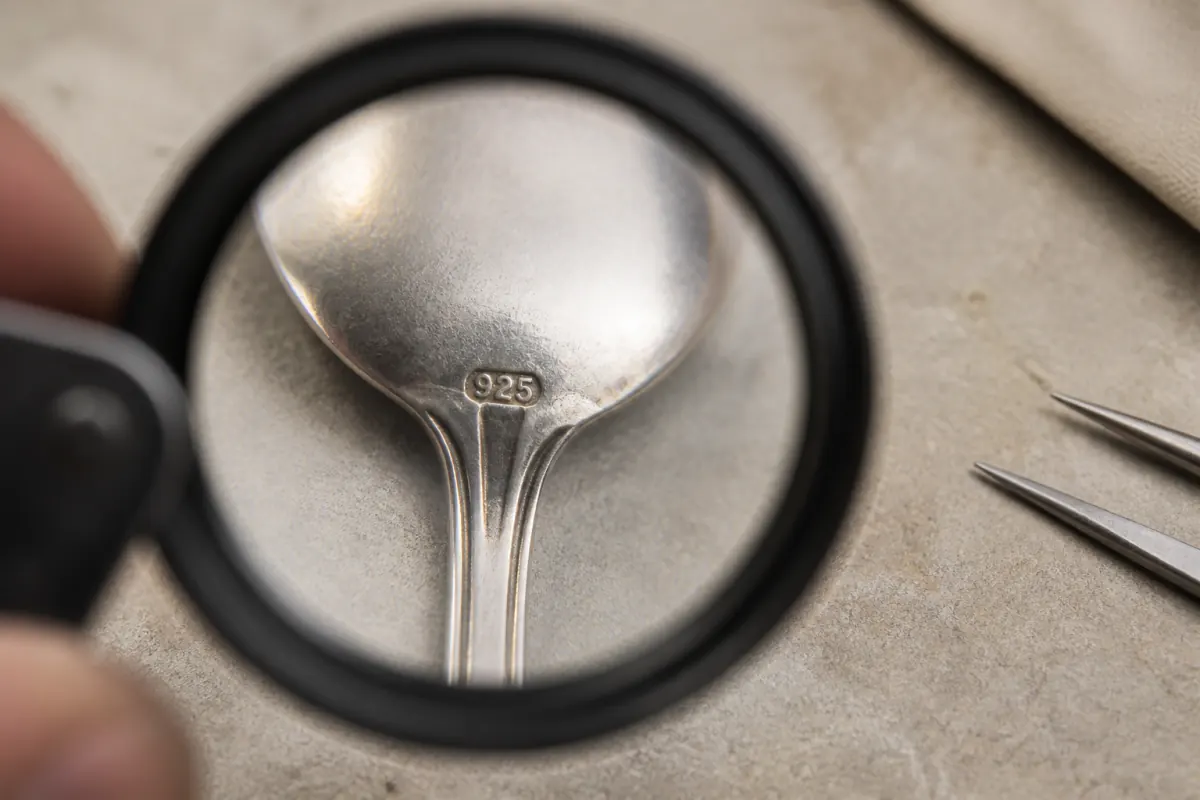
Other marks need more care. COIN or COIN SILVER commonly refers to 90% silver. Marks such as EPNS, EP, silver plate, quadruple plate, A1, or community plate usually mean a thin silver coating over a base metal. Plate can still be attractive and collectible, but it contains far less recoverable silver than sterling.
Do not rely on one home test. A magnet can identify some base metals, but sterling silver itself is not magnetic and many nonmagnetic metals are not silver. Acid testing can damage a piece if done poorly. A reputable precious-metals buyer, jeweler, or appraiser can confirm composition with professional testing. For a broader explanation of the difference, see our guide to whether silver-plated silverware is worth anything.
How to Estimate Value Before Selling Silver Flatware for Cash
Sterling flatware often has two possible values: its metal value and its value as a usable or collectible object. The higher one should guide how you sell it.
Start with the silver content
Group confirmed sterling pieces separately and weigh them. A kitchen scale is useful for a rough estimate, while a gram scale is better. Then use this simple framework:
Total sterling weight × 0.925 × current silver price per unit = estimated gross metal value
Make sure the units match. If your scale shows grams, use the silver price per gram. Precious metals are commonly quoted in troy ounces, and one troy ounce equals about 31.103 grams. Check a current market source on the day you calculate. Silver prices change throughout the trading day, so an article that prints a fixed price will soon be wrong.
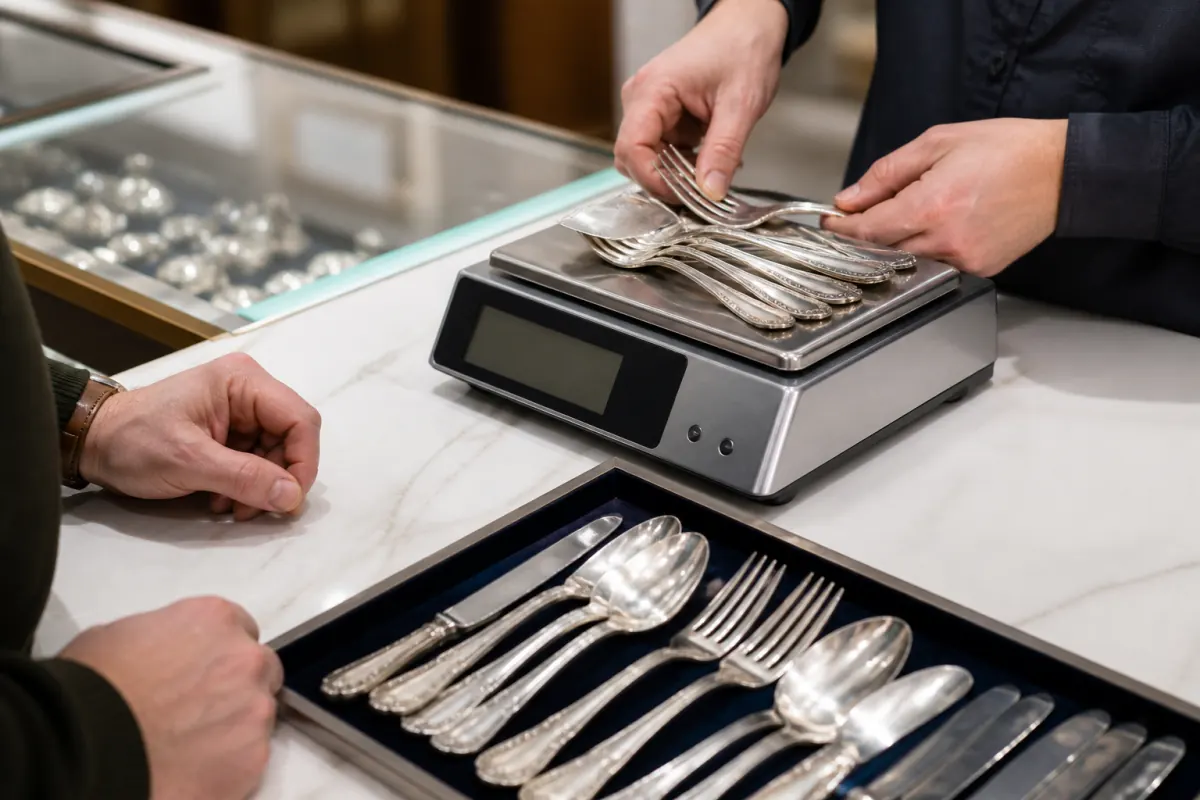
The result is a starting point, not a guaranteed payout. A buyer needs room for testing, refining, market movement, shipping, insurance, and profit. Ask each buyer for the net amount you will receive after every fee. A useful quote states the tested purity, payable weight, market price used, payout percentage, and any deductions.
Account for hollow handles and weighted pieces
Knives are a common source of confusion. A sterling knife handle may contain a steel blade, filler, or other non-silver material. Some serving pieces and candlesticks are marked “weighted,” which means their gross weight is not all precious metal. A buyer may estimate or separate the recoverable silver rather than paying for the full scale weight.
Do not dismantle pieces before getting advice. Taking apart a collectible item can destroy resale value and create sharp edges. Let a qualified buyer explain how the non-silver components affect the offer.
Compare Your Options Without Pressure
Request a free cash offer, then compare it with the metal and resale value you researched.
Check Whether the Pattern Is Worth More Than Scrap
Before accepting a melt-value offer, identify the maker and pattern. Look for a manufacturer name near the purity mark, then photograph the front, back, monogram, and any unusual serving pieces. Count every place setting and note missing or damaged items.
A complete set from a recognized maker may appeal to replacement-flatware dealers, collectors, or families completing an inherited pattern. Rare serving utensils can be worth more individually. Condition matters: deep scratches, bent tines, disposal damage, heavy monograms, and missing pieces can reduce resale demand. A tasteful monogram does not automatically make a set scrap, especially when the pattern is scarce.
Search completed sales, not optimistic asking prices. If several comparable sets actually sold above estimated metal value, consider an antique dealer, auction house, consignment specialist, or direct online sale. If there is little buyer demand and the offer is close to the realistic metal value after costs, a precious-metals buyer may be the simpler route.
Where to Sell Silver Flatware for Cash
There is no single best buyer for every set. The right option depends on whether you value the highest possible price, a quick sale, or a low-effort transaction.
Local precious-metals or coin buyers
A local buyer can test and weigh the flatware while you watch. This makes it easier to ask questions and leave with the set if the quote feels unclear. Compare at least two written offers when the value is substantial. Ask whether knives, weighted pieces, and non-sterling items were excluded from payable weight.
Antique dealers and auction houses
These are stronger options for an identifiable pattern, an old maker, unusual serving pieces, or a complete service. Ask about commissions, photography fees, minimum charges, reserve prices, payment timing, and unsold-item fees. An auction estimate is not the same as a guaranteed sale price.
Online marketplaces and specialist buyers
A direct online listing may produce a better price, but it takes more work. Build shipping, insurance, marketplace fees, returns, and payment-dispute risk into your net estimate. If you mail the set to a buyer, photograph and weigh the contents, use tracked insured shipping, keep the receipt, and read the return policy before sending anything.
Pawn shops
A pawn shop may offer speed and convenience, but its offer can reflect local resale demand rather than the best national market. Ask whether the quote is for a sale or a loan and get the full terms in writing. If your pieces are sterling, compare the offer against your own metal-value estimate.
Questions to Ask Every Buyer
- What purity did you test, and how did you test it?
- What payable weight are you using after excluding blades or filler?
- Which silver market price and unit are you using?
- What percentage of estimated metal value is the offer?
- Are refining, shipping, appraisal, or processing fees deducted?
- When and how will I be paid?
- Can I decline the offer, and who pays return shipping?
A careful buyer should be willing to show the math. Be cautious if someone refuses to separate sterling from plated pieces, pressures you to decide immediately, or will not provide a receipt. The FTC recommends researching a seller or dealer by checking reviews and complaints rather than relying only on social media claims. Keep an inventory and copies of every quote.
Clean It, Keep It, or Sell It As-Is?
Light hand washing with mild soap is usually enough to remove surface dirt. Avoid aggressive polishing, power buffers, abrasive paste, and chemical dips until you know whether the set has collectible value. Heavy polishing can soften details and remove patina that some collectors prefer.
Keep original boxes, sleeves, receipts, appraisals, and pattern information with the set. Even a damaged case can help establish completeness. Never place sterling or silver plate in a dishwasher because heat and detergents can harm finishes and knife construction.
Tax and Recordkeeping Basics
Keep records of how you acquired the flatware, your cost or inherited basis if known, appraisal documents, selling fees, and the final payment. The IRS says a gain on the sale of personal-use property such as silverware is taxable, while a personal loss generally is not deductible. Inherited and gifted property can have different basis rules. Online payment or marketplace activity may also produce tax reporting documents.
This article provides general information, not tax advice. If the set is valuable, inherited, part of an estate, or sold for more than its basis, speak with a qualified tax professional. The IRS pages on taxable income from personal-item sales and basis of assets are useful starting points.
A Practical Selling Checklist
- Sort pieces by hallmark and keep plated items separate.
- Photograph the marks, pattern, condition, and full set.
- Weigh confirmed sterling, noting knives and weighted pieces.
- Estimate gross metal value using the current silver price.
- Research the maker and completed sales for the pattern.
- Request itemized net offers from two or more suitable buyers.
- Choose based on net proceeds, terms, safety, and convenience.
If your set is mostly plated, the best route may be a collector, replacement service, estate-sale buyer, or local marketplace rather than a refiner. You can also review our broader guide on how to sell silver coins, bars, flatware, and jewelry.
Ready to See What Your Flatware May Be Worth?
Share the details with Cha-Ching Co and get a free cash offer you can review on your own time.
Disclaimer: This content is for general educational purposes only and is not financial, legal, appraisal, or tax advice. Silver values, buyer terms, and tax rules can change. Confirm purity and value with qualified professionals and review all transaction terms before selling.