If you are comparing cash for cars free towing offers, the word "free" should mean the pickup costs you nothing. A reputable buyer will explain the offer, towing arrangement, paperwork, and payment method before a truck arrives. The final amount can still change if the vehicle is materially different from what you described, but that should not come as a surprise. This guide shows you what to ask, what to prepare, and how to avoid losing part of your payment to an unexpected fee.
Get an Offer Without Paying for Pickup
Tell Cha-Ching Co about your vehicle and request a free cash offer with pickup details explained upfront.
How Cash for Cars Free Towing Usually Works
The process normally starts with a quote by phone or online. You provide the year, make, model, mileage, location, title status, and an honest description of the vehicle. The buyer uses those details to estimate its resale, parts, or scrap value. If you accept the offer, the buyer schedules a tow truck or flatbed to meet you at the vehicle's location.
At pickup, the driver or buyer may confirm the VIN, inspect the car, review the ownership documents, and make sure its condition matches your description. You sign the required transfer paperwork, receive the agreed payment, and release the vehicle. The towing company then removes it.
That is the clean version. Before agreeing, ask whether the quote is guaranteed based on the information you supplied or merely an estimate. Also ask who is paying the towing company. A true free-towing offer should not deduct a dispatch charge, mileage charge, winching fee, storage fee, or fuel surcharge unless a special condition was clearly disclosed and accepted in advance.
What "Free Towing" Should Include
Free towing generally means standard pickup from an accessible location during the agreed service window. The buyer, not the seller, handles the tow bill. Confirm that in writing by text or email. A short written record is useful if the driver later mentions a fee you never approved.
Special access can complicate the job. Tell the buyer if the car is in a parking garage, behind a locked gate, missing wheels, blocked by another vehicle, stuck in mud, or located far from a paved road. A car with no keys or locked steering may also require different equipment. These facts do not automatically mean you should pay, but hiding them can lead to a delayed pickup or a changed offer.
Ask these questions before booking:
- Is towing completely free from my exact pickup location?
- Could any mileage, winching, storage, cancellation, or after-hours fee apply?
- Is the tow operator your employee or a third-party contractor?
- Will I receive payment before the vehicle leaves?
- What documents and identification must I have?
- What could cause the quoted price to change?
What Affects a Cash for Cars Free Towing Quote?
A buyer may value a vehicle for resale, repair, usable parts, or scrap metal. That means two cars of the same year and model can receive very different offers. Mileage matters, but so do mechanical condition, collision damage, local demand, missing components, title brand, and whether the vehicle is complete.
Be specific when you request the quote. If the engine does not start, say so. Mention flood or fire exposure, deployed airbags, major body damage, a missing catalytic converter, flat tires, and removed parts. Send current photos if the buyer accepts them. Accurate details make it harder for either side to claim there was a misunderstanding at pickup.
A changed offer is not automatically dishonest. The VIN might identify a different trim, or the inspection might reveal damage that was not visible in the photos. The problem is a buyer who advertises an unrealistic number, arrives with a tow truck, and cuts the offer for reasons already disclosed. You are allowed to decline a reduced price. Do not sign the title or let the vehicle leave until you understand and accept the final amount.
Know the Pickup Terms Before You Commit
Request a free cash offer and confirm the vehicle condition, payment, and towing terms before scheduling.
Paperwork to Prepare Before the Tow Truck Arrives
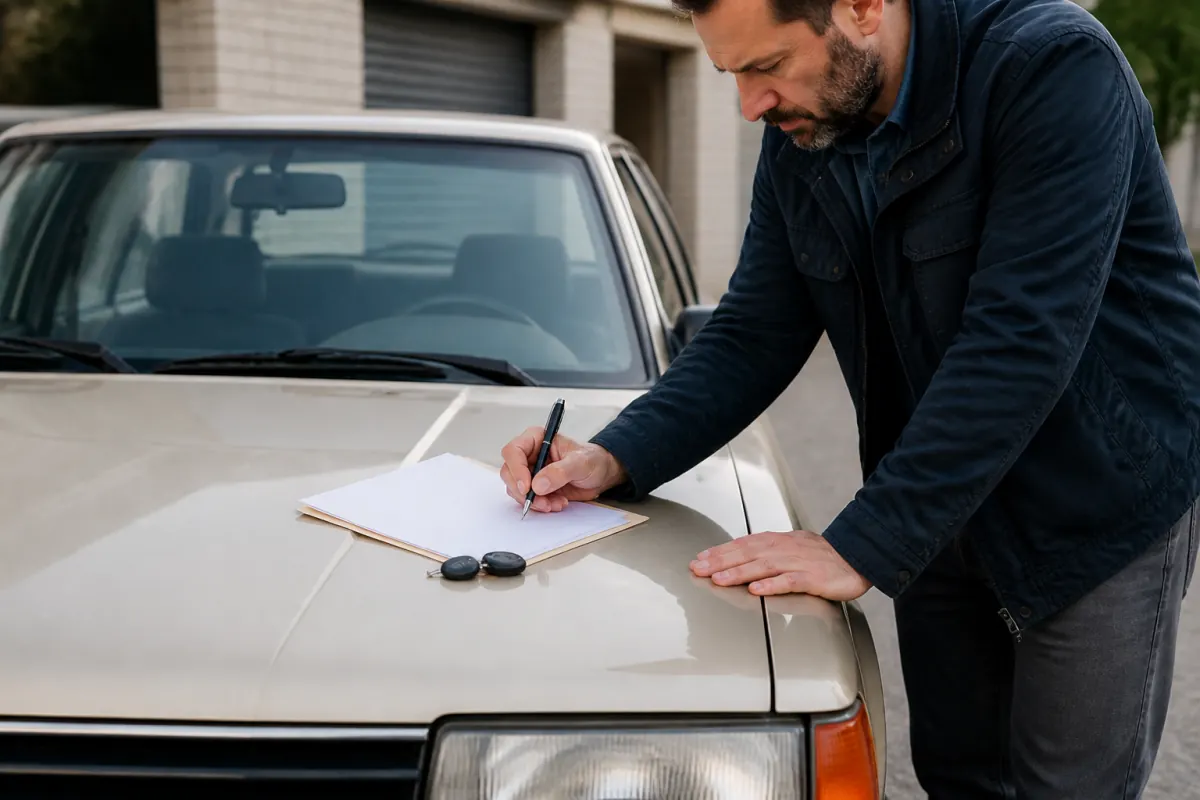
Requirements vary by state and by the type of buyer. In many ordinary sales, you will need the vehicle title, a government-issued photo ID, and any state-required odometer or transfer disclosure. A bill of sale can document the buyer, seller, vehicle, sale date, and agreed price. Check your state motor vehicle agency's instructions instead of assuming another state's rules apply.
Make sure the VIN on the vehicle matches the title. If there is an active lien, the lender may need to release it before ownership can transfer. If the title is lost, ask your state agency about a replacement. Some licensed dismantlers or junk vehicle programs can handle limited no-title situations, but the rules are local. Do not accept a buyer's claim that paperwork is unnecessary without checking.
Many states also require the seller to report the sale or transfer. For example, the California DMV requires a Notice of Transfer and Release of Liability within five calendar days. Your deadline and form may be different. Save copies or photos of the signed paperwork, the buyer's business information, the final payment record, and any confirmation from your state agency.
How and When You Should Be Paid
Confirm the payment method before pickup. Depending on the buyer and local rules, payment may be made by business check, cashier's check, electronic transfer, or another documented method. If you are unsure about a check, contact the issuing bank through a phone number you find independently. Do not use a number printed only in a message from the buyer.
Never send money back to a buyer who claims to have overpaid you. The Federal Trade Commission warns that fake-check scams target online car sellers. A fake check can appear in your account before the bank identifies it as fraudulent. If someone sends more than the sale price and asks you to refund the difference, pay a shipper, buy gift cards, wire money, or send cryptocurrency, stop the transaction.
Payment should be settled before the vehicle is hauled away and before you hand over fully executed ownership documents. Read every form. Do not sign blank fields, and do not let anyone pressure you to rush through the transfer.
How to Prepare the Car for a Smooth Pickup
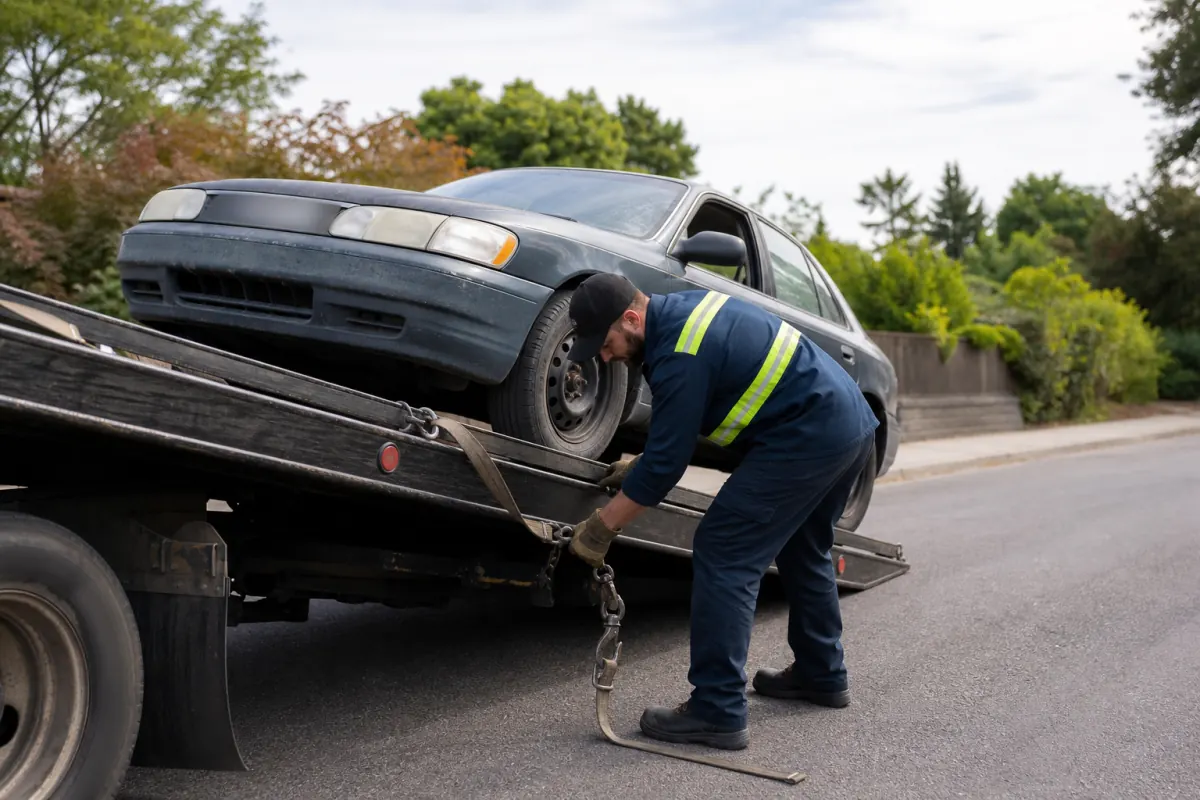
Move the vehicle to an accessible spot if you can do so safely and legally. The tow truck needs enough room to approach, load, and leave. Do not try to start, push, or repair an unsafe car just to make the pickup easier. Tell the dispatcher about access limits so the operator arrives with the right equipment.
Remove all personal belongings. Check the glove box, trunk, center console, door pockets, under the seats, and any storage compartments. Take out toll transponders, garage remotes, parking passes, medication, paperwork with personal information, and removable electronics. Unless the buyer says otherwise, remove aftermarket items you plan to keep before the appointment.
Whether you remove license plates depends on state rules. Some states tell sellers to keep them, while others allow plates to remain with the vehicle. Check the motor vehicle agency where the car is titled. After the sale, contact your insurer about ending or changing coverage, but first make sure you have completed the transfer steps required in your state.
If you want a better sense of how mechanical problems affect a sale, see our guide to selling a car with mechanical issues. For a severely damaged vehicle, our junk car value factors guide explains why offers can differ.
Red Flags in Free Towing Cash Offers
Slow down if the buyer refuses to identify the business, will not provide clear pickup terms, or demands that you sign over the title before confirming payment. Watch for vague answers about fees. "The driver will decide" is not enough when you are asking whether towing is free.
Other warning signs include a buyer who sends an overpayment, asks you to pay a separate towing company, requests gift cards or cryptocurrency, or threatens a cancellation charge that was never disclosed. Be cautious if a driver arrives for a different business than the one you contacted and cannot show the work order.
Get the legal business name, phone number, and pickup confirmation. Search for recent complaints and verify any license required in your state or city. A professional buyer should be able to explain who is taking ownership, who is towing the car, and what you will receive at pickup.
Cash for Cars Free Towing Seller Checklist
- Describe the vehicle honestly and send current photos.
- Get the final offer and free-towing terms in writing.
- Disclose access problems, missing keys, flat tires, or removed parts.
- Confirm the buyer's identity and the tow operator's name.
- Prepare the title, ID, and state-specific transfer forms.
- Remove personal items and follow your state's plate rules.
- Review payment before signing or releasing the vehicle.
- Keep copies of the bill of sale and transfer documents.
- Report the sale to your state agency by its deadline.
- Contact your insurer after completing the required transfer steps.
The best pickup is uneventful. You know the final price, the truck arrives when promised, the paperwork is complete, and the car leaves without a surprise towing bill. A few direct questions before scheduling can protect your time and your payment.
Ready to Request a Cash Offer?
Share the details of your car with Cha-Ching Co and ask about free towing from your location.
Disclaimer: This article provides general educational information and is not legal, tax, financial, or motor vehicle agency advice. Vehicle transfer, title, plate, disclosure, payment, and towing rules vary by location and situation. Confirm current requirements with your state motor vehicle agency, lienholder, insurer, and a qualified local professional when needed.