How much do you lose when you sell gold? For ordinary gold jewelry sold for its metal value, the difference between theoretical melt value and the cash offer is often about 10% to 40%. That means a competitive buyer may pay roughly 60% to 90% of melt value, while some convenience-focused offers land lower. The exact gap depends on purity, weight, testing, buyer costs, and whether the item is worth more intact than as scrap.
Get a Number You Can Compare
Request a free cash offer from Cha-Ching Co, then compare it with your melt-value estimate and other written quotes.
The word "lose" needs context. You are not necessarily losing 10% to 40% of the price you paid at a jewelry store. Retail prices include design, manufacturing, distribution, rent, marketing, and sometimes a brand premium. A scrap-gold buyer usually values the recoverable gold, not the original retail receipt. Your best comparison is the item's current melt value or, for collectible pieces, its current resale value.
How Much Do You Lose When You Sell Gold for Melt Value?
Start with the theoretical value of the pure gold inside the item. A buyer estimates that value, then offers less to cover testing, handling, shipping, refining, market-price risk, overhead, and profit. Most buyers build this margin into the offer instead of charging a separate fee.
A practical way to think about common offers is:
- About 40% to 65% of melt value: You give up roughly 35% to 60%. This may happen with small lots, difficult items, or buyers selling convenience rather than the strongest payout.
- About 60% to 80% of melt value: You give up roughly 20% to 40%. Many ordinary jewelry offers fall somewhere in this broad band.
- About 80% to 90% of melt value: You give up roughly 10% to 20%. Competitive specialist buyers may reach this range on straightforward, easily tested lots.
- Closer to wholesale market value: Recognizable investment bars and coins can trade on tighter margins than mixed scrap jewelry.
These ranges are examples for comparison, not guaranteed payouts. A buyer can advertise a high percentage and still produce a weak offer if the purity, weight, or reference price is wrong. Focus on the final math.
How Much Do You Lose When You Sell Gold Jewelry?
Gold jewelry is made with alloys because pure 24K gold is soft. The karat tells you how much of the item's metal is gold. Common purity factors are:
- 10K: 10/24, or about 41.7% gold
- 14K: 14/24, or about 58.3% gold
- 18K: 18/24, or 75% gold
- 22K: 22/24, or about 91.7% gold
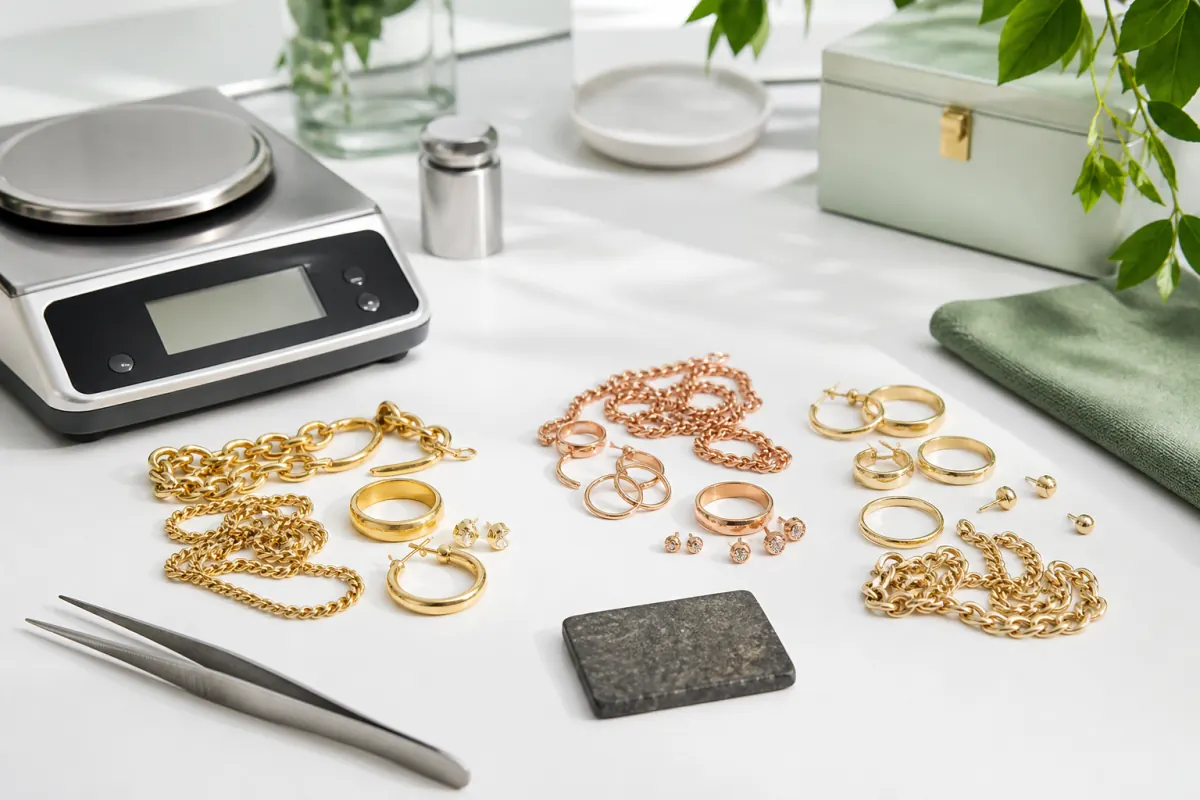
The Federal Trade Commission explains that karat marks describe the proportion of gold in jewelry. A 14K bracelet that weighs 20 grams does not contain 20 grams of pure gold. Its estimated fine-gold content is about 11.67 grams before accounting for stones, springs, solder, or non-gold components.
A hallmark is only a starting point. Clasps can be replaced, pieces can be repaired, and plating can hide a different base metal. A buyer may use visual inspection, a touchstone and acid, electronic testing, X-ray fluorescence, or a combination. Ask to see the weight and hear how purity was established.
Calculate the Dollar Difference Before You Sell
The basic estimate is:
Item weight x purity factor x pure-gold value per gram = estimated melt value
Gold market prices are commonly quoted per troy ounce. One troy ounce equals approximately 31.1035 grams. To estimate the pure-gold value per gram, divide the per-troy-ounce price by 31.1035. Use a current price when you do the calculation because gold prices change.
Consider a 20-gram 14K bracelet. For simple sample math, assume pure gold is worth $100 per gram. This is not a current market quote.
- 20 grams x 0.5833 = 11.67 grams of estimated pure gold.
- 11.67 grams x $100 = about $1,167 in estimated melt value.
- An $875 offer is about 75% of melt value.
- The difference is about $292, or 25% of melt value.
If another buyer offers $992, that is about 85% of the same melt estimate. The second offer is $117 higher. Comparing each quote against the same weight, purity, and gold price keeps the exercise honest.
For a closer look at the inputs, read our guide to how gold buyers determine value. It explains testing, payable weight, and the difference between melt and resale value.
Why Buyers Pay Less Than Melt Value
The spread is not automatically a hidden scam or pure profit. The buyer may need to verify ownership, test and sort the items, remove stones or non-gold parts, insure a shipment, and pay a refiner. The final recovery can differ from the first estimate. The gold price may also move before the material is sold.
Lot size matters. Processing a $150 item can require many of the same staff steps as processing a $5,000 lot. A buyer may offer a lower percentage on a tiny lot because the fixed cost consumes more of the transaction.
The sales channel matters too. A high-volume specialist with direct refinery access may have lower costs than a shop that sends small batches through an intermediary. A jewelry buyer may pay more for an attractive piece it can resell. A scrap-only buyer may see nothing beyond metal content.
Compare the Final Payout
A free Cha-Ching Co cash offer gives you one more written number to evaluate without pressure.
You May Lose More by Selling the Wrong Piece as Scrap
Melt value is not always the right benchmark. Signed designer jewelry, antique pieces, collectible coins, watches, and jewelry with important gemstones may sell for more intact. A buyer who only handles scrap gold may not pay for craftsmanship, rarity, brand demand, or stone quality.
Before accepting a melt offer for an unusual or high-value piece, identify the maker, model, hallmarks, and any serial or reference numbers. Gather receipts, boxes, grading reports, service records, and prior appraisals. An independent appraiser or specialist auction house may be worth the fee when the likely resale premium is substantial.
Be clear about what an appraisal means. An insurance replacement appraisal is often higher than an item's cash resale value. Ask for the type of value being estimated and whether the appraiser has a financial interest in buying the item.
Costs That Can Increase How Much You Lose
Some deductions appear separately, while others are embedded in the offer. Before handing over your gold, ask about:
- Testing or assay fees
- Refining deductions
- Shipping and insurance charges
- Return shipping if you reject a mail-in offer
- Cancellation deadlines or administrative charges
- Deductions for stones, clasps, springs, and other non-gold parts
A "no-fee" claim does not prove the payout is better. A buyer offering $700 with no separate fees pays less than a buyer offering $820 after a clearly disclosed $20 charge. Compare the net amount you receive.
Also confirm the weighing unit. Gold buyers may use grams, pennyweights, or troy ounces. One pennyweight equals 1.555 grams. An ordinary household ounce is not the same as a troy ounce. Convert each quote to the same unit before comparing it.
How to Reduce the Loss When Selling Gold
- Separate items by karat. Do not let 10K and 18K pieces get blended into one unexplained rate.
- Record your own weight. Use a gram scale for a rough baseline and photograph the items before a mail-in sale.
- Check a current benchmark price. Write down the time because the market can move during the day.
- Estimate melt value. Apply the purity factor and remove any obvious stone or non-gold weight where possible.
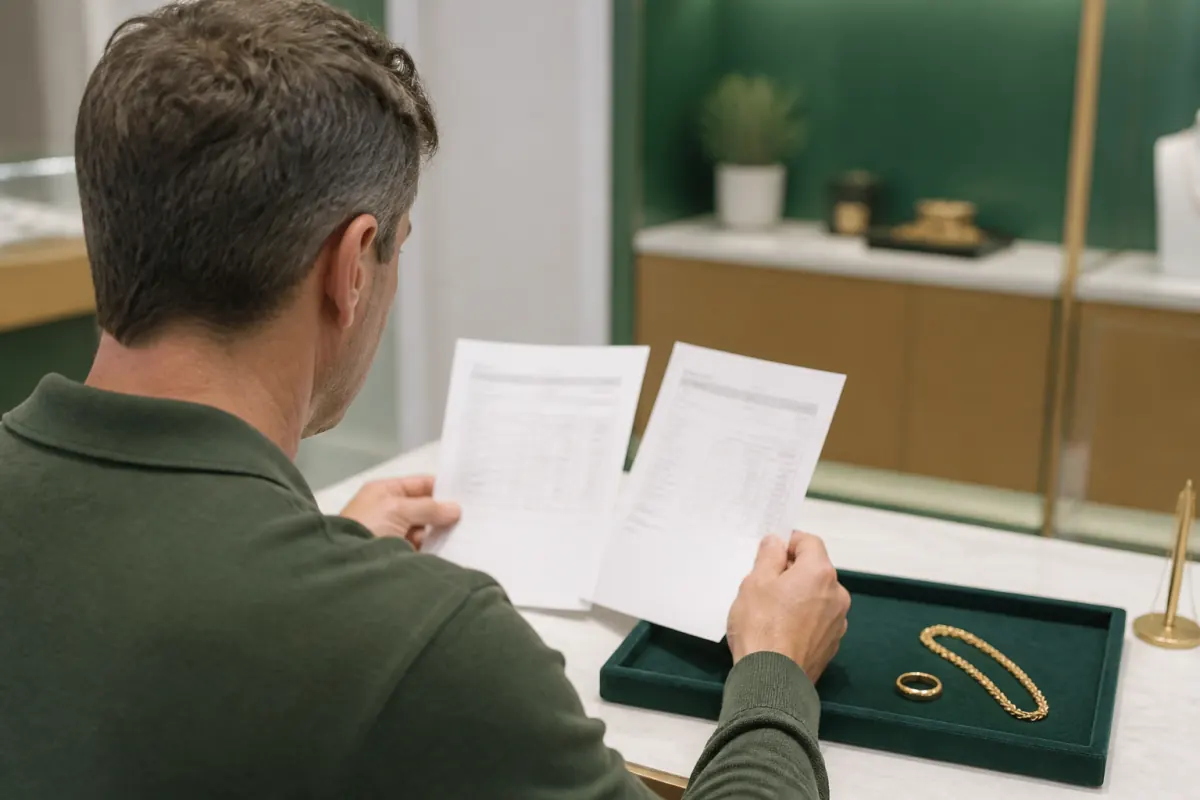
- Get multiple written offers. Same-day quotes are easier to compare than offers collected weeks apart.
- Ask for the payout percentage. Divide the cash offer by your estimated melt value, then multiply by 100.
- Protect resale value. Get specialist input before sending a rare, signed, antique, or gemstone-heavy piece to a refiner.
If you are comparing different buyer models, our guide to what percentage gold buyers take shows how pawn shops, local buyers, and specialist services can differ.
Red Flags That Can Cost You Money
Walk away if a buyer will not show the scale, identify the weighing unit, explain the purity result, or put the final offer in writing. Do not accept an estimate based only on the original retail price. That number does not reveal the item's current metal or resale value.
Pressure is another warning sign. A legitimate buyer should let you ask questions and retrieve your property if the offer does not work for you. For mail-in services, read the acceptance and return policy before shipping. Find out whether an offer is accepted automatically after a short deadline and who pays to return rejected items.
Keep a written inventory, photographs, weights, shipment tracking, and proof of insurance. Confirm the buyer's business identity and physical address. Never sell property you do not own or lack authority to sell.
Questions to Ask a Gold Buyer
- What weight did you record, and which unit did you use?
- What purity did each item test at?
- How did you test the gold?
- Which gold price and timestamp did you use?
- What is the estimated melt value?
- What percentage of melt value does the offer represent?
- Are any fees or deductions taken after this quote?
- How long is the offer valid, and what happens if I decline?
The Bottom Line
So, how much do you lose when you sell gold? For standard gold jewelry sold for refining, the gap is commonly around 10% to 40% of estimated melt value, though the real result can fall outside that range. You may give up more with a convenience-focused offer or a difficult lot. You may give up less with competitive quotes, clear testing, and easily traded gold.
The biggest avoidable loss often comes from using the wrong benchmark. Calculate melt value for ordinary scrap, but check resale value before melting anything signed, collectible, antique, or stone-set. Then compare written net offers using the same weight, purity, and market price.
See What Your Gold May Be Worth
Get a free cash offer from Cha-Ching Co, review the amount, and decide whether it works for you.
Disclaimer: This article provides general educational information and is not financial, investment, legal, tax, appraisal, or gemological advice. Gold prices, testing results, buyer terms, and resale values change. Consider an independent qualified appraisal for rare, signed, antique, collectible, or gemstone-set items before selling.