If you are wondering, can I sell gold without receipt paperwork, the short answer is usually yes. Most gold buyers do not require the original store receipt to test and buy ordinary gold jewelry, coins, or scrap gold. They may still ask for a valid government-issued photo ID and a signed statement that you own the items. Exact requirements depend on the buyer and the state or city where the sale takes place.
See What Your Gold May Be Worth
Request a free cash offer from Cha-Ching Co with no obligation to accept.
Can I Sell Gold Without Receipt Paperwork at Most Buyers?
In many cases, yes. A purchase receipt helps show when and where an item was bought, but it is not the only way a buyer can evaluate gold. Professional buyers normally base an offer on the item itself: its purity, weight, condition, current gold price, and any resale value beyond the metal.
The buyer can test purity even if you have no paperwork. Common methods include electronic testing, acid testing, X-ray fluorescence testing, and checking hallmarks such as 10K, 14K, 18K, or 750. A missing hallmark does not automatically make an item unsellable either. Our guide to selling gold without a hallmark explains how unmarked pieces are tested.
A receipt can still be useful for a branded piece, a collectible coin, or jewelry with a valuable stone. It may support the item's history, but it does not prove today's gold content or guarantee a particular offer.
What You May Need Instead of the Original Receipt
Bring the gold itself and a current photo ID. Depending on local law and store policy, the buyer may record your name, address, ID number, item description, photograph, signature, or thumbprint. Some jurisdictions also require the buyer to hold the item for a set period before reselling or melting it.
For example, Virginia law requires a precious-metals dealer to check government-issued identification and obtain a statement of ownership from the seller. Kansas law likewise requires identification and a signed statement that the seller owns the metal or is authorized by the owner to sell it. Those examples do not apply everywhere, but they show why a reputable buyer may ask questions even when no receipt is required.
Useful things to bring include:
- A valid driver's license, state ID, passport, or other accepted government photo ID
- Any appraisal, certificate, warranty card, box, or service record you still have
- A note explaining how you acquired the item, especially if it was inherited or given as a gift
- Written authorization if you are selling for another person or an estate
An appraisal is not the same as a receipt. It describes the item and may give an insurance replacement value, which is often much higher than a buyer's cash offer. Still, it can help identify a maker, gemstone, or design that deserves separate evaluation.
Can I Sell Gold Without Receipt Paperwork If It Was Inherited?
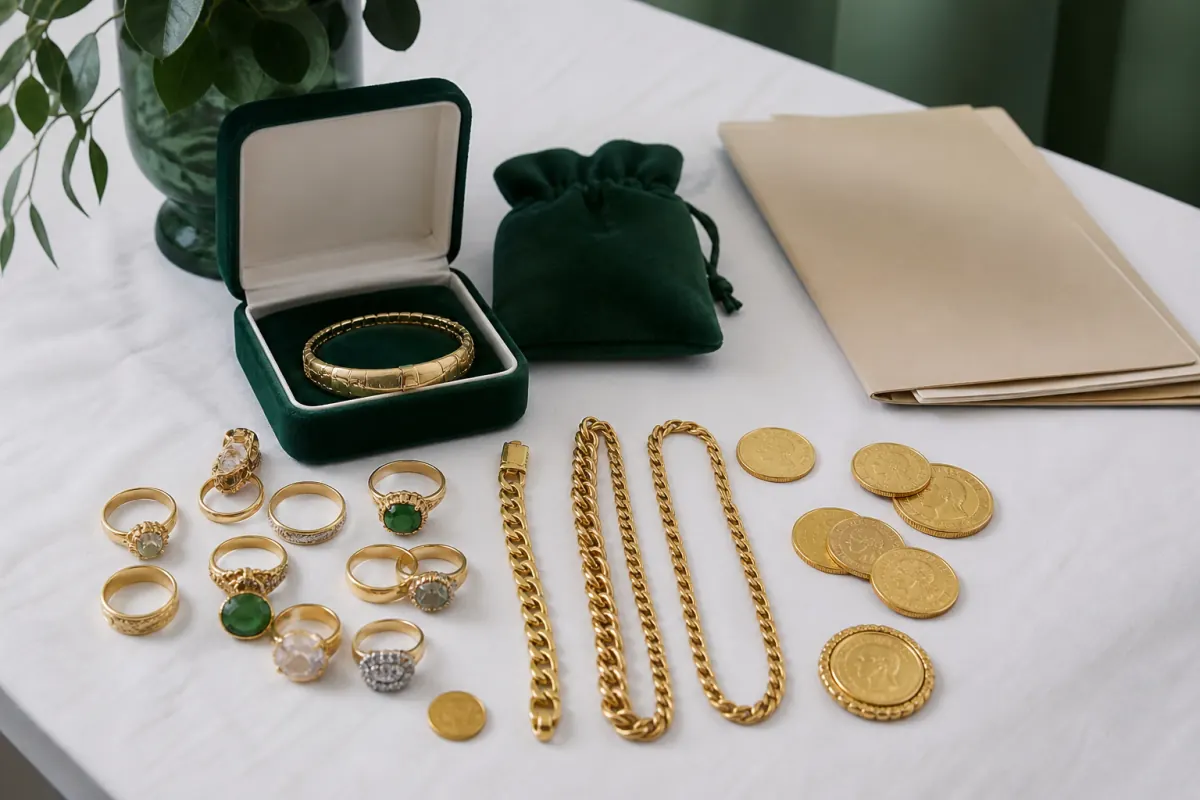
Usually, but inherited items can raise extra questions. A buyer may accept your ID and ownership statement for ordinary jewelry. For a large collection, high-value coins, or property from an unsettled estate, the buyer may want documents showing that you are allowed to sell it.
Possible supporting records include a will, trust document, probate order, small-estate affidavit, receipt from the estate administrator, or written consent from the owner. Do not take or sell an item when ownership is disputed. If several relatives may have a claim, settle that question before visiting a buyer.
Keep your own record of the transaction. Photograph the items, note their weights, save the buyer's written offer, and request a receipt showing what was sold and how much you received. Your lack of an old purchase receipt does not mean you should leave without a new sale receipt.
Why Gold Buyers Ask for Identification
ID checks are not necessarily a sign that something is wrong. Secondhand-dealer and precious-metals laws are often designed to discourage the sale of stolen property and create a record that law enforcement can review. The details vary widely by location, so one store may request more information than another.
A buyer may refuse a transaction if the seller cannot show acceptable ID, gives conflicting information, appears underage, cannot explain ownership, or brings an item reported as lost or stolen. A buyer may also decline property with altered serial numbers or identifying marks.
Federal cash-reporting rules are sometimes confused with receipt requirements. IRS Form 8300 generally concerns businesses that receive more than $10,000 in cash in one transaction or related transactions. Selling your gold to a buyer is not automatically the same situation, and the rule does not create a universal requirement that every gold seller produce the original retail receipt. High-value or unusual transactions may involve other recordkeeping, so ask the buyer what information will be collected before you agree.
No Store Receipt? You Can Still Request an Offer
Tell Cha-Ching Co what you have and get a free cash offer without pressure.
How Different Gold Buyers Handle Missing Paperwork
Local gold buyers and jewelers
These businesses can inspect the item in person and explain the test result. Many will buy common gold jewelry without a purchase receipt as long as you meet their ID and ownership requirements. Ask whether stones are valued separately or whether the offer is based only on melt value.
Pawn shops
Pawn shops operate under state and local rules that may require detailed seller records. A receipt may not be mandatory, but photo ID commonly is. If you are considering a pawn loan instead of a sale, read the interest, fees, due date, and forfeiture terms before signing.
Online or mail-in gold buyers
Online buyers may ask you to complete an ownership declaration, upload ID, or verify your identity before payment. Review the shipping insurance limit and photograph every item before sealing the package. Use a trackable service and keep the acceptance deadline in writing.
Coin dealers and auction houses
Bullion and common coins may be straightforward, but rare or high-value coins can deserve specialist review. Provenance, grading certificates, and prior invoices may affect collector value even though they are not always required to sell the metal. Do not let a potentially collectible coin be valued only for its gold weight until a qualified specialist has examined it.
How to Prepare Your Gold Before Getting Offers
- Sort by hallmark. Separate 10K, 14K, 18K, 22K, and unmarked items. Do not assume color alone proves purity.
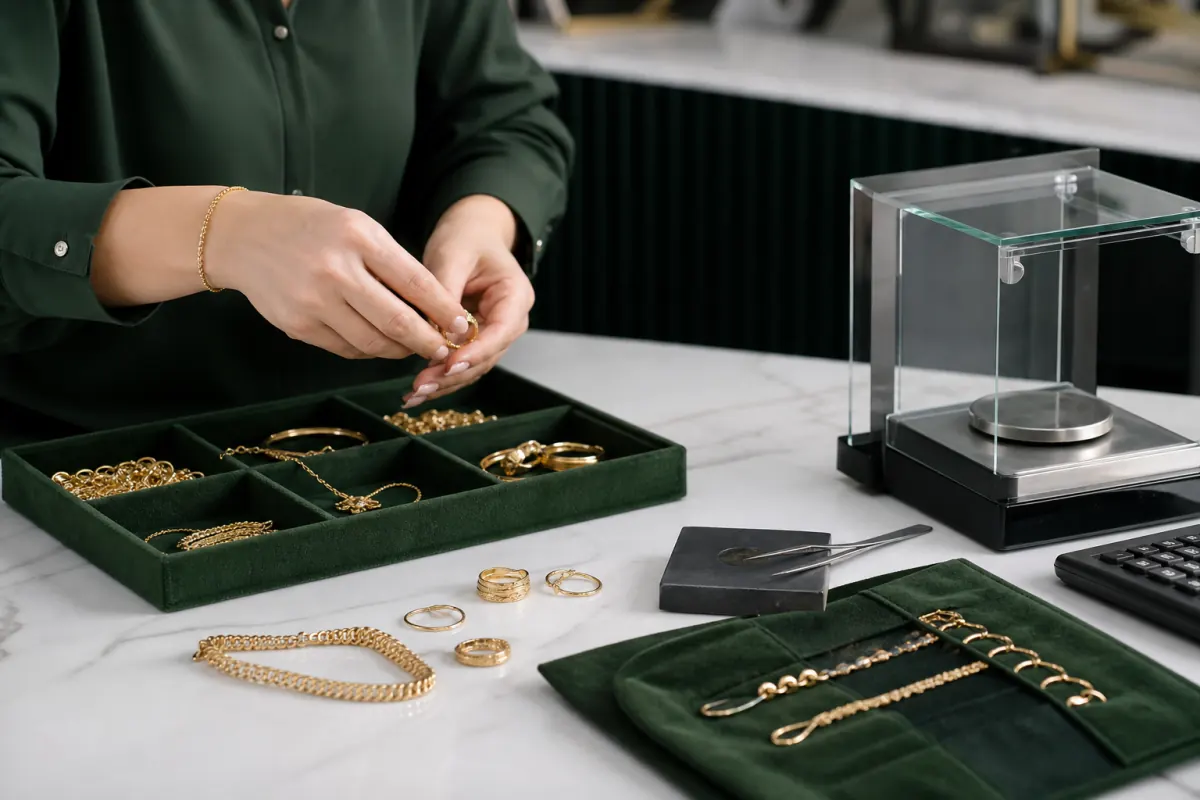
- Weigh carefully. A small gram scale can give you a rough starting point. Remove packaging and keep stones in mind because total jewelry weight is not pure-gold weight.
- Check the spot price. Gold prices change throughout the day. The spot price is for pure gold, while jewelry contains other metals and buyers have testing, refining, and resale costs.
- Identify pieces with extra value. Signed jewelry, intact antique pieces, desirable watches, and quality gemstones may be worth more than scrap.
- Get itemized offers. Ask for the tested purity, accepted weight, price basis, deductions, and payment amount in writing.
- Compare more than one buyer. Offers can differ because buyers have different costs and resale channels. Our article on how gold buyers determine value shows the math worth checking.
Avoid destructive cleaning. Polishing or using harsh chemicals can damage antique finishes, stones, or plated details. A buyer can inspect normal dirt and wear.
Red Flags When Selling Gold Without a Receipt
A missing receipt should not force you into a rushed deal. Walk away if a buyer will not explain the test, refuses to weigh items where you can see the scale, pressures you to accept immediately, or will not provide a written transaction record.
Also be careful with vague claims such as "today only" pricing or a single total offer for mixed-karat items. Separate testing matters because 18K gold contains more gold than 10K gold. If an item has diamonds or other stones, ask whether the buyer is paying for them. If not, consider a jewelry or estate specialist.
For mail-in sales, read the return policy before shipping. Confirm who pays return postage, how long you have to reject the offer, and what happens if a package is lost or an item is damaged. Save screenshots or copies of the terms that applied when you mailed the package.
What If a Buyer Refuses Your Gold?
A refusal does not always mean the gold is fake. The business may not accept your type of item, your ID may not meet local requirements, the item may need specialist testing, or the buyer may be unable to verify ownership. Ask for the reason without arguing, then decide whether another established buyer is a better fit.
If ownership documents are the issue, gather what you can. A gift letter, estate paperwork, old photograph, appraisal, insurance schedule, repair invoice, or correspondence about the item may help. None of these guarantees acceptance, and a buyer can set a stricter policy than the legal minimum.
Bottom Line: Can I Sell Gold Without Receipt Paperwork?
Yes, you can often sell gold without the original receipt. Expect the buyer to test the item, verify your identity, and ask you to confirm that you own it. Requirements vary by state, city, buyer type, item value, and how you acquired the gold.
Bring any supporting paperwork you do have, compare itemized offers, and keep a record of the sale. If ownership is disputed or the item belongs to an estate, resolve your authority to sell before completing the transaction.
Ready to Check Your Gold?
Request a free cash offer from Cha-Ching Co and decide in your own time.
Disclaimer: This article provides general educational information, not legal, tax, financial, or appraisal advice. Precious-metals, secondhand-dealer, identification, ownership, holding-period, and reporting rules vary by state and locality. Confirm current requirements with the buyer and the appropriate government agency. Cha-Ching Co does not guarantee that any buyer will accept an item or make a particular offer.